
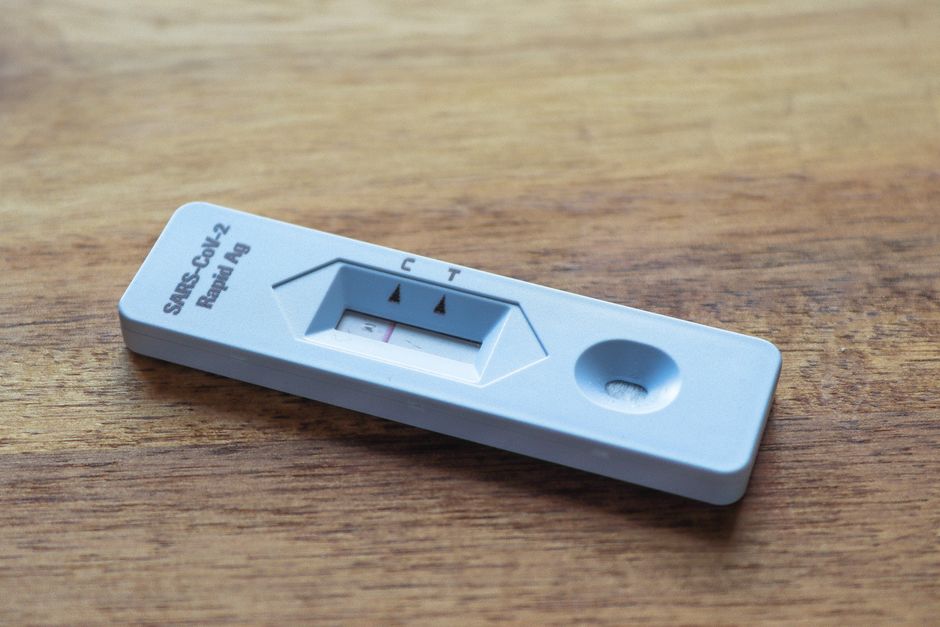
COVID-19 is diagnosed by detecting the SARS-CoV-2 virus in a sample taken from your nose or throat. Two main test types do this: PCR tests, which look for the virus’s genetic material in a lab, and rapid antigen tests, which detect viral proteins and give results in minutes. A third route — antibody blood tests — shows past infection but is not used to diagnose an active case.
Each test answers a slightly different question. Understanding what each one measures explains why a rapid test can be negative while you are still infected, and why a PCR result can stay positive long after you are no longer contagious.
How Is Covid Diagnosed With PCR and Rapid Tests Explained?
Both tests start with the same step: a swab collects cells and fluid from the inside of your nose or the back of your throat. What happens next separates them.
PCR tests (polymerase chain reaction) detect the virus’s RNA — its genetic instructions. The sample goes to a laboratory, where a machine repeatedly copies any viral genetic material present. Even tiny amounts become detectable. This amplification is why PCR is considered the most sensitive method for detecting an active infection.
Rapid antigen tests detect proteins on the virus’s surface. They work a bit like a home pregnancy test — a chemical reaction produces a visible line if viral protein is present. No lab is needed. Results come back in about 15 minutes.
The trade-off is sensitivity. Antigen tests need a higher amount of virus in the sample to turn positive. PCR can catch an infection with far less virus present. That difference matters most early in infection, when viral levels are still climbing.
What Does a PCR Test Actually Detect?
PCR detects viral RNA, and it does so with very high sensitivity when the sample is collected properly and the test is run correctly. A positive PCR result is strong evidence that SARS-CoV-2 genetic material is present.
What it cannot tell you is whether live, infectious virus is still there. PCR can keep detecting fragments of viral RNA for weeks after your immune system has cleared the active infection. This is why some people test positive on PCR long after they feel well, and why a positive PCR is not by itself proof you are still contagious.
PCR also cannot tell you how sick you will get. Viral load — the amount of virus detected — does not reliably predict symptom severity.
Most PCR results are reported within a day or two, though timing depends on the lab and how samples are transported. Some rapid molecular tests run on-site and return results in under an hour, but these are less common than standard lab PCR.
How Accurate Are Rapid Antigen Tests?
Rapid antigen tests are most reliable when viral levels are high — typically when someone has symptoms and is in the first several days of illness. In that window, a positive result is generally trustworthy. A positive antigen test is strong evidence of infection and usually does not need PCR confirmation in a person with symptoms.
Sensitivity drops in two situations: early infection before viral levels rise, and infection without symptoms. A negative antigen test does not rule out COVID-19. This is the single most misunderstood point about rapid tests.
If you have symptoms and test negative on an antigen test, public health guidance has generally recommended repeat testing a day or so later, or confirming with a PCR test where available. Repeat testing improves the chance of catching an infection you actually have.
Specificity — the ability to correctly return negative when you are not infected — is high for antigen tests. False positives do happen but are uncommon, and their likelihood rises when there is very little COVID-19 circulating in the community.
Why Can a Rapid Test Be Negative When You Have Covid?
A negative rapid test means the test did not detect enough viral protein at that moment. It does not mean the virus is absent.
Several things can produce a false negative:
- Testing too early. Viral levels may still be low in the first day or two of infection.
- Poor sample collection. Swabbing too shallowly or too briefly collects less material.
- The test’s detection threshold. Antigen tests simply need more virus present than PCR does.
- Variant differences. Some tests target proteins that have changed in newer variants, which can reduce detection.
This is why guidance for antigen testing has emphasized serial testing — testing more than once, spaced a day or two apart — rather than relying on a single result. One negative test is a snapshot. Several tests over a few days tell a more reliable story.
What About Antibody Tests?
Antibody tests look for your immune system’s response to the virus, not the virus itself. They require a blood sample and detect antibodies your body made after infection or vaccination.
These tests are not used to diagnose an active infection. Antibodies take time to develop, so a person could be actively infected and still test negative for antibodies. Antibody testing has mainly been used in research and in some clinical situations, not for deciding whether someone is currently contagious.
Antibody levels also fade over time and vary between individuals, so a negative antibody test does not necessarily mean you were never infected.
When Should You Test and Which Test Should You Choose?
Test when you have symptoms consistent with COVID-19, or after a known exposure, or before gathering with people at higher risk of severe illness. The right test depends on your situation.
| Test | What it detects | Typical result time | Best use |
|---|---|---|---|
| PCR | Viral RNA | Usually 1–2 days | Confirming infection; high sensitivity |
| Rapid antigen | Viral proteins | About 15 minutes | Fast answers when viral levels are high |
| Antibody | Immune response | Varies | Past exposure; not for active infection |
If you need a definitive answer and can wait, PCR is the more sensitive choice. If you need a fast answer and are willing to repeat the test, antigen testing is practical and widely used.
A negative result on either test does not cancel out symptoms. If you feel unwell, isolating and seeking medical advice remains sensible regardless of a single test result.
What Should You Do With Your Result?
A positive result on either test means you should act as though you have COVID-19 — isolate according to current public health guidance and inform close contacts. Guidance on isolation duration has changed repeatedly through the pandemic, so check your local health department’s current recommendations rather than relying on older rules.
A negative result should be interpreted alongside your symptoms and exposure history. If symptoms persist or worsen, repeat testing or seek medical care. Shortness of breath, chest pain, confusion, or difficulty staying awake warrant urgent attention regardless of any test result.
One point worth keeping in mind: test performance is not the same as test usefulness. A slightly less sensitive test used promptly and repeatedly often gives better real-world information than a highly sensitive test whose result arrives too late to change what you do.
Frequently Asked Questions
Can a PCR test tell if I am still contagious?
No. PCR can stay positive for weeks after you are no longer infectious because it detects viral RNA fragments, not live virus. Isolation decisions should follow current public health guidance, not a single PCR result.
How soon after exposure should I test?
Testing too early can produce a false negative because viral levels may still be low. Public health guidance has generally recommended waiting a few days after exposure or testing as soon as symptoms appear, then repeating if the first result is negative.
Are rapid tests less accurate than PCR?
Rapid antigen tests are less sensitive overall, especially in people without symptoms. They perform best when viral levels are high, which is typically when symptoms are present in the first several days.
Can a rapid test give a false positive?
False positives are uncommon but do occur, and they become more likely when very little COVID-19 is circulating in the community. A positive antigen test in someone with symptoms is usually reliable.
