
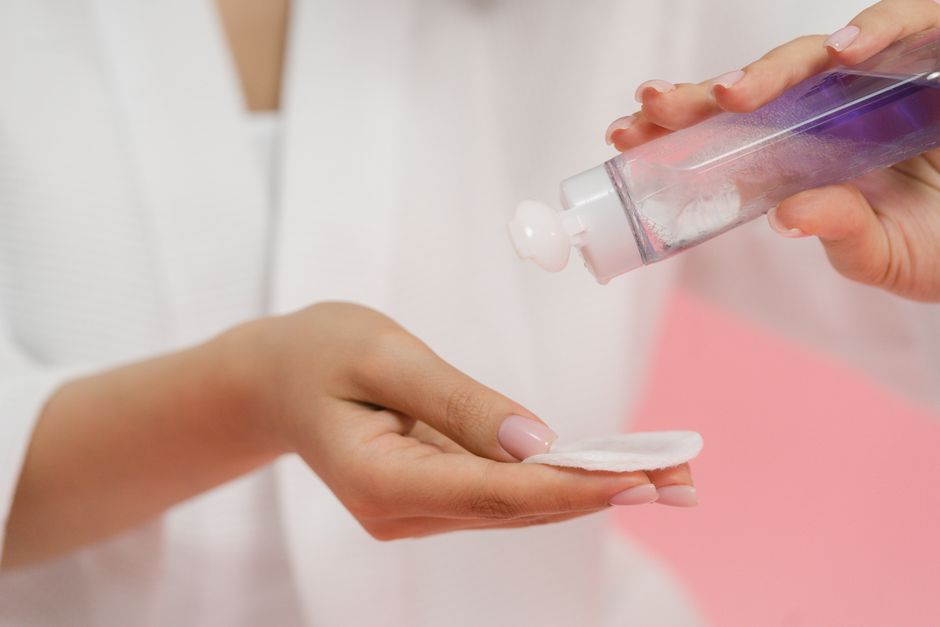
Removing makeup properly means breaking down and lifting away oils, waxes, silicones, and pigments without stripping the skin barrier that protects you. The reliable method is a two-step routine: an oil-based cleanser or micellar water first to dissolve makeup, then a gentle water-based cleanser to clear what is left. How you remove makeup matters more than most people realize, because sleeping in it, scrubbing at it, or leaving residue behind all have real effects on skin health.
Why Does Removing Makeup Actually Matter?
Sleeping in makeup is not just a cosmetic annoyance. It leaves a film of product that can trap oil, sweat, and dead skin cells against the surface of your skin.
That film can clog pores, and clogged pores are the starting point for acne and for a type of bumpy irritation some people call cosmetic acne. Makeup residue also sits in the same space as your skin’s natural oils and the bacteria that live there normally. Leaving it on overnight gives those conditions time to build up.
There is a second, less obvious issue. The skin barrier — the outer layer that holds in moisture and keeps irritants out — works best when it is clean but not stripped. Harsh rubbing or strong soaps can damage that barrier. So the goal is thorough removal, not aggressive removal. Those are different things.
One clarification worth making: skipping removal once in a while is unlikely to cause lasting harm. The problems build up with repeated habits, not single slip-ups.
What Is the Best Way to Remove Makeup?
The most reliable approach is a two-step cleanse, and it works because of basic chemistry. Many makeup products — especially foundations, waterproof mascara, and long-wear lipstick — are built on oils, waxes, and silicones. Water alone cannot dissolve them. Oil dissolves oil.
So the first step uses an oil-based product to break the makeup down. The second step uses a gentle water-based cleanser to remove the oil and whatever makeup it lifted, along with sweat and surface grime.
Here is how to do it:
- Step one: Apply a cleansing oil, cleansing balm, or micellar water to dry skin. Massage gently for about 30 seconds, focusing on the eyes and any areas with heavy coverage.
- Step two: Rinse, then wash with a mild water-based cleanser. Use lukewarm water, not hot.
- Pat dry with a clean towel. Do not rub.
Not everyone needs both steps every night. If you wear light makeup or none at all, a single gentle cleanser may be enough. If you wear sunscreen daily — and most dermatologists recommend you do — a single cleanse is often sufficient to remove it. The two-step method matters most for heavy or long-wear makeup.
How Do I Remove Eye Makeup Without Damaging My Eyes?
The skin around your eyes is the thinnest on your body, and the eyes themselves are delicate. This is where most removal mistakes happen.
Waterproof mascara is designed to resist water, so it will not come off with a splash of water and a rub. Use an oil-based eye makeup remover or a micellar water formulated for eyes. Soak a cotton pad, press it gently against your closed eyelid for several seconds to let the product dissolve the mascara, then wipe downward and outward. Never scrub back and forth.
For eyeliner along the lash line, a cotton swab dipped in remover works well. Be careful not to drag the swab across the eye itself.
A few safety points that matter:
- Do not pull at your lashes. Repeated tugging can damage lash follicles over time.
- Keep remover out of the eye. If it gets in, rinse with clean water.
- If you wear contact lenses, remove them before cleaning your eye area, or use a product labeled safe for contact lens wearers.
- Replace eye makeup and remover applicators regularly, and never share eye products — this is a common route for eye infections.
If your eyes sting, water, or feel irritated after removal, stop using that product. Persistent redness or pain after makeup removal is worth a doctor’s visit rather than a guess.


Does Micellar Water Really Remove Makeup?
Yes, micellar water removes makeup — but its reputation is sometimes oversold. Micellar water contains tiny clusters of mild surfactant molecules called micelles suspended in water. These micelles surround oils and pigments and lift them off the skin.
For light makeup, sunscreen, and everyday grime, micellar water works well on its own. For waterproof mascara and heavy foundation, it usually needs more effort and may leave residue if you only swipe once. Some people find it slightly drying with frequent use, depending on the formulation.
One practical note: micellar water is often marketed as a “no-rinse” cleanser. That is generally acceptable for a quick refresh, but if you are using it to remove a full face of makeup, following with a water rinse or a gentle cleanser is the more thorough choice.
What About Cleansing Balms, Oils, and Wipes?
Each removal method has trade-offs. Here is an honest comparison.
| Method | Best for | Limitations |
|---|---|---|
| Cleansing oil or balm | Heavy and long-wear makeup; dry skin | Needs a second cleanse; some formulas can irritate acne-prone skin |
| Micellar water | Light makeup, quick refresh, sensitive skin | Less effective on waterproof products; may leave residue |
| Makeup wipes | Travel and occasional convenience | Often leave residue; friction from rubbing can irritate skin; not ideal as a daily habit |
| Gentle foaming or gel cleanser | Light makeup, oily skin, daily use | May not fully break down waterproof or oil-based products |
Makeup wipes deserve a specific word. They are convenient, but they tend to smear product around rather than fully lift it, and the physical rubbing can irritate skin over time. They are fine in a pinch. They are not the best daily method for most people.
If you have acne-prone skin, oil cleansers are not automatically off-limits — many are formulated to rinse clean — but some people find them comedogenic. If you notice new breakouts after switching, that is worth paying attention to.
How Do I Remove Makeup Without Irritating Sensitive Skin?
Sensitive skin responds to friction, heat, and harsh ingredients. The fix is mostly about technique.
Use lukewarm water. Hot water strips oils from the skin and can leave it tight and reactive. Apply products with fingertips or a soft cloth, not rough pads or scrubbing tools. Skip physical exfoliants on the same night you remove heavy makeup — doubling up on manipulation irritates skin.
Choose fragrance-free cleansers if your skin reacts easily. Fragrance is one of the more common causes of contact irritation in skincare products. And patch-test any new remover on a small area before using it on your whole face, especially if you have a history of reactions.
If your skin feels tight, stings, or looks red after cleansing, the product or the technique is likely too harsh. That is a signal to simplify, not to scrub harder.
What Happens If I Do Not Remove Makeup Every Night?
Occasional lapses are not a crisis. The concern is the pattern.
Repeatedly sleeping in makeup is associated with clogged pores, irritation, and a duller appearance over time. It can also make it harder for skincare products to do their job, since they are being applied over a layer of old makeup. Eye makeup left on overnight can irritate the eyes and, in some cases, contribute to styes or irritation around the lash line.
The honest position: there is no precise number of missed nights that causes a specific problem. The evidence links the habit to irritation and breakouts in general terms, not to a guaranteed outcome for any one person. The practical takeaway is to make removal a routine, not a perfection test.
Frequently Asked Questions
Can I remove makeup with just water?
Plain water does not dissolve oil-based makeup, so it will not fully remove foundation, waterproof mascara, or long-wear products. It can rinse away light, water-based makeup, but an oil-based remover or micellar water is more reliable.
Is it bad to sleep in makeup once?
One night is unlikely to cause lasting harm, but it can leave skin feeling congested or irritated the next day. The real concern is the repeated habit rather than a single lapse.
Do I need a special makeup remover if I use a cleanser?
Not always. A gentle cleanser handles light makeup and sunscreen for many people, but heavy or waterproof makeup usually needs an oil-based remover or micellar water first.
How often should I replace my makeup remover or wipes?
Follow the product’s expiration date and discard anything that smells off or has changed texture. Avoid sharing eye products or applicators, since that is a common way eye infections spread.
