
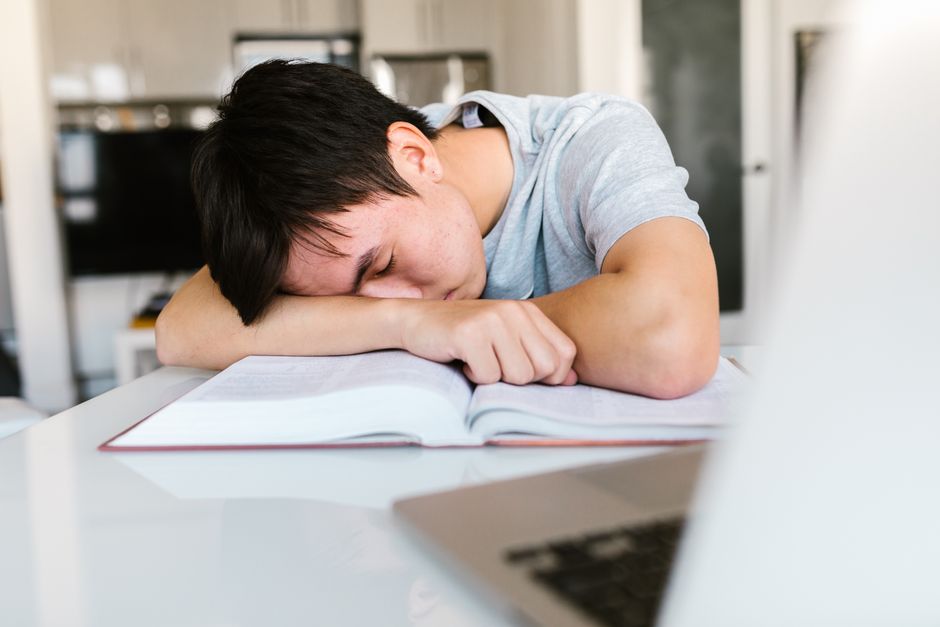
Homework is one of the most reliable stressors in a student’s week, and its effects show up in three places at once: mood, sleep, and school performance. The research picture is consistent on the broad strokes. Moderate homework is linked to better grades, while very heavy homework is linked to more stress, shorter sleep, and diminishing academic returns. The amount that counts as “moderate” changes with age, and the timing of homework matters as much as the total.
How Homework Affects Students Stress Sleep And Grades?
The three effects are connected, and the connection runs mostly through sleep. Homework that pushes bedtime later shortens sleep. Short sleep makes it harder to concentrate, remember, and regulate emotion the next day. That combination raises stress and can lower the quality of the work a student produces, which often leads to more homework time. The loop can tighten over a school year.
Grades respond differently depending on how much homework is assigned. A well-known review of homework research by Harris Cooper and colleagues at Duke University found a positive link between homework and achievement that grows stronger in higher grades. In elementary school, the relationship was close to zero. The same review found that too much homework is associated with fatigue and loss of interest in learning, especially at younger ages.
That pattern — benefit up to a point, then diminishing or negative returns — is the most useful thing to understand about homework. More is not automatically better.
How Much Homework Is Too Much?
There is no single number that fits every student, and no large trial has established a firm cutoff. The most widely cited guide is the “10-minute rule,” which suggests about 10 minutes of homework per grade level per night — roughly 10 minutes in first grade, 50 minutes in fifth, and 90 minutes in ninth. The rule is a practical heuristic, not a finding from controlled trials. Cooper has described it as a reasonable guide rather than a proven standard.
What research does support is that the burden rises sharply in middle and high school, and that a meaningful share of students report spending more time than the rule suggests. A widely reported survey of US high school students found many reporting several hours of homework on a typical night. Self-reported homework time is not perfectly reliable, but the pattern has been consistent across surveys.
For younger children, the evidence is clearest: homework loads beyond a modest amount show little academic benefit and a real cost in stress and family conflict. For older students, the picture is more nuanced. Some homework is genuinely useful for practice, consolidation, and building independent work habits. The problem is volume that crowds out sleep, physical activity, and recovery.
How Does Homework Affect Sleep?
Homework is one of the most commonly reported reasons adolescents go to bed later than they should. The effect is partly about total time and partly about timing. A student who starts homework at 9 p.m. after sports, dinner, and chores is working against their own biology.
This matters more in adolescence than many parents realize. At puberty, the body’s internal clock shifts later — a well-documented biological change, not laziness. Teens naturally feel sleepy later and need to wake earlier for school. The result is a chronic sleep debt that most US high school students carry. The American Academy of Sleep Medicine recommends that teenagers aged 13 to 18 get 8 to 10 hours of sleep per night. National survey data consistently show most do not.
Homework that runs late compounds this. Screens used for homework add another layer: light exposure and mental engagement close to bedtime can delay sleep onset, though the size of the effect varies by person and device use.
The consequences of short sleep are well established. It impairs attention, working memory, and emotional regulation. It raises irritability and anxiety. Over time, it is associated with worse academic performance, not better. A student who trades an hour of sleep for an hour of homework is often trading a clear-headed school day for a marginally more complete assignment.
Does Homework Actually Improve Grades?
Yes, for older students, within limits. The evidence is strongest for middle and high school, where homework is linked to higher test scores and grades. The effect is modest and depends heavily on the type of homework and whether it is reviewed.
Homework that gets feedback tends to be more useful than homework that is collected and never discussed. Practice that reinforces what was taught in class supports retention. Busywork does not, and students tend to recognize the difference.
In elementary school, the academic case for homework is weak. Research has generally found little to no relationship between homework and achievement at that age. What homework can build in young children is routine and responsibility — real but limited benefits that do not require long assignments.
One clarification worth making: homework is often defended as teaching time management and self-discipline. Those are plausible benefits, but they are difficult to measure and the evidence for them is thinner than the evidence for academic effects. It is fair to say some students build these skills through homework; it is not established that homework is the best or only way to build them.
Why Does Homework Cause Stress?
Homework stress comes from several sources at once. Volume is one. Uncertainty is another — not understanding an assignment and having no one available to help. Time pressure is a third, especially for students with jobs, caregiving duties, or long commutes.
Competition adds a layer in high school. Students aiming for selective colleges often take demanding course loads, and the homework from several advanced classes can stack into a nightly load that leaves little room for anything else. The stress is real even when the work itself is valuable.
For some students, homework stress is a symptom of something else: an underlying anxiety disorder, a learning difference, or attention difficulties that make tasks take far longer than they should. Persistent, intense homework distress is worth discussing with a pediatrician or school counselor rather than treating as a discipline problem.
What Helps When Homework Feels Overwhelming?
The most effective changes are usually structural, not motivational. Families and schools have more room to adjust the load than students often realize.
- Protect a sleep window. Set a consistent bedtime and treat it as a hard stop. If work is unfinished, that is information for the teacher, not a reason to stay up.
- Start earlier when possible. Moving homework before dinner, or using a study period at school, reduces late-night work.
- Talk to the teacher. Teachers often do not know how long assignments actually take. Specific feedback about time spent is more useful than a general complaint.
- Break work into short blocks. Short sessions with brief breaks are easier to start and sustain than one long block.
- Reduce distractions during homework. Phone notifications during study time lengthen the work and raise frustration.
- Ask about accommodations. If homework consistently takes far longer than expected, an evaluation for a learning or attention issue may be appropriate.
Some schools have experimented with homework limits, homework-free evenings, and redesigned assignments that focus on quality over quantity. These approaches are reasonable on their face, but large controlled studies of their effects on stress and grades are limited. The general direction — less busywork, more feedback, protected sleep — aligns with what the research supports.
What Parents and Students Should Take Away
Homework is not the enemy, and it is not a measure of dedication. It is a tool that works best in moderation and with feedback. The evidence supports a moderate load that grows with age, protects sleep, and leaves room for recovery.
The clearest warning sign is a student who is consistently tired, irritable, and working late. That pattern predicts worse outcomes than an unfinished worksheet. Sleep is not a luxury that competes with schoolwork. It is part of what makes schoolwork possible.
Frequently Asked Questions
How many hours of homework is too much?
There is no proven cutoff, but the widely used 10-minute rule suggests about 10 minutes per grade level per night. Loads well beyond that are linked to more stress and shorter sleep with little added academic benefit, especially in elementary school.
Does homework cause sleep deprivation in students?
It can contribute, particularly in high school, where late-night homework stacks on top of a natural shift toward later sleep times. The American Academy of Sleep Medicine recommends 8 to 10 hours for teens, and most US high schoolers fall short.
Does homework improve grades in elementary school?
Research has generally found little to no link between homework and achievement in elementary school. Modest assignments may help build routine, but long assignments show no clear academic payoff at that age.
Should a student stay up late to finish homework?
Usually not. Trading sleep for completed work tends to hurt attention and performance the next day. If late nights are routine, the assignment load or the student’s study routine is worth discussing with the teacher.
