
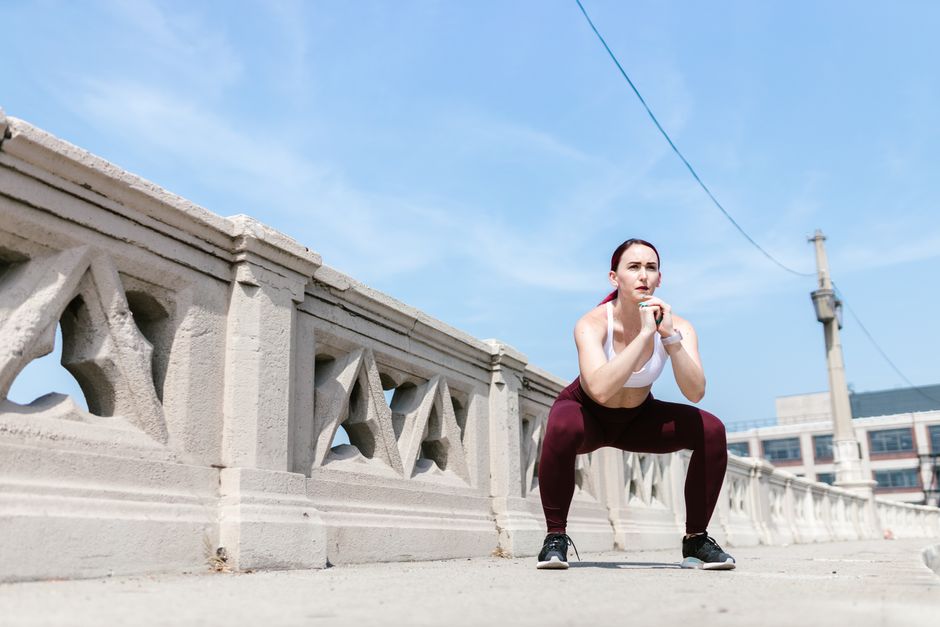
Squatting twice your bodyweight is a strong, advanced strength standard. It puts you well above the average gym-goer and into a range most lifters never reach. For a healthy adult, it signals serious lower-body strength and years of consistent training, not a beginner milestone.
To be clear about what “twice your bodyweight” means: if you weigh 180 pounds, that is a 360-pound squat. This is measured as a one-rep max, the most weight you can lift once with good form. That number separates recreational lifters from committed ones.
What Does a Two-Times Bodyweight Squat Actually Put You In?
It places you in an advanced category for most adult lifters. Strength standards used in coaching and sport generally describe a double-bodyweight back squat as advanced for men and exceptional for women, though any single standard is a rough guide, not a verdict on you.
Context matters here. In raw powerlifting, a two-times bodyweight squat is a solid qualifying-level number for many weight classes but is not elite. Elite raw squatters often exceed two and a half times bodyweight. So the honest framing is this: double bodyweight is excellent for a general lifter and respectable but not remarkable in competitive powerlifting.
Most people who train consistently for years still do not reach it. That is not a knock on them. It reflects how much time, body proportions, and training focus shape the outcome.
How Does Body Weight Change What “Twice” Means?
Body weight is the denominator, so the same ratio means different absolute loads for different people. A lighter lifter squatting double bodyweight is moving less total weight than a heavier lifter at the same ratio. This is why strength standards are usually split by body weight and sex.
Heavier lifters often find high ratios harder to reach. As body weight climbs, the load needed to hit a fixed multiple climbs with it. A 250-pound lifter needs a 500-pound squat for double bodyweight. A 130-pound lifter needs 260 pounds. The second is a demanding but more attainable target for many trained people.
Body proportions also play a role that gets less attention than it deserves. Lifters with shorter legs and a longer torso tend to squat more weight at the same training age, because the movement geometry favors them. Someone with long femurs may train just as hard and squat less. The ratio is a useful benchmark, not a fair fight.
Is a Two-Times Bodyweight Squat Hard to Reach?
Yes. For most people it takes years of structured training, not months. Reaching it usually requires consistent progressive overload, attention to technique, and enough recovery to keep adding weight over time.
Some lifters get there faster. People with favorable proportions, a strength-sport background, or a focused powerlifting program may reach it in a shorter window. Others train for many years and plateau below it. Both outcomes are normal.
A few things reliably separate people who reach it from those who stall:
- Consistency over intensity. Showing up and adding small amounts of weight over many months beats occasional max-out sessions.
- Technique that holds under load. A squat that breaks down at heavy weight cannot be loaded further safely.
- Enough recovery. Strength is built between sessions, and chronic under-recovery caps progress.
- Patience with plateaus. Progress is rarely linear. Stalls are part of the process, not a sign of failure.
There is no reliable formula that predicts how long it will take a given person. Anyone who gives you a fixed timeline is guessing.
What Does It Say About Your Strength and Health?
It says your lower body is genuinely strong and that you have trained consistently. It does not, by itself, tell you much about your cardiovascular fitness, mobility, or overall health.
Strength is one piece of physical fitness, not the whole picture. A person can squat double bodyweight and still have poor aerobic capacity, or the reverse. Resistance training is widely recommended for adults because it supports muscle and bone health, but a single strength ratio is not a health score.
Be cautious about claims that a specific squat number predicts longevity or disease risk. Some research links muscular strength to better health outcomes, but no study establishes a double-bodyweight squat as a health threshold. The number is a training benchmark, not a medical marker.
What Are the Risks of Chasing This Number?
The main risks come from how you pursue it, not from the number itself. Loading a barbell heavier than your technique can handle is the most common way lifters get hurt.
Common problems include lower-back strain from losing a neutral spine under load, knee and hip irritation from rapid load increases, and shoulder or wrist discomfort from bar placement. Most of these trace back to form breaking down or to adding weight faster than the body adapts.
A few sensible guardrails:
- Build load gradually rather than jumping to a new max.
- Keep technique consistent at every weight, and back off when it breaks down.
- Use a spotter or safety bars when squatting heavy.
- Treat pain that persists as a signal to get it checked, not to push through.
If you have an existing back, hip, or knee condition, or you are returning from injury, talk to a clinician or a qualified coach before loading heavy. This is general guidance, not personalized medical advice.
How Should You Train Toward a Double-Bodyweight Squat?
Train the squat regularly with a plan that adds weight or reps over time. Most effective approaches combine heavier work at lower reps with moderate work at higher reps, plus accessory exercises for the muscles that support the squat.
Progressive overload is the core principle. You give the body a bit more than it handled before, then recover, then repeat. The squat itself should be the main lift, trained with enough frequency to build skill and strength without burying your recovery.
Accessory work helps address weak points. Depending on where you stall, that might mean targeting the quads, glutes, hamstrings, or core. A coach can spot the specific weakness faster than you can alone.
How Good Is Squatting Twice Your Bodyweight Compared With Other Standards?
It is a high standard for a general lifter and a mid-to-upper standard in competitive strength sport. The table below frames it against common reference points. These are broad descriptions, not precise cutoffs, and individual standards vary by sex, body weight, and federation.
| Reference Point | General Description |
|---|---|
| Beginner | Learning technique, well below bodyweight |
| Intermediate | Around bodyweight to somewhat above |
| Advanced (general lifter) | Roughly double bodyweight |
| Competitive powerlifting | Double bodyweight is solid; elite exceeds it |
The takeaway is that double bodyweight is a meaningful achievement for almost anyone who lifts for health and fitness. It is not the ceiling, and it is not the entry point. It sits in the advanced range where consistent, dedicated training shows.
Frequently Asked Questions
Is squatting twice your bodyweight good?
Yes, it is an advanced strength standard for a general lifter. Most people who train consistently still do not reach it.
How long does it take to squat double your bodyweight?
For most people it takes years of consistent training, not months. There is no reliable formula for a specific timeline, and it varies widely by person.
Is a two-times bodyweight squat elite?
Not in competitive powerlifting, where elite raw lifters often exceed it. It is excellent for a general lifter and solid at the qualifying level in many weight classes.
Is squatting double bodyweight safe?
It can be safe when built gradually with good technique and proper safety equipment. Loading faster than your form can handle is the main source of injury risk.
