
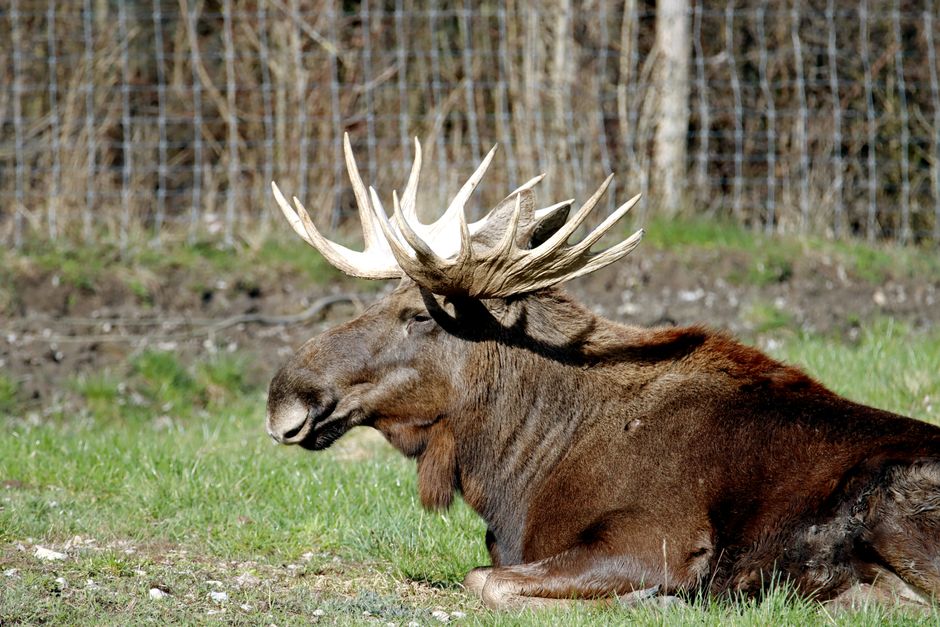
A moose can run up to 35 miles per hour (56 kilometers per hour). They can also trot for hours at about 20 miles per hour and are strong swimmers. Despite their large size, these animals are surprisingly fast and agile when they need to be.
How Fast Can A Moose Run Compared To Other Animals?
Moose are among the fastest large land animals in North America. Their top speed of 35 mph puts them in a range that can surprise people who see them as slow, lumbering creatures.
For context, a healthy human sprinter reaches about 15 to 20 mph. A moose can easily outrun any person. Even a trained athlete has no chance of escaping a moose on foot. This is why wildlife experts stress that you cannot run away from an aggressive moose.
Horses can run about 40 to 45 mph. Bears can reach 30 to 35 mph. Moose are comparable to bears in raw sprinting speed. They are not the fastest animal in the forest, but they are fast enough to pose a serious danger if they charge.
Why Can A Moose Run So Fast Despite Its Size?
A full-grown moose can weigh between 800 and 1,200 pounds. Some large bulls weigh even more. Carrying that much weight at high speed requires a specific body design.
Moose have long legs that act like powerful levers. Each stride covers a great deal of ground. Their legs are also built for endurance, not just short bursts. This allows them to maintain a fast trot for long distances without tiring quickly.
Their hooves are split, which gives them better traction on soft ground, mud, and snow. This is a major advantage in their natural habitat. A moose can run through terrain that would slow down a horse or a person significantly.
Despite their bulk, moose are also surprisingly agile. They can turn quickly and jump over obstacles while running at speed. Their shoulder hump is made of muscle, which powers their front legs and helps them push through deep snow or dense brush.
How Fast Can A Moose Run In Different Conditions?
Terrain matters a great deal for moose speed. On hard, flat ground, a moose can reach its top sprinting speed of about 35 mph. In deep snow, mud, or thick forest, their speed drops considerably.
Moose are well adapted to snow. Their long legs allow them to walk through snow that would stop other animals. However, even a moose cannot sprint at full speed in deep powder. In heavy snow, they slow to a walk or a slow trot.
In water, moose are also strong swimmers. They can swim at about 6 mph and can cover several miles in open water. They have been observed swimming across large lakes and rivers. This swimming ability is another way they escape predators or reach feeding areas.
During winter, moose often conserve energy. They may not run at all unless threatened. In summer, when they are healthier and have more body fat, they are more capable of short, explosive sprints.





How Far Can A Moose Run Without Stopping?
Moose are built for endurance as well as speed. A moose can trot at 20 mph for hours without stopping. This is not a sprint but a steady, ground-covering gait that allows them to travel many miles in a single day.
This endurance is partly why moose are so difficult to manage when they wander into populated areas. They do not tire quickly. Wildlife officials who try to herd a moose away from a road or neighborhood often find that the animal can simply keep going longer than the people pursuing it.
The difference between sprinting and trotting matters for anyone who encounters a moose. A moose that is charging can close a distance of 100 yards in about six seconds. That gives a person very little time to react or find cover.
When Do Moose Run At Full Speed?
Moose do not sprint often. Running at full speed consumes a lot of energy, and a moose that size needs to conserve calories. They usually run only in specific situations.
The most common reason for a full-speed run is a perceived threat. Moose are not typically aggressive animals, but they will defend themselves if they feel cornered. This is especially true during certain times of the year.
In late spring and early summer, female moose with newborn calves are highly protective. They will charge at anything that comes too close to their calf. A cow moose protecting her young is one of the most dangerous situations a hiker can encounter.
During the fall mating season, called the rut, bull moose can become aggressive. They may charge at people, cars, or even trains. Their focus during this time is on competing with other bulls, and their tolerance for disturbance is very low.
Moose also run when they are startled. Like many wild animals, their first response to sudden noise or movement is to flee. If a moose is surprised at close range, it may bolt in any direction, including toward the person who startled it.
Why Do People Underestimate Moose Speed?
Moose look slow. Their large bodies, long faces, and seemingly relaxed walking style give an impression of sluggishness. This visual impression is dangerously misleading.
People often compare moose to domestic cattle, which are genuinely slow and docile. A moose is not a cow. It is a wild animal with the speed and agility of a large predator, even though it eats plants.
Another reason people underestimate moose is that they rarely see one run. A moose standing still in a meadow or walking along a road does not look threatening. But a moose that decides to charge covers ground faster than most people can process.
This misunderstanding contributes to moose-related injuries. Every year, people are injured because they got too close to a moose for a photo or tried to walk past one on a trail. The moose did not chase them from far away. The moose charged when the person crossed an invisible boundary.
What Should You Do If A Moose Charges?
If a moose charges, running in a straight line is the worst thing you can do. You cannot outrun it. Instead, try to put a large object between you and the moose. A tree, a boulder, a car, or a building can block the charge.
Moose charges are often warning bluffs. The moose may run at you and stop short. It may turn sideways and lay its ears back before charging. These are signals that you are too close and need to back away slowly.
If the moose makes contact, it will likely use its front hooves to strike down. Moose kick forward with their front legs, unlike horses which kick backward with their hind legs. A moose can deliver powerful blows that can break bones and cause severe injuries.
If you are knocked down, curl into a ball and protect your head and neck with your arms. Do not get up and run. Wait until the moose moves away before you try to leave.
How Fast Can A Moose Run Compared To A Car?
A moose running at 35 mph is slower than most vehicles on a highway. However, moose-vehicle collisions are a serious problem in areas with large moose populations. This is because moose are most active at dawn and dusk, when visibility is poor.
Moose are also hard to see at night. Their dark brown coats blend into the darkness. Their eyes do not reflect light the way deer eyes do, so headlights may not reveal them until it is too late.
Another factor is that moose do not always move out of the way of oncoming vehicles. A moose standing in the road may freeze or even walk toward the car. Drivers who slow down and wait often find the moose simply will not move.
Because moose are so tall, a collision with one is especially dangerous. The animal’s body often comes over the hood and strikes the windshield. This is why moose collisions cause more severe injuries than deer collisions.
Frequently Asked Questions
Can a human outrun a moose?
No. A moose can run 35 mph, while even elite human sprinters reach only about 20 mph. You cannot escape a moose on foot.
Are moose faster than horses?
No. Horses can sprint at about 40 to 45 mph, which is faster than a moose. However, a moose can navigate rough terrain that would slow a horse down.
How fast can a moose run in the snow?
Moose slow down significantly in deep snow, but their long legs let them move through snow that stops other animals. In shallow snow, they can still trot at a good pace.
Why do moose attack people?
Moose usually attack only when they feel threatened, especially cows protecting calves or bulls during mating season. Dogs can also trigger attacks because moose see them as predators.
