
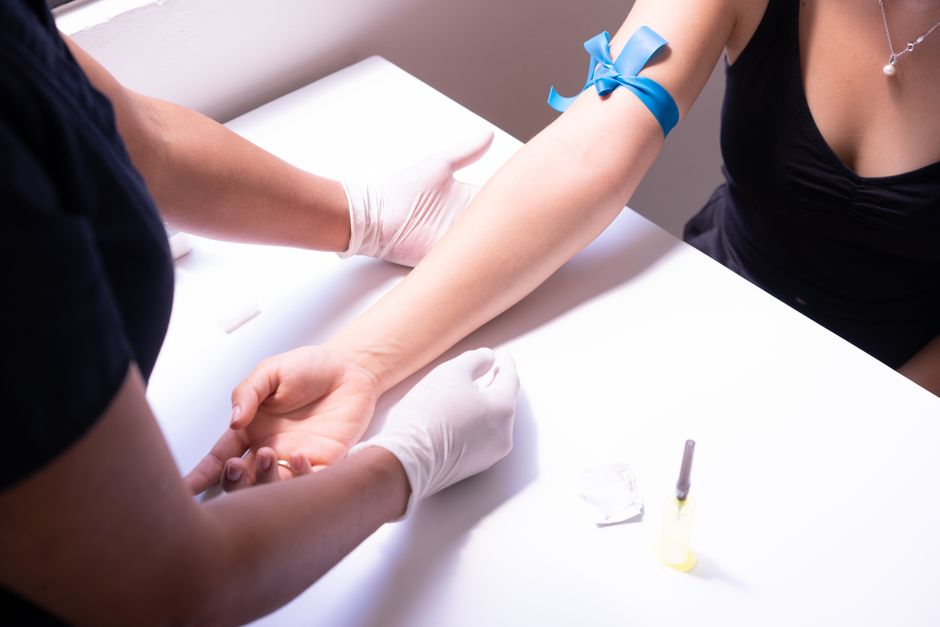
You can get a blood test for fetal gender starting at 10 weeks of pregnancy. These tests work by finding small pieces of the baby’s DNA floating in the mother’s blood. Before 10 weeks, there is usually not enough of that DNA to get a clear result.
The test is called cell-free DNA screening, or cfDNA. It is also known as noninvasive prenatal testing, or NIPT. It looks at the baby’s sex chromosomes. It can also check for certain chromosome conditions like Down syndrome.
This test is not the same as the old blood tests that looked for hormones. Those older tests could not tell you the baby’s sex at all. The DNA test is different because it reads actual genetic material from the pregnancy.
What Is a Blood Test for Gender and How Does It Work?
A blood test for gender is a DNA test. It does not test the mother’s DNA. It tests DNA from the placenta that has entered the mother’s bloodstream.
During pregnancy, cells from the placenta break down and release small DNA pieces into the mother’s blood. This is called cell-free DNA. By 10 weeks, there is enough of it to measure.
The lab looks for the Y chromosome. If the Y chromosome is found, the baby is male. If no Y chromosome is found, the baby is female. That is the basic logic.
This method is simple in theory. In practice, several things can affect the result. The amount of fetal DNA in the mother’s blood matters. If that amount is too low, the test may not give a clear answer. This is called a “no result” or “low fetal fraction.”
Low fetal fraction is more common in early pregnancy. It is also more common in women with a higher body mass index. When this happens, the lab may ask for a new blood draw. Waiting a week or two often fixes the problem.
How Early Can You Get a Blood Test for Gender?
The earliest you can get a reliable blood test for gender is 10 weeks. Most labs set this as their minimum. Some labs accept samples at 9 weeks, but the chance of a failed result is higher.
Before 10 weeks, the test is not considered reliable. There is simply not enough fetal DNA in the mother’s blood to detect the Y chromosome with confidence. Testing too early often leads to a “no result” rather than a wrong answer.
There is one important exception. A different procedure called chorionic villus sampling, or CVS, can test the baby’s chromosomes earlier. CVS is usually done between 10 and 13 weeks. It takes a small sample of placental tissue. It is invasive and carries a small risk of miscarriage. It is not offered for gender alone. It is used when there is a medical reason to check the baby’s chromosomes.
Amniocentesis is another invasive test. It is typically done between 15 and 20 weeks. Like CVS, it is used for medical reasons, not just to learn the sex.
For most people who want to know the baby’s sex early, the cfDNA blood test is the standard option. It is safe for the mother and the baby because it only requires a blood draw from the mother’s arm.
How Accurate Is the Test at 10 Weeks?
The cfDNA test is very accurate when it works. For detecting the Y chromosome, studies have found accuracy above 99 percent when there is enough fetal DNA to read. That means the result is correct almost every time a result is produced.
The key phrase is “when a result is produced.” The test can fail to give an answer. A failed result is not the same as a wrong result. When the lab cannot find enough fetal DNA, it reports that no result was possible.
Several factors can cause a failed or unclear result:
- Testing before 10 weeks
- Low amount of fetal DNA in the mother’s blood
- Higher maternal body mass index
- Certain medications, such as blood thinners
- Vanishing twin pregnancy, where one twin was lost early
A vanishing twin is a rare but real source of error. If a twin was lost early in pregnancy, its DNA may still be in the mother’s blood. That DNA could come from a male twin, even if the surviving baby is female. This can lead to a wrong result. This is why it is important to tell your doctor about any early pregnancy losses or fertility treatments.
Some research suggests that the accuracy of the test depends heavily on how much fetal DNA is present. When the fetal fraction is low, the test is less reliable. Labs have different cutoffs for what counts as “enough.” This is one reason results can vary between labs.




What Is the Difference Between Screening and Diagnostic Testing?
The cfDNA blood test is a screening test, not a diagnostic test. This distinction matters.
A screening test tells you the chance that something is present. It does not confirm it. A diagnostic test gives a definite answer. CVS and amniocentesis are diagnostic tests. They analyze cells directly and can confirm a chromosome condition with near certainty.
For gender, the cfDNA test is accurate enough that many people treat it as final. But strictly speaking, it is still a screening test. If the result matters for a medical decision, a doctor may recommend a diagnostic test to confirm.
Some companies sell “early gender tests” directly to consumers. These are usually the same cfDNA technology. The difference is that they are not ordered by a doctor and may not be reviewed by a clinician. The quality and accuracy of these direct-to-consumer tests can vary. Some have been found to give wrong results, especially when used too early.
If you want a reliable result, a test ordered through your doctor and processed by a certified lab is the safer choice. The American College of Obstetricians and Gynecologists has stated that cfDNA screening should be offered to all pregnant women, regardless of age or risk level. It is not a replacement for diagnostic testing when a diagnosis is needed.
What Can Affect the Accuracy of the Result?
Several things can affect whether the test gives a clear and correct answer. Knowing these helps you understand your result.
Timing is the biggest factor. Testing before 10 weeks raises the chance of a failed result. Waiting until at least 10 weeks improves the odds of getting a clear answer.
Maternal weight plays a role. Women with a higher body mass index tend to have more of their own DNA in their blood. This dilutes the fetal DNA. The result is a lower fetal fraction and a higher chance of a failed test.
Medications can matter too. Blood thinners and some other drugs may affect the test. Always tell your doctor about any medications you take.
Multiple pregnancies add complexity. In a twin pregnancy, the test may detect DNA from both babies. If one is male and one is female, the test will likely report a male result because the Y chromosome is present. It cannot tell you the sex of each twin separately.
Recent blood transfusions or organ transplants can also interfere. In rare cases, these can introduce DNA from a donor that confuses the result.
If your result seems wrong or unclear, talk to your doctor. A repeat test or a diagnostic test may be needed.
What Are the Alternatives to a Blood Test?
Blood testing is not the only way to learn the baby’s sex. Ultrasound is the most common alternative.
An ultrasound can sometimes show the baby’s sex, but not as early as a blood test. It usually works best between 18 and 22 weeks. Before that, it is less reliable. The accuracy depends on the skill of the technician, the position of the baby, and the quality of the equipment.
Some people try old methods like the baking soda test or the ring test. These have no scientific basis. No study has confirmed that they can predict a baby’s sex. They are folk beliefs, not medical tests.
Here is a simple comparison:
| Method | Earliest Time | How It Works | Accuracy |
|---|---|---|---|
| cfDNA blood test | 10 weeks | Detects Y chromosome in mother’s blood | Above 99% when a result is produced |
| Ultrasound | About 18-22 weeks for best results | Visualizes the baby’s anatomy | Varies by technician and position |
| CVS | 10-13 weeks | Samples placental tissue | Diagnostic, near certain |
| Amniocentesis | 15-20 weeks | Samples amniotic fluid | Diagnostic, near certain |
CVS and amniocentesis are invasive. They carry a small risk of miscarriage. They are not done just to learn the sex. They are done when there is a medical reason to check the baby’s chromosomes.
What Should You Do If You Want to Know Early?
If you want to know the baby’s sex as early as possible, talk to your doctor about cfDNA screening at 10 weeks. This is the earliest reliable option.
Do not rely on direct-to-consumer tests used before 10 weeks. They are more likely to fail or give a wrong result. A test ordered by your doctor and run by a certified lab is the better path.
Remember that the test is a screening test. It is highly accurate, but it is not a diagnosis. If the result matters for a medical decision, ask about confirmatory testing.
Also keep in mind that the test is about more than gender. It can screen for chromosome conditions like Down syndrome, trisomy 18, and trisomy 13. Many doctors offer it for that reason. The gender information is a secondary finding.
Insurance coverage varies. Some plans cover cfDNA screening for all pregnancies. Others cover it only for higher-risk pregnancies. Check with your insurance before testing.
Frequently Asked Questions
How early can you get a blood test for gender?
The earliest reliable time is 10 weeks of pregnancy. Testing before 10 weeks often leads to a failed result because there is not enough fetal DNA.
Can you find out the baby’s gender at 8 weeks with a blood test?
No, 8 weeks is generally too early for a reliable result. Most labs set 10 weeks as the minimum because fetal DNA levels are too low before that.
How accurate is the blood test for gender at 10 weeks?
When the test produces a result, accuracy is above 99 percent. The main issue is that the test can fail to give a result if fetal DNA is too low.
Can the blood test for gender be wrong?
Yes, though it is rare when the test produces a result. A vanishing twin, a recent transplant, or a very low fetal fraction can cause a wrong or unclear result.
