
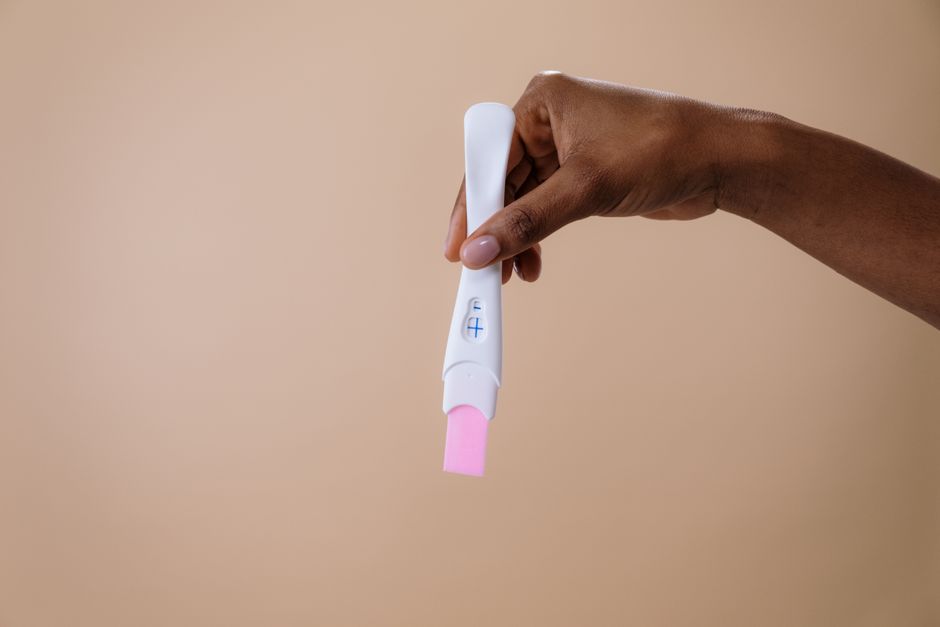
You can take a home pregnancy test as early as the first day of a missed period. For most people, that is about two weeks after ovulation. Some tests are marketed for use a few days before a missed period, but the earlier you test, the higher the chance of a false negative.
That short answer hides a lot of biology. Timing, test sensitivity, and the hormone hCG all matter. Understanding how they fit together will help you test at the right moment and read the result correctly.
How Early Can I Take a Pregnancy Test at Home?
The standard answer is the first day of a missed period. That timing is not arbitrary. It reflects when the hormone tests detect is reliably high enough to measure in most pregnancies.
Home tests look for human chorionic gonadotropin, or hCG. This hormone is made by the cells that form the placenta after an embryo implants in the uterine lining. Implantation usually happens about 6 to 12 days after ovulation, though the range varies. Once implantation occurs, hCG starts entering the bloodstream and then the urine.
hCG rises quickly in early pregnancy, roughly doubling every two to three days at first. But it starts from a very low level. A test taken too soon may simply miss it. That is why testing early raises the odds of a false negative, not a false positive.
Some tests are labeled for use several days before a missed period. Those products are designed to detect lower levels of hCG. They can work early, but the manufacturer’s own instructions usually note that testing before a missed period lowers accuracy. The further ahead of your period you test, the less reliable the result.
Why Does Timing Matter So Much?
Timing matters because pregnancy is not a single moment. It is a sequence, and hCG only appears partway through it.
Consider the timeline. Ovulation releases an egg. If it is fertilized, the resulting embryo travels down the fallopian tube and implants in the uterus days later. Only after implantation does the body begin producing hCG in measurable amounts. Before that point, no urine test can detect a pregnancy, no matter how sensitive it is.
This is the part many people miss. A negative test a week after sex does not mean you are not pregnant. It may simply mean implantation has not happened yet, or has happened too recently for hCG to build up. Waiting a few days and retesting is often more informative than testing repeatedly on the same day.
Cycle length adds another wrinkle. The “first day of a missed period” assumes a fairly regular cycle. If your cycles are irregular, ovulation may happen later than you expect, which pushes back the earliest reliable test date. Tracking ovulation, if you do, can give you a better anchor than counting days alone.
How Do Home Pregnancy Tests Actually Work?
Home tests use a strip treated with antibodies that bind to hCG. When urine containing hCG passes over the strip, it triggers a visible line or symbol. The test is essentially a yes-or-no check for whether hCG is present above a certain level.
Each test has a detection threshold, usually stated in milli-international units per milliliter (mIU/mL). A lower threshold means the test can pick up smaller amounts of hCG. Tests marketed for early use generally have lower thresholds than standard tests. The threshold is printed on the box, and it is worth reading.
Two things can throw off a result even when the test works as designed:
- Diluted urine. Drinking a lot of fluid before testing can lower the concentration of hCG. First-morning urine is usually the most concentrated and is often recommended for early testing.
- Testing too early. If hCG is below the test’s threshold, the result will read negative even if you are pregnant.
Home tests are generally accurate when used correctly and at the right time. Research on widely used test brands has found high accuracy when instructions are followed and testing occurs around the time of a missed period. Accuracy drops when people test earlier than the label recommends.
What Can Cause a False Negative or False Positive?
False negatives are far more common than false positives. The usual cause is testing too early, before hCG has risen enough to be detected. Using diluted urine or a test past its expiration date can also produce a false negative.
False positives are rare but possible. A few situations can cause a positive result when you are not actually pregnant:
- Certain fertility medications that contain hCG can linger in the body and trigger a positive test.
- Rare medical conditions, including some tumors, can produce hCG.
- Reading the test after the recommended time window can sometimes show a faint “evaporation line” that looks like a positive.
Blood in the urine or certain medications can occasionally interfere with results, though this is uncommon. If a result surprises you, or does not match your symptoms, a repeat test a few days later or a visit to a clinician is the most reliable next step. A blood test at a clinic can measure hCG directly and is more sensitive than a urine test.
When Should You Test Again After a Negative Result?
If you test before your missed period and get a negative result, wait a few days and test again. hCG levels rise over time, so a test that was negative early can turn positive within days.
If your period is late and a test is negative, the picture is less clear. It could mean the test was taken too early, or it could mean something else is delaying your period. Stress, illness, changes in weight, and hormonal conditions can all affect cycle timing.
As a general guide, if your period is late and repeated home tests stay negative, it is reasonable to check in with a healthcare clinician. They can confirm whether you are pregnant and look into why your cycle has changed. There is no fixed number of negative tests that rules out pregnancy for everyone, so persistent uncertainty is a good reason to seek a professional opinion.
Does Test Sensitivity Change the Answer?
Yes, and this is where marketing and biology can get confused. A more sensitive test can detect lower hCG levels, which in principle allows earlier testing. But sensitivity only helps if hCG is actually present.
A highly sensitive test taken before implantation will still read negative, because there is no hCG to detect yet. Sensitivity improves the odds of catching a pregnancy slightly earlier, but it cannot outrun the biology of implantation. No home test can reliably detect a pregnancy in the first days after conception.
The table below summarizes the general relationship between timing and expected reliability. These are broad patterns, not guarantees for any individual.
| When you test | What to expect |
|---|---|
| Days before a missed period | Possible with early-detection tests, but higher chance of a false negative |
| First day of a missed period | Most reliable time for standard home tests |
| About a week after a missed period | Very reliable for most home tests if pregnant |
How to Get the Most Accurate Result
Follow the instructions on your specific test closely. Different brands have different steps, wait times, and reading windows, and skipping details is a common cause of unclear results.
A few practical habits improve accuracy:
- Test with first-morning urine, especially if you are testing early.
- Check the expiration date before using a test.
- Read the result within the time window stated on the package. Lines that appear later can be misleading.
- If the result is faint or unclear, wait a couple of days and test again rather than guessing.
If you are trying to conceive and want a clearer answer than a home test can give, a clinician can order a blood test. Blood tests measure hCG directly and can detect pregnancy earlier than urine tests. They are also used to track how hCG levels are changing over time.
Frequently Asked Questions
Can I take a pregnancy test 5 days before my period?
Some early-detection tests are labeled for use a few days before a missed period, but accuracy is lower that early. A negative result at that point does not rule out pregnancy.
How soon after sex can I take a pregnancy test?
No home test can detect pregnancy in the days right after sex, because implantation and hCG production take time. Waiting until around your expected period gives a far more reliable result.
Can a home pregnancy test show positive before a missed period?
It can, especially with a sensitive early-detection test, but it is less reliable than testing at or after your missed period. If it is negative, retest in a few days.
Is a negative test ever wrong?
Yes. False negatives are common when testing too early or with diluted urine. If your period stays late, retest and consider seeing a clinician.
