
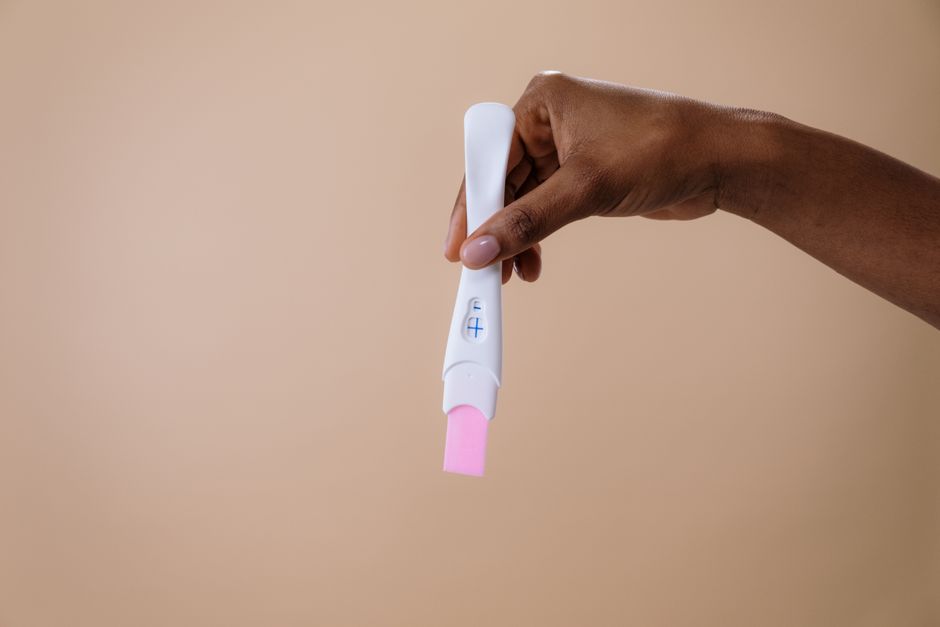
Blood tests can detect pregnancy as early as 6 to 8 days after ovulation — often before a missed period. Urine tests typically turn positive around the time of the expected period, roughly 12 to 14 days after ovulation. The gap comes down to sensitivity and timing, not luck.
How Early Can a Pregnancy Be Detected in Urine vs Blood?
Both tests look for the same hormone: human chorionic gonadotropin, or hCG. The difference is how much hCG each test can detect and how early after implantation that detection becomes possible.
Implantation — when a fertilized egg attaches to the uterine lining — usually happens 6 to 12 days after ovulation. The body does not start making hCG until implantation occurs. That single fact sets the floor for every pregnancy test on the market.
A quantitative blood test measures the exact amount of hCG in your blood. It can pick up very low levels, which is why it can turn positive just days after implantation. A urine test uses a threshold — it flips positive only once hCG crosses a certain concentration. Most over-the-counter urine tests are labeled to detect hCG at concentrations of 20 to 25 mIU/mL. Some newer tests claim sensitivity as low as 10 mIU/mL, but real-world performance varies.
That threshold difference explains the timing gap. Blood tests can detect pregnancy roughly 6 to 8 days after ovulation. Urine tests generally become reliable around 12 to 14 days after ovulation — about the time of a missed period.
Why Does Blood Detect Pregnancy Earlier Than Urine?
hCG enters the bloodstream first. It is produced by the developing placenta and released directly into circulation. From there, it filters through the kidneys and accumulates in urine. That filtration step introduces a delay, and the concentration in urine can lag behind blood levels.
There is also a dilution factor. How much you have had to drink, how concentrated your urine is, and what time of day you test all affect the reading. Blood hCG is not subject to those variables.
One more point that often gets lost: early hCG levels double roughly every 48 to 72 hours in a typical early pregnancy. A test that reads negative on day 10 after ovulation might read clearly positive by day 13. Timing within the same method matters as much as which method you choose.
What Is the Difference Between a Qualitative and Quantitative Blood Test?
Not all blood tests are the same. A qualitative blood test simply answers yes or no — hCG is present or it is not. A quantitative blood test, often called a beta hCG test, measures the exact number.
Quantitative testing is generally more useful in early pregnancy because it can detect very low levels and track whether the number is rising appropriately. Clinicians sometimes use it when the timeline is unclear or when early pregnancy needs to be monitored.
Urine tests are qualitative by design. They give you a yes or no, not a number.
| Test Type | What It Measures | Typical Earliest Detection |
|---|---|---|
| Quantitative blood (beta hCG) | Exact hCG level in blood | About 6 to 8 days after ovulation |
| Qualitative blood | Presence of hCG in blood | Slightly later than quantitative |
| Urine test | Presence of hCG in urine | About 12 to 14 days after ovulation |
The table numbers reflect general clinical patterns. Individual timing can vary based on when implantation occurred, which is not something you can predict with precision.





When Should You Take a Urine Test for the Most Accurate Result?
Wait until the day of your expected period, or a day or two after. Testing earlier than that raises the odds of a false negative — the test reads negative even though you are pregnant, because hCG has not yet crossed the detection threshold.
If you test early and get a negative result, wait 48 to 72 hours and test again. hCG rises quickly in early pregnancy, and a test that was negative can turn positive within a few days.
Use first-morning urine when possible. It is typically the most concentrated after an overnight fast, which gives the test the best chance of detecting hCG if it is present at low levels.
Follow the instructions on the specific test you use. Testing too soon after conception does not make the test more sensitive — it just increases the chance of a misleading result.
Can a Blood Test Be Wrong?
False negatives on blood tests are uncommon but possible if the test is done too early — before implantation has occurred or before hCG has risen to a detectable level. False positives are rare but do occur. Certain medications, including some fertility treatments that contain hCG, can cause a positive result. Rare medical conditions can also produce hCG outside of pregnancy.
Urine tests have a higher rate of user error. Testing too early, drinking too much water beforehand, or misreading a faint line can all lead to inaccurate results. A faint line is generally still a positive result, but reading faint lines can be genuinely difficult and is a common source of confusion.
Does the Type of Test Change How Early You Can Know?
Yes, but only within limits. No test can detect pregnancy before implantation happens, because there is no hCG to detect before that point. Implantation timing varies from person to person and even from cycle to cycle.
A blood test is the earliest option available. If you need to know as early as possible — for medical reasons or because of a medication or treatment that requires it — a quantitative blood test ordered by a clinician is the most sensitive method.
For most people, a urine test taken at the time of a missed period is accurate and sufficient. Research consistently shows that urine tests used correctly and at the right time have high accuracy.
What no test can do is tell you the exact moment implantation occurred. That is the variable that determines how early any test can work, and it is not something you can control or predict.
Frequently Asked Questions
How early can a blood test detect pregnancy?
A quantitative blood test can detect pregnancy as early as 6 to 8 days after ovulation. This is typically before a missed period.
How early can a urine test detect pregnancy?
Most urine tests become reliable around 12 to 14 days after ovulation, which is about the time of your expected period. Testing earlier increases the chance of a false negative.
Can a urine test detect pregnancy before a missed period?
Sometimes, but it is less reliable. If hCG levels are high enough, a sensitive urine test may turn positive a day or two before your expected period, but results vary.
Why is a blood test more sensitive than a urine test?
Blood tests can measure very low levels of hCG, while urine tests rely on hCG crossing a detection threshold. hCG also reaches the blood before it accumulates in urine.
