
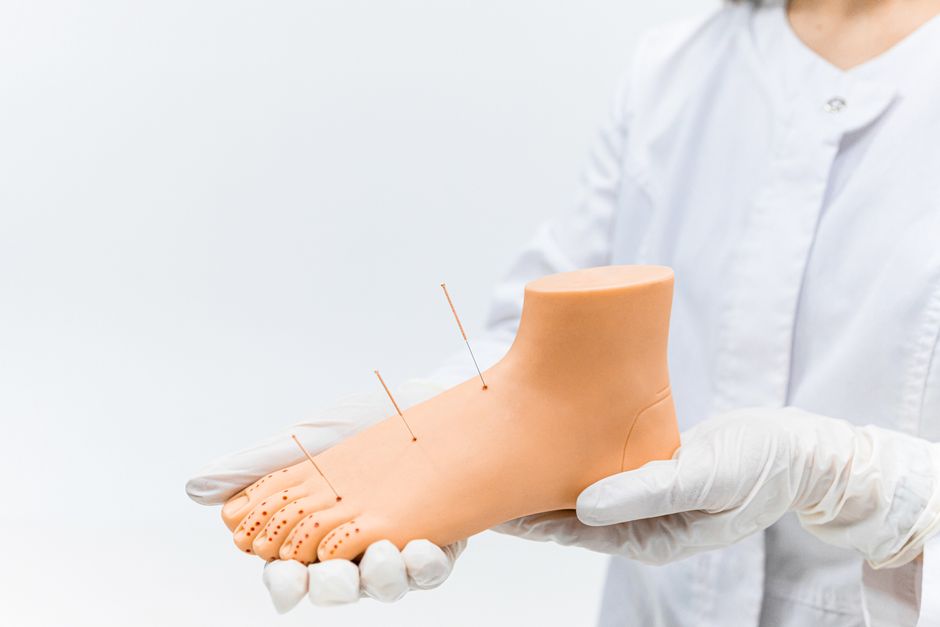
Dry needling uses thin, solid filament needles — the same kind used in acupuncture — inserted through the skin into tight bands of muscle called trigger points. The goal is to release that tension and reduce pain. It is a real clinical technique with real evidence behind it for some conditions, and weaker evidence for others. It also carries genuine risks that are usually mild but occasionally serious.
This guide explains what happens during a session, what research actually shows about relief, who should avoid it, and how it differs from acupuncture. No hype, no marketing language — just what the evidence supports.
How Dry Needling Works: What Happens Inside the Muscle
A trigger point is a small, tender knot within a muscle band. When a needle enters it, the muscle often twitches — a visible, sometimes surprising response called a local twitch response. That twitch is not a sign something went wrong. It is a spinal reflex, and clinicians who use dry needling generally view it as a sign the needle reached the target tissue.
The physiology is reasonably well described. Trigger points show altered electrical activity and a buildup of metabolic byproducts in the local tissue. Needle insertion appears to interrupt that cycle. Some research suggests the twitch response helps reset the way the nervous system signals that patch of muscle.
There is also a broader mechanism at work. Needling any tissue causes a small local response — brief microtrauma, increased blood flow, and release of the body’s own pain-modulating chemicals. This is thought to explain why needling sometimes reduces pain beyond the specific spot treated.
What dry needling is not: it is not injecting anything. “Dry” means no fluid is delivered. That distinguishes it from wet needling, where a local anesthetic or other substance is injected into the trigger point.
What Happens During a Dry Needling Session?
A session usually starts with a physical exam. The practitioner — often a physical therapist, but sometimes a physician, chiropractor, or other licensed clinician — presses on muscles to locate taut bands and reproduce your pain. Reproducing the familiar pain is a key part of identifying the right target.
You will be positioned so the muscle can be reached comfortably. The skin is cleaned. A thin, sterile, single-use needle is guided into the trigger point. The practitioner may move the needle slightly up and down to elicit twitches. A single session commonly involves several needle insertions across the affected area.
Sensations vary widely. Some people feel nothing more than a small pinch. Others feel a deep ache, a cramp, or a brief sharp sensation that fades. The needle typically stays in place for a short period before removal.
Afterward, many people report soreness similar to what follows a hard workout. It usually settles within a day or two. Some clinicians apply heat or gentle movement afterward; this is common practice rather than something proven in trials.
Does Dry Needling Actually Relieve Pain?
The evidence is strongest for certain musculoskeletal pain conditions and weaker for others. It is not a universal pain treatment, and the research base has real limitations — small studies, inconsistent methods, and difficulty blinding participants, since people usually know whether they received a needle.
Where evidence is reasonably supportive:
- Neck pain: Several trials and reviews suggest dry needling can reduce pain and improve function when combined with other care.
- Myofascial trigger point pain: This is the core indication. Some studies show meaningful short-term relief compared with no treatment or sham needling.
- Tension-type headache and some headache disorders: Evidence indicates possible benefit, though study quality varies.
- Low back pain: Results are mixed. Some trials show short-term improvement; others do not.
Where the picture is less clear: fibromyalgia, chronic widespread pain, and many overuse injuries have thinner evidence. Some studies suggest benefit; others show little difference from placebo.
One honest point that often gets lost: most studies compare dry needling added to other treatment — exercise, manual therapy, education — rather than dry needling alone. The best available evidence supports it as one part of a broader plan, not a standalone fix. Relief, when it comes, tends to be short-term in the studies conducted so far. Whether repeated sessions produce lasting change is not firmly established.
Dry Needling vs. Acupuncture: What Is the Difference?
The needles look identical. The thinking behind them is not.
Acupuncture comes from traditional Chinese medicine. It is based on concepts of energy flow along meridians, and needles are placed at defined points tied to that system. Modern research on acupuncture often frames it in neurophysiological terms, but the tradition and point selection are distinct.
Dry needling is a Western anatomical approach. Practitioners target specific muscle tissue based on a physical exam, not meridian maps. The trigger point itself is the target. Training, licensing, and oversight differ by state and profession.
Interestingly, some acupuncture points and common trigger points overlap anatomically. That overlap is one reason the two techniques sometimes produce similar sensations and, possibly, some similar effects. It does not make them the same practice.
What Are the Risks and Side Effects of Dry Needling?
Most side effects are minor and short-lived. The most common is soreness at the needle site, often described as bruising or post-exercise ache. Small bruises can occur. Some people feel lightheaded or faint during or right after a session, particularly if they are nervous or have not eaten.
More serious complications are uncommon but documented. These include:
- Pneumothorax — a collapsed lung, from needling near the chest wall. This is rare but is the most serious recognized risk, and it is why needle depth and angle near the upper back and chest matter.
- Infection at the needle site, which is uncommon with proper sterile technique and single-use needles.
- Bleeding or hematoma, more likely in people taking blood thinners.
- Nerve irritation or injury, usually temporary, if a needle contacts a nerve.
Seek urgent medical care if you develop shortness of breath, chest pain, or sudden difficulty breathing after needling near the chest or upper back. Those symptoms warrant immediate evaluation, not waiting to see if they pass.
Who should be cautious or avoid it: people who are pregnant, people taking anticoagulant medication, people with bleeding disorders, those with compromised immune systems, and anyone with a known needle phobia. For pregnancy specifically, no clinical guidelines establish dry needling as safe, so discuss it with your obstetric clinician first rather than relying on general reassurance.
Who Performs Dry Needling and What Should You Ask?
Training requirements vary significantly by state and by profession. Some practitioners complete short continuing-education courses; others complete more extensive certification. There is no single national license for dry needling in the United States, which means the letters after a name tell you less than you might assume.
Reasonable questions before booking:
- What is your training and certification in dry needling?
- How many sessions do you typically recommend, and how will we judge whether it is working?
- What are the specific risks for the area you plan to needle?
- Are you using single-use, sterile needles?
A practitioner who answers these plainly and without overselling is a better sign than one who promises a cure. Dry needling is not appropriate as a first-line treatment for undiagnosed pain. Get a proper diagnosis first, particularly for chest, back, or radiating pain that could have another cause.
Frequently Asked Questions
How painful is dry needling?
Most people feel a small pinch on insertion and a deep ache or brief cramp when the muscle twitches. Soreness afterward is common and usually fades within a day or two.
How many dry needling sessions will I need?
No standard number is established in clinical guidelines, and recommendations vary by condition and practitioner. Many clinicians suggest a short trial of a few sessions and reassess whether pain and function are improving.
Can dry needling cause a collapsed lung?
It can, though this is rare and is the most serious recognized risk when needling near the chest or upper back. Seek urgent care for shortness of breath or chest pain after a session.
Is dry needling the same as acupuncture?
No. Both use thin needles, but dry needling targets muscle trigger points based on a physical exam, while acupuncture follows traditional meridian theory.
