
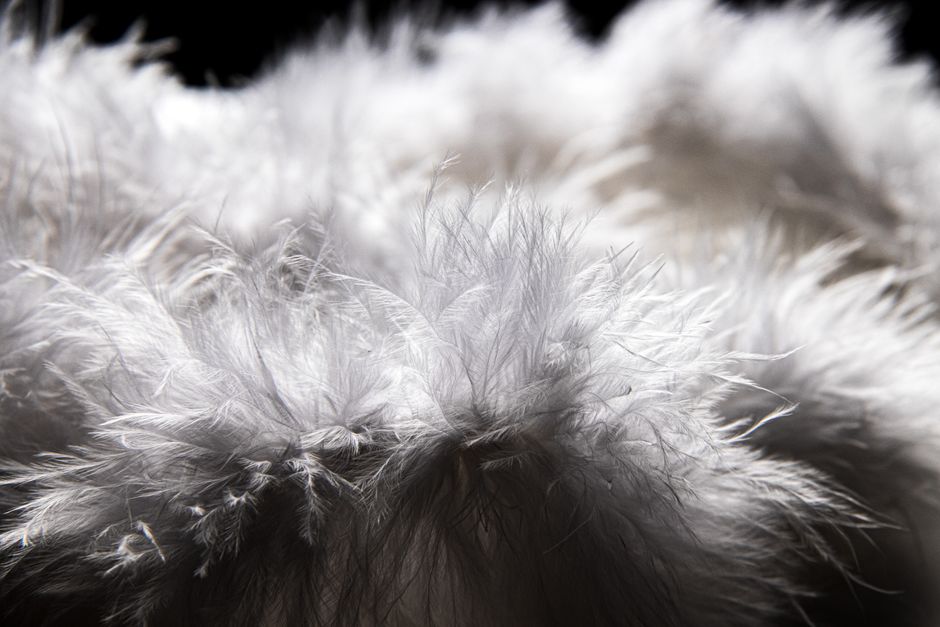
Down feathers are the soft, fluffy underlayer that keeps ducks and geese warm. They are collected in three main ways: as a byproduct of the meat industry after birds are slaughtered, from live birds during natural molting, or by plucking feathers from live birds, a practice that is widely condemned and illegal in many countries. Once collected, the feathers are washed, sanitized under high heat, sorted by size and quality, then stuffed into jackets, comforters, and pillows.
Most people never think about where the down in a jacket comes from. But the answer matters — both for animal welfare and for the product you end up wearing. The process has real variation, and not all of it is humane.
Where Does Down Come From?
Down comes from ducks and geese. It is not the same as the stiff outer feathers you see on a bird. Down is the light, three-dimensional cluster that grows underneath the outer feathers, close to the skin. Each cluster has a tiny quill point at the center with thousands of fine filaments radiating outward. Those filaments trap air, and trapped air is what holds heat.
Down has no barbed structure like flight feathers, so it does not zip together into a flat surface. Instead it stays loose and puffy. That structure is what makes it so effective as insulation — and so hard to replicate with synthetic materials at the same weight.
Geese generally produce larger down clusters than ducks. Larger clusters trap more air per unit of weight, which is why goose down often commands a higher price. But species alone does not determine quality. Age, climate, diet, and how the down is processed all play a role.
How Down Feathers Are Collected And Processed?
There are three collection methods in commercial use today. They differ enormously in how the birds are treated.
Post-slaughter collection is the most common method globally. After ducks and geese are processed for meat, their feathers and down are collected as a byproduct. No additional harm comes to the bird from the feather collection itself, since the bird is already dead. This is standard practice in the food industry and accounts for a large share of the world’s down supply.
Live-plucking involves restraining a bird and pulling feathers and down from its body while it is alive. This is painful for the bird and can cause skin wounds and stress. It is illegal in the European Union, the United States, and several other countries. It still occurs in some parts of the world, most notably in certain supply chains linked to foie gras production. Brands that sell down products are under increasing pressure to verify that their supply does not include live-plucked material.
Molting collection is the third method. Ducks and geese shed their down naturally once or twice a year. In some small farms and traditional operations, workers gather the shed down from the ground or gently comb it from the birds during this natural molt. This method does not harm the birds, but it yields far less down per bird, so it is not the primary source of commercial supply.
Once collected, the raw material goes through processing:
- Washing: Raw feathers and down are washed to remove dirt, oils, and debris.
- Thermal sanitization: The material is exposed to high heat — typically in a steam or drying process — to kill bacteria, fungi, and parasites. This step is important for hygiene and is standard in regulated supply chains.
- Sorting and grading: Down clusters are separated from feathers and graded by size, fill power, and cleanliness. Fill power is a measure of how much space one ounce of down occupies. Higher fill power means more loft and better insulation per weight.
- Final processing: The graded down is treated, sometimes with a water-repellent finish, and then filled into garments, bedding, or other products.
What Is Fill Power and Why Does It Matter?
Fill power is the standard measure of down quality. It describes the volume that one ounce of down fills, measured in cubic inches. A higher number means the down is loftier — it traps more air and provides more warmth for the same weight.
Fill power typically ranges from around 400 to 900 cubic inches per ounce. Down in the 400–500 range is common in budget products. Down in the 700–900 range is considered high quality and is used in premium outdoor gear and luxury bedding. The difference is not just warmth. Higher fill power down also compresses more easily and weighs less, which matters for backpacking and travel.
Fill power is not the same as fill weight. Fill weight is how many ounces of down are in a product. A jacket with 5 ounces of 800-fill down will generally be warmer than a jacket with 5 ounces of 500-fill down. But a jacket with 8 ounces of 500-fill down might be warmer than one with 5 ounces of 800-fill. Both numbers matter together.





Is Down Cruelty-Free?
No down is inherently cruelty-free. The ethics depend entirely on how the birds were raised and how the down was collected.
Down collected after slaughter is not linked to additional suffering from the collection itself, but the conditions in which the birds were raised still matter. Many ducks and geese in commercial supply chains are raised in crowded indoor facilities. That is a separate welfare issue from plucking, but it is part of the same supply chain.
Down collected during natural molting is generally considered the most humane option. The birds are not harmed and the collection aligns with their natural cycle. However, molting collection is rare at commercial scale, and verifying it in a finished product can be difficult.
Live-plucking is the clearest welfare concern. It causes pain and injury. It is banned in many countries but still occurs in some regions.
Several certification programs exist that aim to verify humane sourcing. The Responsible Down Standard (RDS) is one of the most widely recognized. It prohibits live-plucking and force-feeding in certified supply chains and requires third-party audits. Other programs include the Global Traceable Down Standard and the Down Integrity System and Traceability (DIS-T). These certifications are not perfect — audits can miss things — but they provide a layer of accountability that unverified down does not.
How Can You Tell If Down Is Ethically Sourced?
You can look for third-party certification on the label. The Responsible Down Standard is the most common. If a product carries the RDS logo, the brand has committed to a supply chain that prohibits live-plucking and force-feeding, and the supply chain has been audited by an independent certifier.
Without certification, it is difficult to know. Some brands publish sourcing information on their websites. Others do not. A brand that does not disclose where its down comes from is not necessarily using unethical down, but the lack of transparency means you cannot verify the claim either way.
Price is not a reliable indicator. A high price does not guarantee ethical sourcing, and a lower price does not automatically mean the down was live-plucked. Certification and transparency are better signals than cost.
What About Synthetic Alternatives?
Synthetic insulation has improved significantly. Modern synthetic fills like PrimaLoft and similar materials can match or exceed down in warmth for certain conditions. They also perform better when wet — down loses its loft and insulating ability when it gets soaked, while most synthetics retain some warmth even when damp.
But synthetics have trade-offs. They are generally heavier for the same warmth, they do not compress as well, and they degrade faster over time. Down, when properly cared for, can last for decades. Synthetics typically lose their loft after a few years of regular use.
For people who want to avoid animal products entirely, synthetic is the practical choice. For those who prioritize warmth-to-weight ratio and longevity, down remains hard to beat — provided it is sourced ethically.
Frequently Asked Questions
Is down plucked from live birds?
Live-plucking does still occur in some parts of the world, though it is illegal in the EU, the US, and several other countries. Certified supply chains like those under the Responsible Down Standard prohibit the practice and require third-party audits.
What is the difference between down and feathers?
Down is the soft, fluffy underlayer that traps air for insulation and has no stiff quill. Feathers are the larger, flatter outer covering with a central shaft, and they provide less warmth per unit of weight.
Does down come from dead birds?
Most commercial down is collected after birds are slaughtered for meat, so the collection itself does not harm the bird. The welfare concerns in that supply chain relate more to how the birds were raised than to the feather collection.
Is down warmer than synthetic insulation?
Down generally provides more warmth per ounce than synthetic fills and compresses more easily. However, down loses its insulating ability when wet, while most synthetics retain some warmth even when damp.
