
Ultraviolet light kills bacteria by scrambling their DNA. When UV photons at the germicidal wavelength strike a microbe, they fuse two adjacent thymine bases into a bond that should not be there. The cell cannot read or copy its own genetic code, so it stops reproducing and dies. That is the whole mechanism in one sentence.
What matters for real-world use is which UV wavelength does this, how much dose it takes, and where the limits are. UV is not a disinfectant that reaches into cracks and shadows. It works only where light reaches, only while it is on, and only at a dose high enough to overwhelm the microbe’s repair enzymes.
How Does UV Light Kill Bacteria at the Cellular Level?
The damage is to nucleic acid, and it happens in a fraction of a second. UV photons in the germicidal range are absorbed directly by the DNA and RNA of bacteria, viruses, and other microbes. No chemical intermediate is needed. The light itself is the agent.
The primary lesion is called a pyrimidine dimer. Two thymine bases sitting next to each other on the DNA strand bond together instead of pairing normally with the opposite strand. This kink blocks the enzymes that copy DNA and the enzymes that read it to make proteins. A bacterium with enough of these dimers cannot replicate.
Bacteria do carry repair systems. Photolyase can undo dimers using visible light. Nucleotide excision repair can cut out the damaged section and patch it. But these systems have a ceiling. Above a certain UV dose, the damage outpaces repair, and the cell dies or becomes unable to reproduce. That dose threshold is what UV disinfection is designed around.
One clarification worth making: UV does not “kill” in the way bleach does. It inactivates. A bacterium hit with a sub-lethal dose may repair itself and resume growing, especially if it is later exposed to visible light. This is why UV systems are rated by dose, not by whether a lamp is glowing.
Which Wavelength of UV Actually Kills Bacteria?
The germicidal range is UV-C, roughly 200 to 280 nanometers. Within that band, 265 nanometers is close to the peak of DNA absorption, and low-pressure mercury lamps emit at 254 nanometers, which is near enough to that peak to be highly effective. This is why 254 nm became the standard for decades.
UV-A and UV-B, the wavelengths in sunlight, are far less efficient at direct DNA damage. Sunlight does have some antimicrobial effect, but it is slow and inconsistent, and it works partly through indirect pathways involving oxygen radicals rather than direct dimer formation.
A newer option is far-UV at around 222 nanometers. The interest here is not that it kills bacteria better. It does not. The interest is that 222 nm is absorbed more strongly by proteins in the outer layer of skin and the tear film of the eye, so it penetrates human tissue less than 254 nm does. Whether this makes far-UV meaningfully safer for occupied spaces is still being studied. The evidence is not settled, and no regulatory body has cleared far-UV lamps for continuous use around people on that basis alone.
Does UV Light Kill All Bacteria Equally?
No. Susceptibility varies by organism, and the differences can be large.
Vegetative bacteria, the actively growing form, are generally the most sensitive. Bacterial spores are far more resistant because their DNA is protected by a dehydrated core and thick protein coats. Mycobacteria, which have a waxy lipid-rich cell wall, also tend to require higher doses than many other bacteria. Protozoan cysts such as Cryptosporidium are notably resistant to UV at doses that inactivate many bacteria, though UV remains one of the few effective treatments against Cryptosporidium in water because it damages their DNA without needing to penetrate the way chlorine does.
Viruses are a separate case. Their sensitivity depends heavily on whether their genetic material is single- or double-stranded and whether they have an envelope. Enveloped viruses tend to be more sensitive than non-enveloped ones.
This is why UV systems are validated against specific organisms rather than given a single universal kill rating. A dose that works against E. coli may not be sufficient against a spore-former.

What Is UV Dose and Why Does It Matter More Than Lamp Power?
UV dose is the product of intensity and time. It is measured in millijoules per square centimeter, written mJ/cm². Intensity alone tells you nothing about whether a system works, because a very bright lamp that exposes a microbe for a fraction of a second may deliver a lower dose than a dimmer lamp with longer contact time.
Dose also depends on distance and on how much UV the water or air absorbs before the light reaches the target. Water with high mineral content, suspended solids, or dissolved organic matter absorbs UV and shields microbes. This is why water treatment systems measure UV transmittance, not just lamp output, and why a lamp that looks bright can still under-dose turbid water.
There is no single dose that applies to every situation. Required doses are set by the target organism and the desired level of inactivation, and they vary widely. If you are evaluating a UV product, the number to ask for is the delivered dose at end of lamp life, not the peak output of a new lamp.
What Can UV Light Not Do?
UV cannot disinfect surfaces it does not reach. This is the single most important limitation and the one most often ignored.
Shadows, crevices, the underside of a surface, and the interior of porous material receive little or no UV. A UV wand passed over a countertop does not sterilize the countertop. It disinfects the spots the light actually strikes, for the time it strikes them, at the dose delivered. Biofilms are a particular problem because the outer layers of the film shield the cells beneath.
UV also leaves no residual. Chlorine keeps working after it is applied. UV stops the moment the light is off. In a water system, that means any contamination introduced downstream of the UV chamber is not treated.
And UV does not remove particles, chemicals, or heavy metals from water. It is a disinfection step, not a purification step.
| UV property | What it means in practice |
|---|---|
| Line-of-sight only | Shadows and crevices are not treated |
| No residual effect | Protection ends when the lamp is off |
| Dose-dependent | Intensity and time both matter |
| Organism-specific | Spores and cysts need higher doses |
| Affected by water clarity | Solids and organics block UV |
Where Is UV Disinfection Actually Used?
Municipal drinking water treatment is the largest and best-established use. UV is widely deployed as a primary barrier against Cryptosporidium and Giardia, which are resistant to chlorine at practical doses. This is an established application supported by decades of operational data.
Wastewater treatment uses UV as an alternative to chlorine, largely to avoid forming chlorinated byproducts and to avoid discharging chlorine into receiving waters.
In healthcare, UV is used for terminal room disinfection between patients and for disinfecting certain equipment. The evidence on whether UV room disinfection reduces patient infection rates is mixed. Some studies show a reduction, others do not, and the effect appears to depend heavily on how thoroughly surfaces are cleaned first. UV is a supplement to manual cleaning, not a replacement.
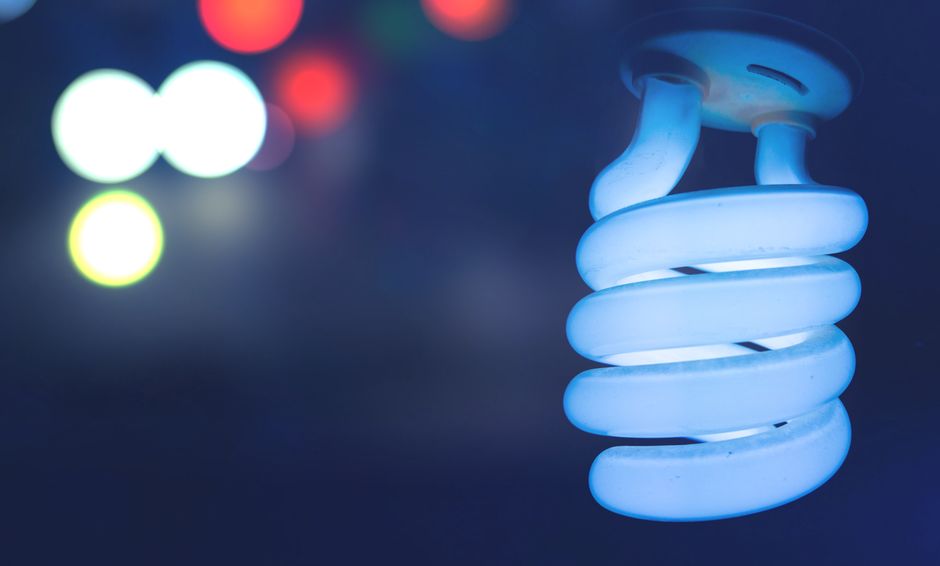
Consumer UV devices are a different category. UV wands, phone sanitizers, and bottle sterilizers vary enormously in delivered dose, and many have not been independently validated. A device that produces a visible blue glow is not necessarily producing germicidal UV-C. Blue light is visible; 254 nm UV-C is not, and should never be viewed directly.
Is UV Light Safe to Use Around People?
UV-C at 254 nm is harmful to human skin and eyes. It can cause painful photokeratitis, sometimes called welder’s flash, and skin burns. Direct exposure should be avoided. This is why UV-C disinfection systems for occupied spaces use interlocks, timers, or motion sensors to shut off when people are present.
Far-UV at 222 nm is being studied as a potentially safer alternative for occupied spaces because it penetrates tissue less deeply. Early research is promising but not conclusive, and long-term human safety data are limited. It should not be treated as established safe for continuous human exposure.
Any UV-C device used at home should be operated according to its instructions, with people and pets out of the room, and with no direct line of sight to the lamp.
Frequently Asked Questions
How long does UV light take to kill bacteria?
It depends entirely on dose, which is intensity multiplied by time. In well-designed water systems, contact times are typically seconds, while surface disinfection may require minutes of direct exposure at close range.
Does UV light kill bacteria in water?
Yes, UV is an established method for disinfecting water and is widely used in municipal treatment. It works best in clear water, because suspended solids and dissolved organic matter absorb UV and shield microbes.
Can a UV phone sanitizer kill bacteria?
Some can, but the delivered dose varies widely between devices and many have not been independently validated. A visible blue light is not evidence of germicidal UV-C output.
Is UV light better than bleach for disinfecting?
Neither is universally better. UV leaves no chemical residue but cannot reach shadows and stops working when the lamp is off, while bleach leaves a residual but can damage some surfaces and requires contact time.
