
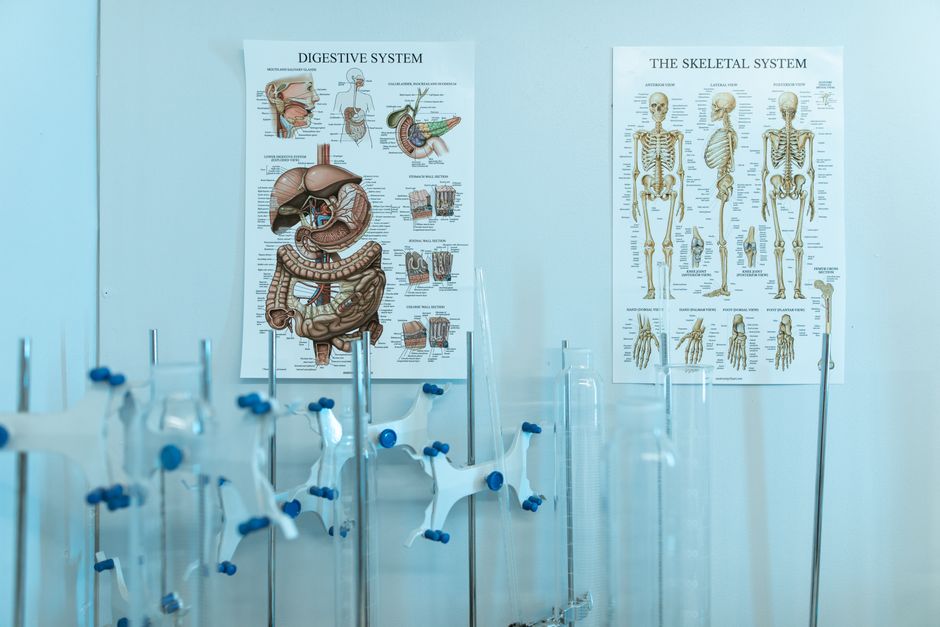
Your skeleton is not just a frame that holds you up. It is a living, changing system that does far more than you probably realize. Bones store minerals, make blood cells, and protect your organs. They also repair themselves when broken and even signal to other parts of your body. Understanding how this system works helps you make better choices for your long-term health.
What Is the Skeletal System Made Of?
Your skeletal system has 206 bones as an adult. But bones are not dry sticks. They are living tissue with blood vessels, nerves, and cells that constantly rebuild. The outer layer is compact bone — hard and dense. Inside is spongy bone, which is lighter but still strong. The center of some bones holds marrow.
There are two types of marrow. Red marrow makes red blood cells, white blood cells, and platelets. Yellow marrow stores fat. As you age, more of your red marrow turns into yellow marrow. This is normal, but it means your body becomes less efficient at making blood cells over time.
Bones also contain collagen, a protein that gives them some flexibility. Without collagen, bones would be brittle like chalk. Minerals like calcium and phosphorus make bones hard. The balance between collagen and minerals is what keeps bones strong without being too stiff.
How Does the Skeletal System Work With Other Systems?
Your skeleton does not work alone. It connects directly to your muscles through tendons. When a muscle contracts, it pulls on a bone, creating movement. This is the musculoskeletal system in action. Without bones, muscles would have nothing to pull against.
The skeletal system also protects soft organs. Your skull surrounds your brain. Your rib cage shields your heart and lungs. Your spine wraps around your spinal cord. This protection is not passive — bones can absorb and distribute force from impacts.
Bones store calcium and release it into your blood when needed. Your heart and nerves need calcium to function. If your blood calcium drops too low, your body pulls calcium from your bones. The National Institutes of Health reports that this process keeps blood calcium levels stable, but over time it can weaken bone if you do not replace the lost calcium through diet.
How Do Bones Grow and Repair Themselves?
Bone growth happens mostly during childhood and adolescence. Growth plates at the ends of long bones produce new bone tissue. This process is driven by hormones including growth hormone and sex hormones like estrogen and testosterone. By your early 20s, your bones reach peak mass — their maximum density and strength.
After peak mass, bone density slowly declines. This is natural. But the rate of decline depends on your lifestyle. Weight-bearing exercise signals your bones to keep building. Without that signal, bone loss speeds up. The CDC notes that about 10 million Americans over 50 have osteoporosis, a condition where bones become weak and break easily.
When a bone breaks, your body immediately starts repairing it. A blood clot forms around the break. Then cells called osteoblasts build new bone tissue across the gap. This process takes weeks to months. Eventually, the bone remodels itself — old bone is removed and new bone is laid down. This remodeling happens constantly, even without a break. About 10 percent of your skeleton is replaced each year through remodeling.





What Weakens Bones Over Time?
Several factors speed up bone loss. Age is the biggest one. After 50, bone density drops faster, especially in women after menopause. Estrogen protects bones. When estrogen levels fall, bone breakdown outpaces bone building. Research published in the Journal of Bone and Mineral Research found that women can lose up to 20 percent of their bone density in the five to seven years after menopause.
Diet matters too. Low calcium intake forces your body to steal calcium from your bones. Low vitamin D means your body cannot absorb calcium from food effectively. The recommended daily intake for adults under 50 is 1,000 milligrams of calcium and 600 international units of vitamin D. After 50, those numbers go up to 1,200 milligrams of calcium and 800 international units of vitamin D.
Lack of exercise is another factor. Bones respond to stress. When you do not challenge them with weight-bearing activity, they get weaker. Smoking and heavy alcohol use also damage bone cells directly. Some medications, like long-term use of corticosteroids, can cause significant bone loss.
What Actually Helps Keep Bones Strong?
Weight-bearing exercise is the most effective way to maintain bone density. This includes walking, jogging, stair climbing, dancing, and lifting weights. The key is that your body weight or added weight puts stress on your bones. Swimming and cycling are great for your heart but do not build bone because they are not weight-bearing.
Calcium-rich foods are essential. Dairy products like milk, yogurt, and cheese are the most concentrated sources. But you can also get calcium from leafy greens like kale and collard greens, canned fish with bones like sardines, and fortified foods like some plant milks and orange juice. The National Osteoporosis Foundation states that getting calcium from food is better than supplements because food sources are absorbed more efficiently.
Vitamin D is just as important. Your skin makes vitamin D from sunlight. But many people do not get enough sun exposure, especially in winter or at northern latitudes. Good food sources include fatty fish like salmon and mackerel, egg yolks, and fortified milk. Some people need a vitamin D supplement, but you should check your blood levels first. Taking too much vitamin D can be harmful.
| Bone-Building Activity | How It Helps | Good For |
|---|---|---|
| Walking or jogging | Weight-bearing stress on hips and spine | Leg and hip bones |
| Strength training | Pulls on bones through muscle attachment | All major bone groups |
| Stair climbing | Weight-bearing plus resistance | Legs and hips |
| Dancing | Weight-bearing with varied impact | Full skeleton |
| Yoga or tai chi | Improves balance to prevent falls | Fall prevention |
What Are Common Myths About Bone Health?
One widespread myth is that you can feel your bones getting weak. You cannot. Osteoporosis has no symptoms until a bone breaks. That is why it is called a silent disease. The first sign for many people is a wrist, hip, or spine fracture from a minor fall.
Another myth is that only older women need to worry about bone health. Men get osteoporosis too. About one in four men over 50 will break a bone due to osteoporosis, according to the National Institutes of Health. Men also lose bone density with age, just more slowly than women.
Some people believe that drinking milk cures weak bones. Milk is a good source of calcium, but it is not a cure. Bone health depends on many factors including exercise, vitamin D, and avoiding smoking and excessive alcohol. No single food or drink can fix bone loss on its own.
There is also a claim that bone broth is the best source of calcium for bones. Bone broth does contain some minerals, but the amount of calcium is very low compared to dairy or leafy greens. A cup of bone broth has about 10 to 20 milligrams of calcium. A cup of milk has about 300 milligrams.
What Should You Avoid for Better Bone Health?
Excessive salt intake causes your body to lose calcium through urine. The American Heart Association recommends limiting sodium to 2,300 milligrams per day. Most Americans eat far more than that. Cutting back on processed foods is the most effective way to reduce sodium.
Too much caffeine may also affect calcium absorption. The effect is small, but if you drink more than three cups of coffee a day, try to add milk to replace some of the calcium lost. Soda is a bigger concern because it often replaces milk in the diet and contains phosphoric acid, which may interfere with calcium balance.
Crash diets and rapid weight loss can harm bones. When you lose weight quickly, you often lose bone density along with fat. The Journal of Clinical Endocrinology and Metabolism published research showing that calorie restriction without adequate calcium and vitamin D leads to significant bone loss. Slow, steady weight loss with proper nutrition is safer for your skeleton.
Frequently Asked Questions
How does the skeletal system work to support the body?
It provides a rigid framework that muscles pull against for movement. It also protects internal organs and stores minerals like calcium.
What are the main parts of the skeletal system?
The main parts are bones, cartilage, ligaments, and tendons. Bones provide structure, cartilage cushions joints, ligaments connect bones, and tendons connect muscles to bones.
How does the skeletal system change with age?
Bone density peaks around age 30 and then slowly declines. After menopause in women and later in men, bone loss speeds up significantly.
What is the best exercise for bone health?
Weight-bearing exercises like walking, jogging, and strength training are most effective. They put stress on bones that signals them to stay strong.
