
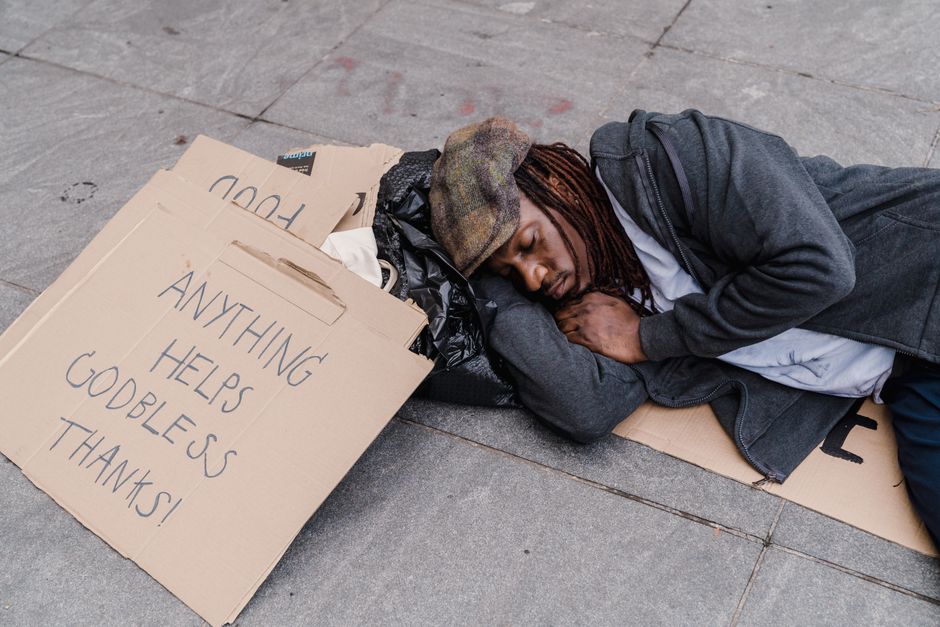
Money cannot buy happiness, but the lack of it can wear down mental health in ways that are measurable and well documented. Socioeconomic status affects mental health through chronic stress, limited access to care, unstable housing, food insecurity, and exposure to violence and discrimination. People with lower income and less education consistently show higher rates of depression, anxiety, and serious psychological distress than those with more resources.
What Is Socioeconomic Status and Why Does It Matter for Mental Health?
Socioeconomic status is a combined measure of income, education, and occupation. It shapes where a person lives, what they eat, how safe their neighborhood is, and whether they can see a doctor when something feels wrong.
Researchers have studied this link for decades. The pattern is consistent: as socioeconomic status rises, rates of common mental health conditions tend to fall. This holds across countries with very different health systems, which suggests the connection is not just about insurance or affordability.
What matters most is not a single factor but the accumulation. A person juggling rent, childcare, and a job with unpredictable hours faces a different daily reality than someone with savings and paid time off. Those differences add up over years.
How Does Chronic Stress Connect Poverty to Mental Health?
Living with financial uncertainty keeps the body’s stress response switched on. The hypothalamus-pituitary-adrenal axis, which controls cortisol and other stress hormones, is designed to activate briefly and then return to baseline. When threats are constant, that system stays engaged.
Over time, this can affect sleep, immune function, and mood regulation. Chronic activation of the stress response is associated with higher rates of depression and anxiety. It also appears to influence how the brain processes threat and reward, though researchers are still working out the exact mechanisms.
An important clarification: this is not about willpower or resilience. The physiological toll of ongoing stress is a body-level response, not a character flaw. People in difficult circumstances often show remarkable coping skills. The problem is that coping has a biological cost when the stress never lets up.
Does Poverty Cause Mental Illness or Does Mental Illness Cause Poverty?
Both directions are real, and they reinforce each other. This is one of the most important things to understand about the relationship.
On one side, financial hardship, housing instability, and food insecurity increase the risk of developing depression and anxiety. On the other side, a mental health condition can make it harder to keep a job, finish school, or maintain stable housing. That can push someone into or deeper into poverty.
Researchers call this a bidirectional relationship. It helps explain why poverty and mental illness often cluster together and why breaking the cycle is so difficult. Treating the mental health condition without addressing the financial situation, or the reverse, often falls short.





How Does Limited Access to Healthcare Play a Role?
Access to mental health care is uneven in the United States. People with lower incomes are less likely to have insurance that covers therapy, less likely to find providers in their area, and more likely to face long waits for appointments.
Even when care is available, other barriers get in the way:
- Taking time off work without pay
- Finding childcare during appointments
- Transportation to and from clinics
- Language and cultural differences with providers
- Past negative experiences with the healthcare system
The result is that many people who need help never receive it, or receive it only after a crisis. Emergency rooms become the entry point instead of a regular provider. That pattern is common clinical practice in under-resourced areas, though it is not how mental health care works best.
What About Housing, Food, and Neighborhood Conditions?
The conditions where people live and work shape mental health as much as income alone. Housing instability, including eviction and homelessness, is strongly associated with psychological distress. The threat of losing a home can be as damaging as losing one.
Food insecurity is another factor. Not knowing whether there will be enough food affects mood, concentration, and sleep. Research has linked food insecurity to higher rates of depression and anxiety, particularly in households with children.
Neighborhood conditions matter too. Exposure to violence, noise, poor air quality, and limited green space are all more common in lower-income areas. Each of these has been associated with worse mental health outcomes in studies. The effects appear to compound rather than act separately.
How Does Socioeconomic Status Affect Children’s Mental Health?
Children in lower-income households face higher rates of anxiety, depression, and behavioral problems. The effects can begin early and persist into adulthood.
Several pathways are involved. Financial stress affects parenting capacity and household stability. It also limits access to enrichment activities, quality schools, and healthcare. Chronic stress in childhood can influence brain development in areas that regulate emotion and attention.
This does not mean children from low-income families are destined for poor mental health. Many thrive despite difficult circumstances. But the statistical risk is higher, and the supports that buffer that risk, such as stable housing, consistent adults, and access to care, are often less available.
Can Mental Health Improve When Economic Conditions Improve?
Yes, and this is one of the more hopeful findings in this area. When people gain financial stability, their mental health often improves. Studies of cash transfer programs and housing interventions have shown reductions in psychological distress.
The evidence is not uniform across all programs or populations. Some interventions show clear benefits; others show smaller or mixed effects. But the general direction is consistent: reducing material hardship tends to reduce mental health symptoms.
This matters because it suggests that mental health is not solely an individual problem to be treated with therapy or medication. Social and economic conditions are part of the picture, and changing those conditions can change outcomes.
What Can Individuals Do When Resources Are Limited?
This is where honesty matters. Individual coping strategies cannot undo structural problems. But there are steps that can help within the constraints people face.
Community health centers often provide mental health services on a sliding scale based on income. Many accept Medicaid or offer reduced fees. Telehealth has expanded access in some areas, though it requires reliable internet and a private space.
Peer support groups, faith communities, and community organizations can offer connection and practical help. Some employers offer employee assistance programs that include free counseling sessions, though confidentiality and quality vary.
If someone is in crisis, the 988 Suicide and Crisis Lifeline is available by call or text in the United States. It is free and confidential.
These options are not a substitute for systemic change. They are what exists in the meantime.
Why This Matters Beyond Individual Lives
When large groups of people face chronic stress, limited care, and unstable conditions, the effects show up in communities. Higher rates of mental illness can strain schools, workplaces, and emergency services.
The relationship between socioeconomic status and mental health is not about blame. It is about recognizing that mental health is shaped by circumstances as much as by biology. That recognition opens the door to solutions that address both.
Frequently Asked Questions
Does poverty cause mental illness?
Poverty increases the risk of developing mental health conditions, but it is not the only cause. The relationship works in both directions, with mental illness also making it harder to escape poverty.
Can financial stress make anxiety worse?
Yes, ongoing financial stress keeps the body’s stress response activated, which is associated with higher rates of anxiety and depression. The effect is physiological, not just emotional.
Are children from low-income families more likely to have mental health problems?
Statistically, yes. Children in lower-income households show higher rates of anxiety, depression, and behavioral issues, though many still do well with adequate support.
Does getting more money improve mental health?
Some studies of cash transfer and housing programs show reductions in psychological distress when financial conditions improve. The evidence is not uniform across all programs, but the general direction is consistent.
