
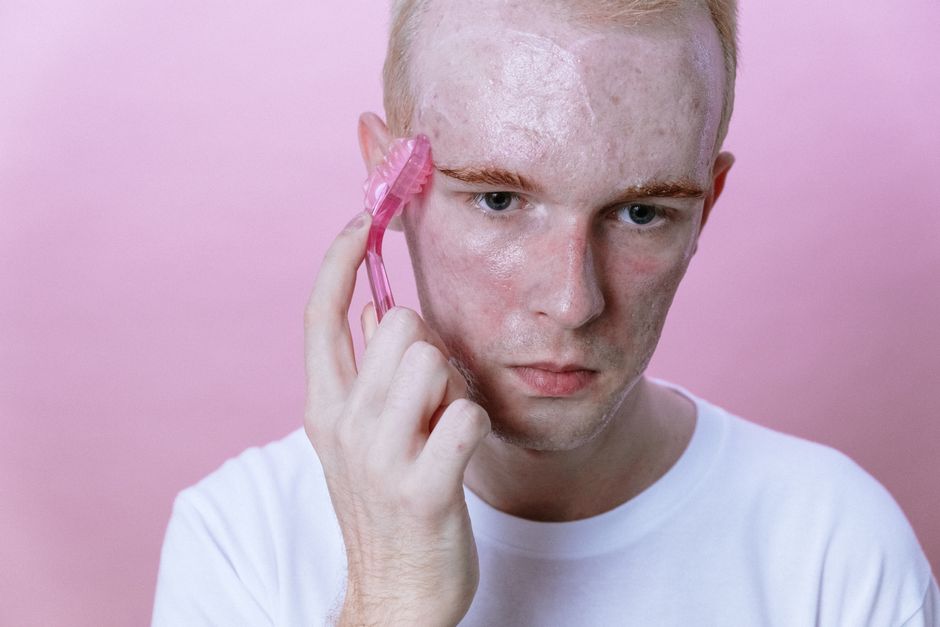
Salicylic acid works for acne by dissolving the mixture of dead skin cells and oil that plugs a pore, and by slowing the rate at which skin cells stick together. Because it is oil-soluble, it can travel through the oily lining of a hair follicle in a way water-soluble acids cannot. That single property explains most of what it does and most of what it cannot do.
How Does Salicylic Acid Work for Acne Skin?
Skin pores are openings of hair follicles. Inside each follicle, sebaceous glands produce sebum, an oily substance that normally travels to the surface and helps keep skin lubricated. When dead skin cells do not shed normally, they mix with sebum and form a plug. This is the starting point of most acne.
Salicylic acid is a beta-hydroxy acid. Its chemical structure lets it dissolve into oil rather than water. That matters because the plug in a pore is oil-based. A water-soluble acid such as glycolic acid mostly acts at the skin surface. Salicylic acid can move into the follicle where the plug forms.
Once inside, it does two main things. It breaks down the bonds holding dead skin cells together, a process called desquamation, so the cells shed instead of clumping. It also helps dissolve the sebum-and-cell debris that makes up the plug. This is why salicylic acid is described as keratolytic, meaning it softens and loosens keratin, the protein that makes up the outer layer of skin.
The result is that the pore is less likely to stay blocked. When a pore is not blocked, sebum can flow out normally. This reduces the environment where acne bacteria can multiply and where inflammation begins.
It helps to be precise about what salicylic acid does not do. It is not an antibiotic. It does not kill Cutibacterium acnes, the bacterium involved in inflammatory acne, in the way prescription antibiotics do. It is not a retinoid, so it does not change how the follicle lining matures the way prescription vitamin A derivatives do. It works on the blockage, which is the first step in the acne process, not on every step that follows.
What Does Salicylic Acid Actually Do to a Pore?
The plug at the center of a blackhead or whitehead is called a microcomedo when it is too small to see. It forms when cells lining the follicle shed faster than usual and stick together instead of falling away. Sebum production adds to the mass.
Salicylic acid interrupts this in a specific way. It weakens the cohesion between cells in the follicle lining so they separate and slough off. It also has a mild effect on the sebum itself, helping break up the thick material that would otherwise stay trapped.
What you see depends on the type of acne:
- Blackheads (open comedones): the plug is open to the air. The dark color comes from oxidized melanin and sebum, not dirt. Salicylic acid helps the plug loosen and shed.
- Whiteheads (closed comedones): the plug stays under the skin surface. Salicylic acid can help break it down, though closed comedones often respond better to prescription retinoids.
- Inflammatory acne (papules, pustules): here bacteria and immune response are involved. Salicylic acid may help with the blockage, but it does not directly address the infection or inflammation.
This is an important distinction. Salicylic acid is most useful for mild acne that is mostly blackheads and whiteheads. It is not a substitute for prescription treatment in moderate to severe inflammatory acne.
Why Is Oil-Solubility So Important?
Most acids used on skin are water-soluble. They act on the surface and are limited in how deep they can go into a follicle. Salicylic acid is different because it dissolves in oil, and the follicle is lined with oil.
Think of it like this. A water-soluble acid is like water poured on a greasy pan. It beads up and mostly stays on top. An oil-soluble acid mixes with the grease and can get into the crevices. In skin, the crevice is the follicle, and the grease is sebum.
This property also affects how salicylic acid feels and how it is used. Because it concentrates in oily areas, it is often used on the face, back, and shoulders, where sebaceous glands are dense. It is less commonly used on dry skin, where there is less oil for it to dissolve into and where it can be more irritating.
One clarification worth knowing: salicylic acid does not “shrink” pores. Pore size is largely determined by genetics and the size of the follicle. What salicylic acid can do is clear the plug inside a pore so the pore looks smaller. The pore itself is not permanently changed.


What Strength and Form Should You Look For?
Over-the-counter acne products in the United States commonly contain salicylic acid at concentrations of 0.5% to 2%. The 2% concentration is the most common for leave-on treatments and is the maximum allowed in over-the-counter acne products in the US.
Form matters as much as strength:
- Cleansers: contact time with skin is short, so a wash-off cleanser has less effect than a leave-on product. It is gentler, which suits sensitive skin.
- Leave-on gels and liquids: stay on the skin and have more opportunity to work. These are generally more effective for active breakouts.
- Pads and toners: convenient and easy to apply, though alcohol content can be drying for some people.
- Spot treatments: higher concentrations applied only to a pimple. Useful for occasional breakouts, not for preventing them across the whole face.
More is not better. Using multiple salicylic acid products at once, or combining them with other exfoliating acids or retinoids, increases the risk of irritation and does not necessarily improve results. Irritation itself can worsen acne by damaging the skin barrier.
No clinical guidelines currently establish a single best strength or frequency for every skin type. General practice is to start with a lower concentration a few times a week and increase gradually if the skin tolerates it. If irritation develops, reduce frequency or stop.
How Long Does It Take to See Results?
Acne treatments work slowly because they act on a process that takes weeks. A pore plug does not form overnight, and it does not clear overnight either. Most clinicians suggest giving a new acne treatment several weeks before judging whether it is working, often around four to eight weeks for meaningful change.
Early on, some people notice their skin looks worse before it looks better. This is sometimes called purging. The theory is that loosening plugs brings existing blockages to the surface faster. Not everyone experiences this, and the evidence for how common it is remains limited.
If there is no improvement after a reasonable trial, or if acne is getting worse, that is a signal to consider other options. Salicylic acid is one tool, not the only one.
What Are the Risks and Limits?
Salicylic acid is generally well tolerated, but it is not risk-free. The most common side effects are dryness, peeling, stinging, and redness. These usually relate to how much is used and how often.
Some people should be more cautious:
- Sensitive or dry skin: may react more easily and may do better with lower concentrations or less frequent use.
- Eczema or rosacea: compromised skin barriers can be irritated by acids. A clinician’s input is reasonable here.
- Combination with other actives: using salicylic acid with benzoyl peroxide, retinoids, or other acids can compound irritation.
- Sun sensitivity: exfoliating acids can make skin more prone to sunburn. Daily sunscreen is sensible.
There is also a safety consideration for certain groups. Salicylic acid is related to aspirin, and topical use over large areas or on broken skin can lead to absorption. For pregnant women, infants, and children, the evidence on safe use is limited, and no clinical guidelines currently exist for these populations. Anyone in these groups should talk to a clinician before using salicylic acid products.
Finally, salicylic acid has limits. It is not effective for everyone, and it does not address hormonal drivers of acne, which can be significant for many adults. If acne is persistent, painful, or leaving scars, a dermatologist can offer treatments that work on different parts of the acne process.
Frequently Asked Questions
How does salicylic acid clear acne?
It dissolves the oil-and-cell plug inside a pore and loosens the bonds between dead skin cells so they shed instead of clumping. Because it is oil-soluble, it can reach the follicle lining where the plug forms.
Is salicylic acid better than benzoyl peroxide for acne?
They work differently and are not directly interchangeable. Salicylic acid targets blockage, while benzoyl peroxide targets bacteria and inflammation, so the better choice depends on the type of acne.
Can I use salicylic acid every day?
Many people can, but it depends on skin type and concentration. Starting a few times a week and increasing gradually reduces the chance of irritation.
Does salicylic acid shrink pores?
No. It can clear the plug inside a pore so the pore looks smaller, but it does not change the actual size of the pore.
