
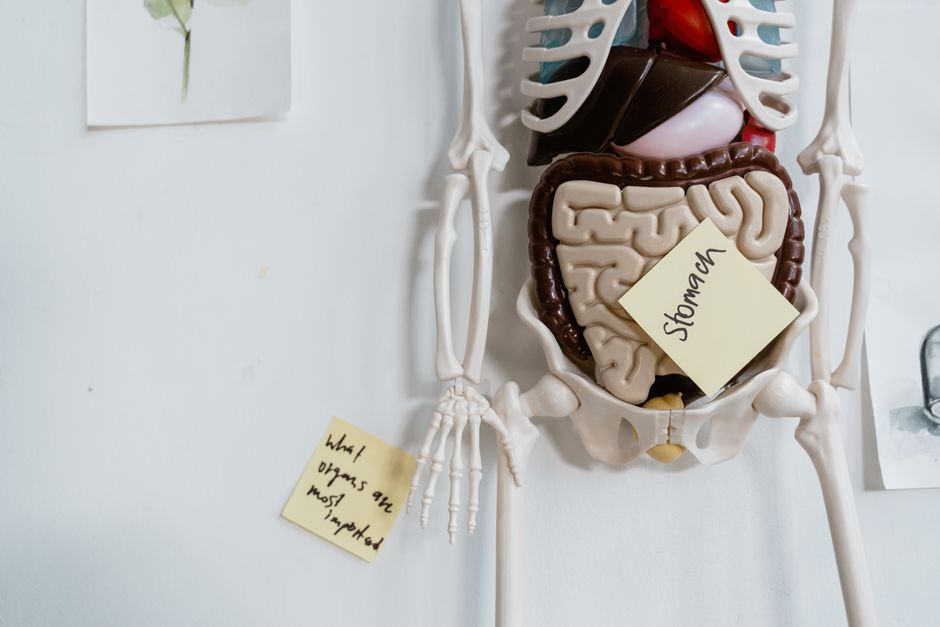
Poop is the end product of a journey that starts the moment you take a bite and lasts, on average, somewhere between one and three days. Food is broken down, nutrients and water are absorbed, and what remains is compacted into stool and stored in the rectum until your body signals it is time to go. The whole process is coordinated by muscles, nerves, hormones, and trillions of gut bacteria working together.
How Does Poop Work The Full Digestive Journey?
The digestive tract is a hollow tube about 30 feet long, running from your mouth to your anus. Food moves through it in a controlled sequence, and each section does a specific job.
Digestion begins in the mouth. Chewing breaks food into smaller pieces, and saliva adds enzymes that start breaking down starches. Swallowing sends the food down the esophagus through a muscular gate called the lower esophageal sphincter, which opens to let food into the stomach and closes to keep acid from splashing back up.
The stomach is a churning bag of acid and enzymes. It mixes food into a soupy paste called chyme. How fast the stomach empties depends on what you ate. Fat slows emptying. So does fiber. A typical mixed meal leaves the stomach over a few hours.
Most absorption happens in the small intestine, which has three parts: the duodenum, jejunum, and ileum. The lining is folded and covered in tiny finger-like projections called villi, which massively increase surface area. This is where carbohydrates, proteins, fats, vitamins, and minerals cross into the bloodstream. The pancreas and liver contribute enzymes and bile to help break down fat.
What is left — mostly water, undigested fiber, and cellular debris — moves into the colon. The colon’s main job is reclaiming water and electrolytes. As water is absorbed, the material turns from liquid to a soft solid. Gut bacteria ferment some of the remaining fiber, producing short-chain fatty acids that the colon lining uses for energy.
Finally, stool is pushed into the rectum, where it triggers the urge to defecate. Two sphincters control the exit. The inner one is involuntary. The outer one is under your conscious control, which is why you can usually hold stool until it is convenient to go.
What Is Poop Actually Made Of?
Stool is mostly water. Of the solid portion, a large share is bacteria — living and dead — along with undigested plant fiber, cells shed from the intestinal lining, and small amounts of fat, protein, and inorganic material.
A common misconception is that stool is mostly leftover food. It is not. Most of what you eat is absorbed. The bulk of stool mass comes from bacteria and water, not from the meal itself.
The brown color comes from bilirubin, a yellow-orange pigment produced when red blood cells are broken down. Bacteria in the colon convert bilirubin into stercobilin, which is brown. Without that bacterial step, stool would not look brown at all.
How Does the Body Know When to Go?
Defecation is a reflex coordinated by the nervous system, and it has two phases.
When stool enters the rectum, stretch receptors in the rectal wall send signals to the spinal cord and brain. This creates the sensation of needing to go. If the time is not right, the external sphincter and pelvic floor muscles contract to hold things in. The rectum relaxes and accommodates the stool, and the urge fades temporarily.
When you decide to go, the process reverses. The internal sphincter relaxes, the pelvic floor relaxes, and the abdominal muscles gently increase pressure. The colon may also contract in a wave that pushes more stool toward the rectum.
The gastrocolic reflex is worth knowing about. Eating — especially a larger meal — stimulates the colon to contract. This is why many people feel the urge to have a bowel movement shortly after breakfast. It is a normal reflex, not a sign of a problem.
What Does a Normal Bowel Movement Look Like?
There is a wide range of normal. Bowel frequency varies from several times a day to a few times a week, and both ends of that range can be healthy for a given person.
What matters more than frequency is what is normal for you and whether it has changed. A sudden shift in frequency, consistency, or color that persists is worth mentioning to a clinician.
The Bristol Stool Scale is a tool clinicians use to describe stool consistency. It runs from type 1 (separate hard lumps, hard to pass) to type 7 (entirely liquid). Types 3 and 4 — a sausage shape with a cracked surface, or a smooth soft sausage — are generally considered the easiest to pass and most typical of normal function.
Healthy stool is usually brown, soft but formed, and passed without significant straining. Occasional variation is normal. Persistent changes are what deserve attention.
What Can Change How Poop Looks and Smells?
Many factors shift stool appearance and odor, and most of them are harmless.
- Diet: Fiber adds bulk and softness. Beets can turn stool red. Iron supplements can turn it dark or black. High-fat meals can make stool pale and greasy.
- Hydration: Less water means harder stool. More water generally means softer stool.
- Gut bacteria: The mix of bacteria in your colon affects odor, gas, and consistency. Fiber feeds beneficial bacteria and can change both over time.
- Medications: Antibiotics, opioids, iron, and some antidiarrheal drugs can all change stool. Opioids in particular slow the colon and cause constipation.
- Illness: Infections, inflammation, and malabsorption can all alter stool. So can stress, through the gut-brain connection.
Odor comes largely from bacterial fermentation producing gases like hydrogen sulfide. It is normal for stool to smell. A marked change in odor alongside other symptoms is worth noting, but odor alone is rarely meaningful.
When Should You Be Concerned About Your Poop?
Most changes in stool are temporary and harmless. Some signs warrant a conversation with a clinician.
Blood in the stool is the one to take seriously. Bright red blood can come from hemorrhoids or an anal fissure, which are common and usually not dangerous. But blood can also signal something more serious, and it should never be assumed benign without evaluation. Black, tarry stool can indicate bleeding higher up in the digestive tract.
Other signs worth checking include persistent changes in bowel habits lasting more than a few weeks, unexplained weight loss, ongoing abdominal pain, and stool that is consistently pale or greasy. These do not automatically mean something is wrong, but they are reasons to get evaluated rather than wait.
Constipation and diarrhea are both common. Constipation is often related to low fiber, low fluid intake, inactivity, or certain medications. Diarrhea is frequently from infection or dietary triggers. When either persists, it is worth understanding why rather than self-treating indefinitely.
How Can You Support Healthy Digestion?
The basics of digestive health are not complicated, and the evidence for them is solid.
Eat enough fiber. Most adults fall short of recommended intake. Fiber adds bulk, feeds gut bacteria, and supports regular bowel movements. Good sources include vegetables, fruits, whole grains, beans, and lentils. Increase fiber gradually to avoid bloating.
Drink enough water. Fiber without adequate fluid can actually worsen constipation. Water needs vary by person, activity, and climate, so there is no single number that fits everyone.
Stay physically active. Movement stimulates the colon and supports regular bowel function. Even regular walking helps.
Do not ignore the urge to go. Habitually suppressing the urge can contribute to constipation over time.
Be cautious with supplements marketed for digestion. Many have limited evidence behind them. If you are considering one, it is reasonable to ask a clinician whether it fits your situation.
One clarification worth making: “detox” products that claim to clean the colon are not supported by evidence. The colon cleans itself continuously. No clinical evidence confirms that colon cleansing products provide health benefits, and some carry risks.
Frequently Asked Questions
How long does food take to become poop?
For most people, the full journey from eating to passing stool takes roughly one to three days. Transit time varies widely based on diet, fiber intake, hydration, activity, and individual gut function.
Is it normal to poop every day?
Yes, but it is also normal to go several times a day or only a few times a week. What matters most is what is typical for you and whether that pattern has changed.
Why does poop turn brown?
Stool is brown because of stercobilin, a pigment formed when gut bacteria break down bilirubin from old red blood cells. Without that bacterial conversion, stool would not be brown.
Is poop mostly undigested food?
No. Most food is absorbed before it reaches the colon. The bulk of stool is water, bacteria, and fiber, not leftover food.
