
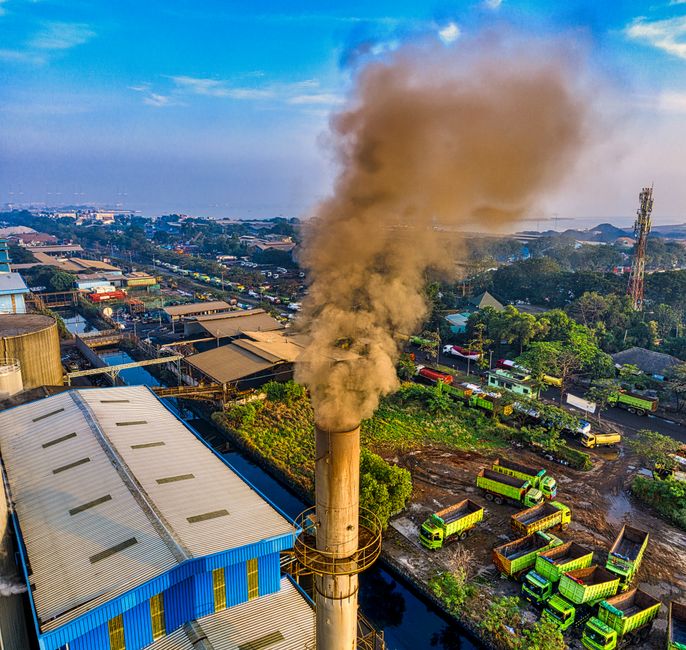
Industrialization drives urbanization by creating concentrated job opportunities in factories, which pulls people from rural areas into cities where those factories are located. As industries grow, they need workers, and workers need housing, services, and infrastructure — all of which build up cities around industrial centers. This process has been the primary engine of city growth for the past 250 years, starting in England and spreading across the globe.
How Does Industrialization Lead To Urbanization?
The connection between industrialization and urbanization is direct. When a factory opens in a specific location, it needs laborers. Those laborers move from surrounding rural areas to be near their jobs. This is the basic pull factor.
But the process does not stop there. Once workers arrive, they need places to live, food to eat, and goods to buy. New businesses spring up to serve them — grocery stores, clothing shops, barbers, doctors, and landlords. Each of those businesses needs its own workers. The city grows not just from the original factory but from the entire ecosystem that builds around it.
The United Nations reports that in 1800, only about 3 percent of the world’s population lived in urban areas. By 2024, that number had risen to roughly 57 percent. The Industrial Revolution is the single largest cause of that shift. Before factories, most people worked on farms. After factories, work moved to cities.
What Economic Factors Connect Industry to City Growth?
The economic logic is simple. Factories concentrate production in one place. This creates economies of scale — it is cheaper to make a thousand shirts in one building than for a thousand people to each make one at home.
These cost savings attract more businesses to the same area. The U.S. Bureau of Economic Analysis has tracked how industrial clusters form around specific regions. For example, the automobile industry concentrated in Detroit not by accident but because early parts suppliers located near assembly plants. Each new supplier made the region more attractive for the next factory.
This clustering creates a self-reinforcing cycle. More factories mean more jobs. More jobs mean more workers. More workers mean more demand for housing and services. More demand means more businesses. The city grows larger and more economically complex with each turn of this cycle.
What Role Does Infrastructure Play in This Process?
Industrialization demands infrastructure, and infrastructure shapes where cities can grow. Factories need raw materials delivered and finished goods shipped out. This requires transportation networks — railroads, ports, highways.
The U.S. Census Bureau data shows that between 1870 and 1920, American cities with rail connections grew at more than double the rate of cities without them. Railroads did not just serve factories. They also brought food into cities and took people to jobs. Cities built around rail hubs became natural locations for industry.
Water infrastructure matters just as much. Factories in the 19th century needed water for steam power and for cooling. Rivers and lakes became magnets for industrial development. Chicago grew from a small trading post to a major city largely because of its position on Lake Michigan and its connection to the Mississippi River system through canals.
Modern infrastructure follows the same pattern. Industrial parks locate near interstate highways and airports. Power grids and water treatment plants expand to serve growing industrial populations. Each infrastructure investment makes the area more attractive for further industrial development.





How Does Industrialization Change Rural Areas During Urbanization?
Industrialization does not just pull people into cities. It also pushes people out of rural areas. This is a less discussed but equally important part of the process.
The U.S. Department of Agriculture has documented that between 1910 and 1950, the number of American farms dropped by roughly 30 percent while farm size increased. Industrial agricultural equipment — tractors, combines, mechanical harvesters — meant fewer workers were needed to produce the same amount of food. People who would have worked on farms had to find other work.
At the same time, industrial factories in cities paid higher wages than farm labor. The gap was significant. According to economic historian Robert Allen, British factory workers in the early 1800s earned about three times what agricultural laborers made. That wage difference was a powerful pull.
This combination — fewer rural jobs and more urban opportunities — created what demographers call rural-to-urban migration. Entire generations left farming communities. Small towns shrank or disappeared. Cities swelled. The pattern repeated across Europe, North America, and now in developing countries in Asia and Africa.
What Are the Social Consequences of Industrial Urbanization?
The social effects of industrial urbanization are mixed. On the positive side, cities offer more educational opportunities, better access to healthcare, and greater social mobility. The World Bank has found that urbanization is strongly correlated with higher GDP per capita and lower poverty rates in most countries.
But there are real costs. Rapid industrial urbanization in the 19th century created overcrowded slums with poor sanitation. Disease spread quickly. The British government’s 1842 Report on the Sanitary Condition of the Labouring Population documented that life expectancy in industrial Manchester was just 38 years for the working class, compared to 52 years in rural areas.
Modern industrial urbanization in developing countries faces similar challenges. The World Health Organization reports that nearly 1 billion people live in informal settlements or slums worldwide, many of them in rapidly industrializing cities in Africa and Asia. Air pollution from factories and vehicles is a major health concern.
Social structures also change. Extended families that lived together on farms often separate when younger members move to cities. Traditional community bonds weaken. New social networks form around workplaces and neighborhoods. This is neither good nor bad — it is simply different. But it represents a fundamental shift in how people live and relate to each other.
How Does This Process Differ Between Developed and Developing Countries?
The pattern of industrialization leading to urbanization looks different depending on when and where it happens. Early industrializers like Britain and the United States went through a gradual process over 150 years. Developing countries today are urbanizing much faster.
| Factor | Early Industrializers (1800-1950) | Developing Countries (1960-present) |
|---|---|---|
| Speed of urbanization | Gradual over decades | Rapid, often within 20-30 years |
| Primary industries | Textiles, steel, coal | Manufacturing, electronics, services |
| Population growth | Slower natural increase | High birth rates plus migration |
| Infrastructure readiness | Built alongside growth | Often lags behind population |
| Government role | Minimal early regulation | More planning, mixed results |
China is the most dramatic modern example. The Chinese government estimates that between 1980 and 2020, roughly 400 million people moved from rural to urban areas. That is more than the entire population of the United States. Industrial growth in coastal cities drove this migration. The speed created enormous challenges in housing, transportation, and pollution.
India is following a similar but slower path. The Indian Ministry of Housing and Urban Affairs reports that about 34 percent of the population lives in cities as of 2024, up from 18 percent in 1960. Industrial growth in cities like Bangalore, Mumbai, and Chennai continues to pull rural migrants.
What Happens When Industrialization Declines in a City?
The relationship between industrialization and urbanization works in reverse as well. When industries leave, cities can shrink. This is called deindustrialization.
The U.S. Bureau of Labor Statistics data shows that manufacturing employment in the United States peaked at 19.5 million jobs in 1979 and fell to about 12.8 million by 2010. Cities that depended heavily on a single industry — like Detroit with automobiles or Pittsburgh with steel — lost population dramatically.
Detroit’s population dropped from 1.85 million in 1950 to about 639,000 in 2020, according to the U.S. Census Bureau. When the factories closed, the jobs disappeared. People left to find work elsewhere. The city’s tax base shrank, public services declined, and vacant buildings became common.
Some cities successfully transition to new economies. Pittsburgh rebuilt around healthcare, education, and technology. The population stabilized after decades of decline. But the transition took 30 years and required significant investment. The lesson is clear: cities built around industrialization are vulnerable when that industry changes or leaves.
Frequently Asked Questions
Frequently Asked Questions
How long does it take for industrialization to cause urbanization?
The process can begin within months of a factory opening as workers move to be near jobs. Significant urban growth typically takes 10 to 30 years depending on the scale of industry and available infrastructure.
Does industrialization always lead to urbanization?
In nearly all historical cases it does, because factories concentrate jobs in specific locations. The only exceptions are extractive industries like mining that operate in remote areas without building permanent settlements.
What is the difference between urbanization in the 1800s versus today?
Modern urbanization happens much faster, often within 20 years instead of a century. Developing countries today also face higher population densities and more pressure on infrastructure than early industrializers did.
Can a country industrialize without urbanizing?
Some evidence suggests that distributed manufacturing and remote work technologies could weaken the link. As of 2026, however, no country has achieved large-scale industrialization without significant urbanization following.
