
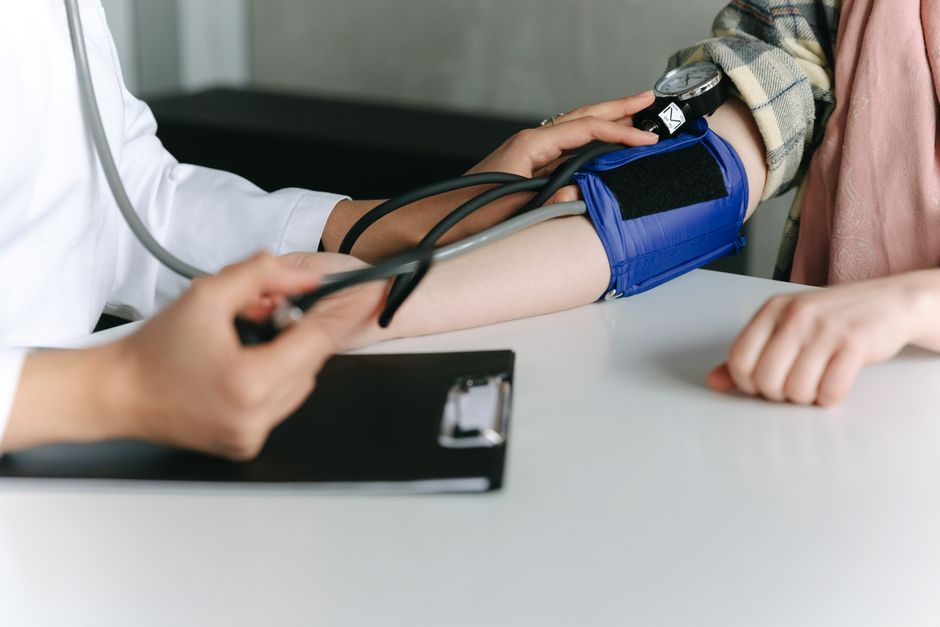
High blood pressure happens when the force of blood pushing against your artery walls stays too high for too long. It develops gradually, often over many years, as your blood vessels narrow, stiffen, or fill with more fluid than they should. The heart has to work harder to push blood through those tighter spaces, and the extra pressure damages the vessel walls over time.
What Does Blood Pressure Actually Measure?
Blood pressure is measured as two numbers. The top number, systolic pressure, is the force when your heart beats and pumps blood out. The bottom number, diastolic pressure, is the force when your heart rests between beats.
Normal blood pressure is below 120/80 mmHg. High blood pressure, also called hypertension, is diagnosed when readings consistently reach 130/80 mmHg or higher. The “mmHg” stands for millimeters of mercury, the standard unit used to measure pressure.
The body regulates blood pressure through a complex system. Your kidneys control how much fluid stays in your blood vessels. Your arteries can widen or narrow to change resistance. Your heart adjusts how hard and how fast it pumps. When any of these systems fail to work properly, pressure rises.
How Does High Blood Pressure Happen In The Body?
High blood pressure happens when the body loses its ability to keep blood flow pressure within a normal range. Three main changes occur inside the body.
Blood vessels narrow. The muscles in artery walls can tighten, making the space inside the vessels smaller. The same amount of blood pushing through a narrower tube creates more pressure.
Blood vessels stiffen. Healthy arteries are elastic and flexible. Over time, they can lose that flexibility. Stiff vessels cannot expand to absorb the force of each heartbeat, so pressure stays higher.
Blood volume increases. When the body holds onto too much sodium and water, the total amount of fluid in your blood vessels rises. More fluid means more pressure against the vessel walls.
These changes often happen together. A person with hypertension may have narrowed, stiff arteries and extra fluid volume at the same time. Each factor compounds the others.
What Causes the Blood Vessels to Narrow and Stiffen?
Several processes damage blood vessels over time. The most common is atherosclerosis, a condition where fatty deposits build up inside artery walls. These deposits, called plaque, make the vessels narrower and less flexible.
Inflammation also plays a role. Chronic low-grade inflammation damages the inner lining of blood vessels, called the endothelium. A healthy endothelium releases substances that help vessels relax and widen. When it is damaged, vessels stay tighter than they should.
Hormones matter too. The renin-angiotensin-aldosterone system is a hormone cascade that controls blood pressure. When the kidneys sense low blood flow, they release renin. This triggers a chain of events that narrows blood vessels and makes the body retain salt and water. In some people, this system stays overactive even when blood pressure is already too high.


What Are the Main Risk Factors?
Some risk factors are within your control. Others are not.
Age is a major factor. Blood vessels naturally become stiffer as you get older. Most people diagnosed with high blood pressure are over 40.
Family history matters. Hypertension tends to run in families, suggesting a genetic component. If a parent or sibling has high blood pressure, your risk is higher.
Race is relevant. Black adults in the United States develop high blood pressure at higher rates and at younger ages than other groups. The reasons are not fully understood but likely involve genetics, environment, and healthcare access.
Diet plays a direct role. High sodium intake makes the body hold onto fluid. Low potassium intake makes it harder for the body to balance sodium. Diets high in processed foods and low in fruits and vegetables are strongly linked to higher blood pressure.
Body weight increases the workload on the heart. More body tissue means more blood vessels, which means the heart must pump harder to circulate blood through them.
Physical inactivity contributes to weight gain and makes blood vessels less elastic. Regular activity helps keep vessels flexible.
Alcohol and tobacco both raise blood pressure. Smoking damages vessel walls directly. Heavy drinking can raise pressure and also interfere with blood pressure medications.
Chronic stress may contribute through repeated activation of the stress response, which temporarily raises blood pressure. Whether stress alone causes long-term hypertension is not fully proven, but it can make existing high blood pressure worse.
What Are the Symptoms of High Blood Pressure?
Most people with high blood pressure have no symptoms at all. This is why it is called the “silent killer.” It can damage your heart, brain, kidneys, and eyes for years without any warning signs.
Some people experience headaches, dizziness, or nosebleeds when blood pressure is very high. But these symptoms are not specific to hypertension and can have many other causes. Relying on symptoms to detect high blood pressure is unreliable.
Severely elevated blood pressure, such as a reading above 180/120 mmHg, can cause symptoms like severe headache, chest pain, vision changes, or shortness of breath. This is a medical emergency called a hypertensive crisis and requires immediate care.
Because symptoms are rare, regular blood pressure checks are essential. A single high reading does not mean you have hypertension. Doctors typically confirm the diagnosis with multiple readings taken on different days.
How Is High Blood Pressure Treated?
Treatment starts with lifestyle changes. Reducing sodium intake, eating more potassium-rich foods, losing excess weight, and increasing physical activity can all lower blood pressure. Limiting alcohol and quitting smoking are also important.
Lifestyle changes alone are not always enough. Many people need medication to bring blood pressure into a healthy range. Several classes of drugs are available, and they work in different ways.
Diuretics help the kidneys remove extra sodium and water, reducing blood volume. ACE inhibitors and ARBs block the hormone system that narrows blood vessels. Calcium channel blockers relax the muscles in artery walls. Beta-blockers slow the heart rate and reduce the force of each beat.
Many people need two or more medications to control their blood pressure. Finding the right combination can take time and requires regular follow-up with a healthcare provider.
Even with medication, lifestyle habits still matter. Medication works best when combined with healthy eating, physical activity, and weight management.
Why Is Uncontrolled High Blood Pressure Dangerous?
Persistent high pressure damages blood vessel walls. The damage creates rough spots where cholesterol and other substances can build up, accelerating atherosclerosis. This raises the risk of heart attack and stroke.
The heart itself suffers. Pumping against high pressure forces the heart muscle to thicken, a condition called left ventricular hypertrophy. A thickened heart muscle works less efficiently and is more prone to heart failure.
The kidneys are especially vulnerable. They rely on delicate blood vessels to filter waste from the blood. High pressure damages these vessels, and over time this can lead to chronic kidney disease or kidney failure.
The brain is at risk too. High blood pressure damages the small blood vessels in the brain, which can lead to cognitive decline and increase the risk of vascular dementia. It is also the leading risk factor for stroke.
Damage to the eyes is another concern. The retina has tiny blood vessels that are easily harmed by high pressure, potentially leading to vision loss.
The good news is that treating high blood pressure reduces all of these risks. Even a modest reduction in blood pressure significantly lowers the chance of heart attack, stroke, and kidney damage.
Frequently Asked Questions
Can high blood pressure be reversed?
Lifestyle changes and medication can bring blood pressure back into a healthy range, but “reversed” is not exactly the right word. Hypertension is a chronic condition that usually requires ongoing management to keep it under control.
How often should I check my blood pressure?
Adults with normal readings should get checked at least once every two years. If you have risk factors or a diagnosis of high blood pressure, your doctor will likely recommend checking more often, sometimes daily at home.
Does stress cause high blood pressure?
Stress causes temporary spikes in blood pressure, but whether it causes long-term hypertension is not fully proven. Chronic stress can contribute to behaviors like overeating and poor sleep that do raise blood pressure over time.
Is 130/80 considered high blood pressure?
Yes, according to current guidelines, 130/80 mmHg or higher is classified as high blood pressure. Readings in this range require attention and usually a conversation with your healthcare provider about treatment.
