
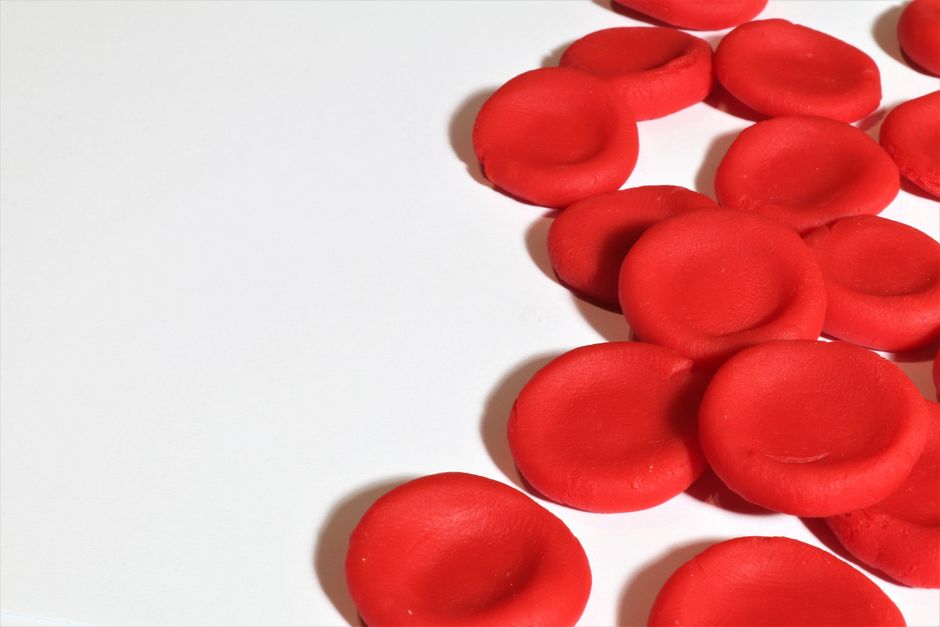
Hemoglobin is the iron-rich protein inside red blood cells that carries oxygen from your lungs to every tissue in your body and carries carbon dioxide back to your lungs to be exhaled. It is what makes blood red, and without it, your organs and muscles could not get the oxygen they need to function. Hemoglobin also gives red blood cells their shape, which lets them travel easily through the smallest blood vessels.
What Is Hemoglobin Made Of?
Hemoglobin is a large protein with four subunits. Each subunit contains a protein chain called globin and a non-protein part called a heme group. At the center of each heme group is one iron atom.
That iron atom is the critical piece. It is the part that actually binds to oxygen. Because there are four heme groups in every hemoglobin molecule, one hemoglobin molecule can carry up to four oxygen molecules at a time.
The structure matters for function. When one iron atom binds to oxygen, it slightly changes the shape of the whole hemoglobin molecule. This shape change makes it easier for the next oxygen molecule to bind. This process is called cooperative binding, and it is why hemoglobin can load oxygen efficiently in the lungs and release it efficiently in the tissues.
How Does Hemoglobin Work In Your Body to Transport Oxygen?
The journey starts in your lungs. When you inhale, oxygen moves into tiny air sacs called alveoli. From there, it passes into the bloodstream and attaches to the iron atoms in hemoglobin.
Blood then travels from the lungs to the heart, which pumps it out to the rest of the body. As blood moves through tissues, the oxygen detaches from hemoglobin and enters the cells. Cells use this oxygen to produce energy in a process that requires oxygen. This process, called cellular respiration, is how your body generates the energy to keep your heart beating, your brain thinking, and your muscles moving.
Hemoglobin does not release the same amount of oxygen in every tissue. It releases more oxygen where the demand is higher. Tissues that are working hard produce more carbon dioxide and become more acidic. Hemoglobin responds to these conditions by releasing oxygen more readily. This is called the Bohr effect, and it is one of the cleverest features of the molecule.
After releasing oxygen, hemoglobin picks up carbon dioxide. About 20 percent of the carbon dioxide in your blood is carried directly by hemoglobin. The rest dissolves in plasma or is converted to bicarbonate. Hemoglobin carries the carbon dioxide back to the lungs, where you breathe it out.
What Is a Normal Hemoglobin Level?
Normal hemoglobin levels vary by age, sex, and other factors. In general, normal ranges are roughly:
- Adult men: 13.8 to 17.2 grams per deciliter (g/dL)
- Adult women: 12.1 to 15.1 g/dL
- Children: Varies significantly by age
These ranges can differ slightly between laboratories. Your doctor will interpret your hemoglobin level based on the specific reference range used by the lab that processed your blood test.
A hemoglobin level below the normal range is called anemia. A level above the normal range is called polycythemia. Both conditions deserve medical evaluation because they can indicate underlying health problems.





What Happens When Hemoglobin Levels Are Low?
Low hemoglobin means your blood cannot carry as much oxygen. This is called anemia. The most common symptoms include fatigue, weakness, pale skin, shortness of breath, and dizziness.
Anemia has many causes. The most common cause worldwide is iron deficiency. Without enough iron, your body cannot make enough functional hemoglobin. Other causes include vitamin B12 or folate deficiency, chronic disease, kidney disease, and blood loss.
Some forms of anemia are inherited. Sickle cell disease is a genetic condition where hemoglobin forms abnormally, causing red blood cells to become rigid and crescent-shaped. These cells can block blood vessels and cause severe pain. Thalassemia is another inherited condition where the body produces less hemoglobin than normal.
If a blood test shows low hemoglobin, the next step is finding out why. Iron studies, vitamin B12 levels, and other tests help identify the cause. Treatment depends entirely on the underlying reason.
What Happens When Hemoglobin Levels Are High?
High hemoglobin means your blood has more oxygen-carrying capacity than normal. This can happen when your body tries to compensate for chronic low oxygen levels. Smokers often have elevated hemoglobin because carbon monoxide in smoke binds to hemoglobin and reduces its oxygen-carrying capacity. The body responds by making more red blood cells.
Living at high altitude also raises hemoglobin levels naturally. The lower oxygen pressure at altitude triggers the body to produce more red blood cells to compensate.
Sometimes high hemoglobin is a primary blood disorder called polycythemia vera. In this condition, the bone marrow produces too many red blood cells. This thickens the blood and increases the risk of blood clots, stroke, and heart attack. Polycythemia vera requires medical treatment and monitoring.
What Affects Hemoglobin’s Ability to Carry Oxygen?
Several factors can interfere with hemoglobin function, even when hemoglobin levels are normal.
Carbon monoxide binds to hemoglobin about 200 times more strongly than oxygen. When carbon monoxide is present, it displaces oxygen and occupies the binding sites. This is why carbon monoxide poisoning is so dangerous — it reduces the blood’s oxygen-carrying capacity without changing the hemoglobin level on a standard blood test.
Certain medications and chemicals can also affect hemoglobin. Nitrates and some antibiotics can convert hemoglobin to methemoglobin, a form that cannot carry oxygen effectively. This condition, called methemoglobinemia, requires prompt medical treatment.
In people with diabetes, a specific type of hemoglobin called hemoglobin A1c is measured to assess average blood sugar levels over the past two to three months. This test works because glucose attaches to hemoglobin, and the amount of attachment reflects average glucose levels over the lifespan of the red blood cell, which is about 120 days.
How Can You Support Healthy Hemoglobin Levels?
Diet plays a role in maintaining healthy hemoglobin levels. Iron is the most important nutrient for hemoglobin production. Good sources include red meat, poultry, fish, beans, lentils, and fortified cereals. Vitamin C helps your body absorb iron from plant sources, so eating iron-rich plant foods with vitamin C-rich foods can improve absorption.
Vitamin B12 and folate are also necessary for red blood cell production. These are found in animal products, leafy green vegetables, and fortified grains.
If you have been diagnosed with iron deficiency anemia, your doctor may recommend iron supplements. Do not take iron supplements without a blood test confirming deficiency. Excess iron can be harmful and can damage organs.
For most healthy people, a balanced diet provides enough iron and other nutrients to maintain normal hemoglobin levels. Routine supplementation is not recommended for people without a diagnosed deficiency.
When Should You See a Doctor?
See a doctor if you have persistent fatigue, unexplained shortness of breath, pale skin, or a rapid heartbeat. These can be signs of anemia or other underlying conditions.
If you have been diagnosed with anemia and treatment is not improving your hemoglobin levels, follow up with your doctor. Persistent anemia despite treatment may indicate a more complex underlying issue.
Do not try to self-diagnose or self-treat based on symptoms alone. Many conditions cause fatigue and weakness, and only a blood test can confirm whether hemoglobin is the issue.
Frequently Asked Questions
What is the main function of hemoglobin?
Hemoglobin carries oxygen from the lungs to tissues throughout the body and transports carbon dioxide back to the lungs for exhalation.
What is a normal hemoglobin level?
Normal levels are roughly 13.8 to 17.2 g/dL for adult men and 12.1 to 15.1 g/dL for adult women, though lab ranges vary slightly.
Can low hemoglobin be fixed with diet?
Iron deficiency anemia can often be corrected with dietary changes and iron supplements, but other causes of anemia require different treatment.
Does hemoglobin carry carbon dioxide?
Yes, hemoglobin carries about 20 percent of the carbon dioxide in your blood back to the lungs to be exhaled.
