
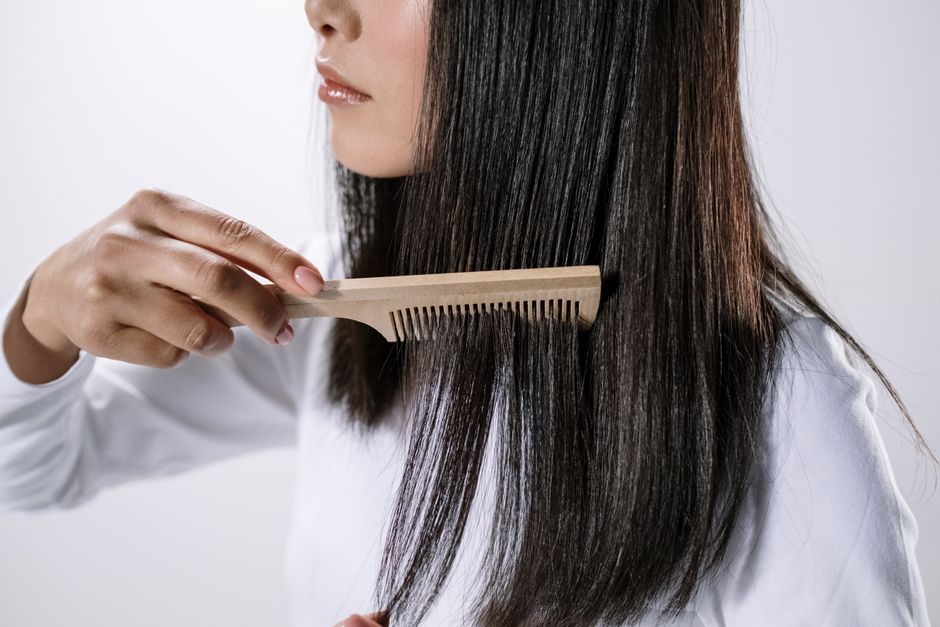
Hair texture changes how color looks, how long it lasts, and how predictable the final shade will be. Fine, straight hair tends to grab color quickly and can look darker than expected, while coarse, curly hair often needs more processing time and may appear lighter because light reflects off the curve of each strand. The same dye formula on two heads of hair can produce two visibly different results.
Texture affects three separate things at once: how fast the cuticle absorbs color, how much light bounces off the surface, and how well moisture stays inside the strand. Understanding those mechanics explains most of the surprises people see after a color appointment.
What Is Hair Texture, Exactly?
Texture describes the physical structure of each strand — its diameter and its shape — not how much hair is on the head. Density is how many strands grow per square inch. Texture is the width of a single strand and whether it grows straight, wavy, or coiled.
Strand diameter falls into three broad categories:
- Fine: the strand is thin, and the cuticle layer is proportionally thinner
- Medium: the middle range, and the most common
- Coarse: the strand is thick, with a wider cuticle layer and often a more developed inner cortex
Shape is separate. Straight hair grows from a roughly round follicle. Curly hair grows from a curved or elliptical follicle, which is why the strand itself twists. A person can have fine curly hair or coarse straight hair. Both variables matter for color, but they matter in different ways.
The cortex — the inner layer that holds the pigment — is where permanent color chemistry actually happens. The cuticle is the outer shield that color has to get through first. Texture determines how thick that shield is and how far the color has to travel.
How Does Hair Texture Affect Hair Color Results?
Texture controls how fast color enters the strand and how evenly it distributes. Fine hair has a thinner cuticle, so dye molecules penetrate quickly and the color often reads one to two shades darker than the swatch suggested. Coarse hair has a thicker cuticle, so the same formula may need longer processing or a higher volume developer to reach the target shade.
There is a second effect that people rarely connect to texture: light reflection. A straight, smooth strand acts like a narrow mirror. Light hits the surface and bounces back at the viewer, which makes the color look brighter and more saturated. A tightly coiled strand reflects light in many directions at once. The eye reads that scattered light as a softer, less intense version of the same color.
This is why the identical dye formula can look glossy and vivid on straight hair and muted on tight curls. The pigment inside the strand may be identical. The way light leaves the surface is not.
Porosity travels with texture too. Coarse, curly hair tends to be more porous, meaning the cuticle is slightly raised and the strand absorbs and releases moisture faster. High porosity can mean color grabs unevenly — deeper at the ends, lighter near the roots. Fine, low-porosity hair can resist absorbing color at all, leaving dye sitting on the surface rather than inside the cortex.
Why Does the Same Color Look Different on Curly Hair?
Curly and coily hair almost always reads lighter and less saturated than the same color on straight hair. The curl pattern breaks up the surface, so less light returns to the eye in a single direction. A level 4 brown on straight hair may look like a level 5 or 6 on tight coils under the same lighting.
There is a practical consequence. People with curly hair sometimes ask for a darker shade to compensate, then find the result looks flat or muddy indoors. The color was never the problem. The lighting and the curl geometry were.
Curly hair also has a longer path from the surface to the cortex in some regions of the strand, because the cuticle layers overlap differently along the curve. Color can deposit unevenly around the bend of a curl. This is one reason curl-specific coloring techniques exist — sectioning and application patterns are adjusted so each part of the curve receives similar contact time.
Shrinkage adds another layer of confusion. Curly hair appears shorter than its actual length, so the visual proportion of colored hair to face shape changes. A color that flatters on straight hair can look different simply because the hair sits differently around the face.




Does Fine Hair Take Color Differently Than Coarse Hair?
Fine hair takes color faster and holds it less predictably. The cuticle is thinner, so the cortex is easier to reach. That sounds convenient, but it also means the strand is easier to over-process. Fine hair lightens quickly with bleach and can lose elasticity if left on too long, which shows up later as breakage rather than an immediate problem.
Coarse hair is the opposite. It resists the initial penetration of color, then holds the pigment longer once it is in. Coarse hair often needs a longer processing time to reach the same lift, and it may hold a darker tone for more weeks before fading.
Gray coverage follows the same pattern. Gray hair lacks melanin, and the cuticle on gray strands tends to be more resistant to color absorption. On fine gray hair, coverage may look complete but fade faster. On coarse gray hair, the first application may look uneven because the resistant strands take color at different rates.
A strand test — coloring a small section before the full application — is the most reliable way to predict how a specific head of hair will respond. Texture gives you the general direction. The strand test gives you the actual answer.
How Do Porosity and Texture Work Together?
Porosity is how easily a strand absorbs and releases moisture, and it interacts with texture in ways that change color outcomes. Low-porosity hair has a tightly closed cuticle. Color tends to sit on the surface and can look dull or wash out quickly. High-porosity hair has a raised cuticle. Color absorbs fast but also escapes fast, so the shade may look rich on day one and faded by week three.
Texture and porosity often move together but not always. Fine hair is usually lower porosity. Coarse hair is usually higher porosity. But heat damage, chemical processing, and sun exposure can raise porosity on any texture. A fine-haired person who has been lightening for years may have high-porosity fine hair — a combination that grabs color unevenly and fades fast.
This is where the practical advice gets specific. On high-porosity hair, color applied to the mid-lengths and ends first, with roots done last, helps even out absorption. On low-porosity hair, a slightly longer processing time or a developer with more lift may be needed to get color inside the strand rather than resting on top.
What Should You Tell Your Colorist About Your Texture?
Describe your hair in terms of diameter and shape, not just curl pattern. “Fine and wavy” tells a colorist something different than “coarse and curly,” even though both descriptions include texture information.
Bring up these points before the formula is mixed:
- How your hair has responded to color in the past — did it go darker than expected, fade fast, or grab unevenly?
- Whether your hair feels rough or smooth when wet, which hints at porosity
- How much heat or chemical processing the hair has had in the past year
- Whether you have gray, and how resistant it has been to coverage
A strand test is worth asking for, especially before a significant change. It costs time, not much else, and it answers questions that texture alone cannot.
One clarification worth making: texture does not determine whether color will work. It determines how the color behaves — how fast it deposits, how evenly it distributes, and how the finished shade reads in light. Those are different questions, and the second one is the one people actually care about.
Frequently Asked Questions
Does hair texture affect how hair color looks?
Yes. Texture changes both how fast color penetrates the strand and how light reflects off the surface, so the same formula can look darker on fine straight hair and lighter on coarse curly hair. The pigment inside the strand may be identical while the visible result differs.
Why does hair color look lighter on curly hair?
Curly and coily strands scatter light in many directions instead of reflecting it back in one beam, so the eye reads the color as softer and lighter. A shade that looks rich on straight hair often appears one to two levels lighter on tight curls under the same lighting.
Does fine hair need a different hair color formula?
Fine hair usually takes color faster because the cuticle is thinner, so a gentler formula or shorter processing time is often used to avoid over-processing. Coarse hair typically needs longer processing or a stronger developer to reach the same depth.
Should I get a strand test before coloring?
A strand test is the most reliable way to predict how your specific hair will respond, because texture and porosity vary from person to person. It shows how fast the color deposits and how the final shade reads before the full application.
