
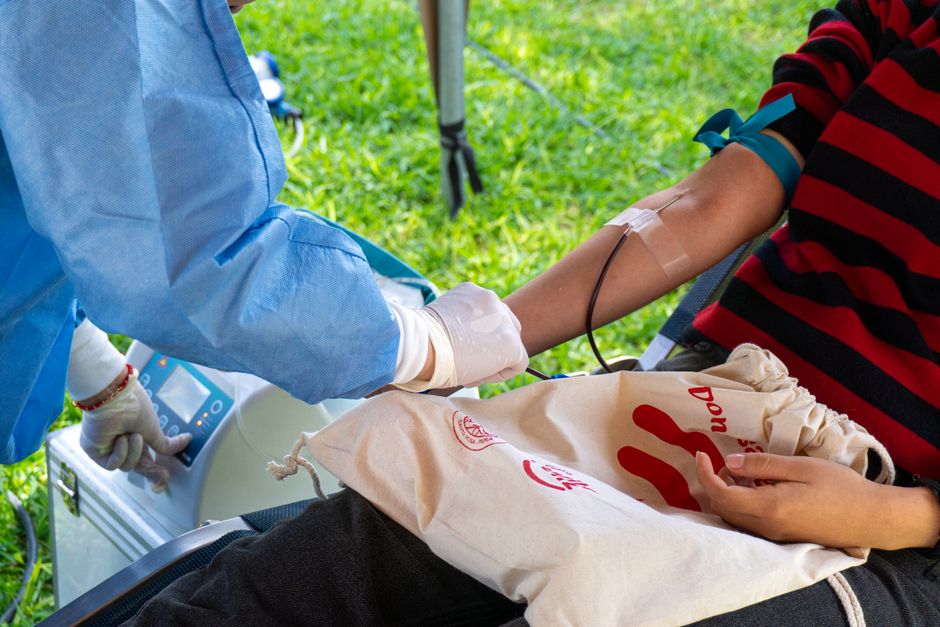
Plasma donation works by removing a portion of your blood, separating the plasma from the blood cells, and returning those cells to your body along with some replacement fluid. The plasma itself is kept and used to make medicines for people with immune disorders, bleeding disorders, burns, and other serious conditions. The whole process usually takes about 45 minutes to an hour, though your first visit will run longer because of screening.
What Is Plasma and What Does It Do in Your Body?
Plasma is the liquid part of blood. It makes up a little over half of your total blood volume. The rest is red blood cells, white blood cells, and platelets floating inside it.
Plasma is about 90 percent water. The remaining 10 percent carries hundreds of dissolved proteins, hormones, salts, sugars, and waste products. Some of those proteins do jobs nothing else can do.
- Albumin keeps fluid from leaking out of your blood vessels into surrounding tissue.
- Clotting factors let your blood form clots when you are injured. People with hemophilia are missing some of these.
- Antibodies (immunoglobulins) fight infections. People with certain immune deficiencies do not make enough of their own.
- Fibrinogen and other proteins support clotting and wound healing.
Your body replaces plasma proteins continuously. That is the biological reason plasma can be donated far more often than whole blood. The cells take weeks to rebuild. Most plasma proteins are replaced within days.
How Does Donating Plasma Work Step by Step?
The method is called plasmapheresis. It uses a machine that draws blood, spins it, and separates it into layers by weight.
Here is the sequence:
- A needle is placed in a vein in your arm. Blood flows out through tubing.
- The blood enters a centrifuge inside the machine. Spinning separates the heavier cells from the lighter plasma.
- The plasma is collected into a bag. The cells — red cells, white cells, and platelets — are diverted back toward your arm.
- Because the cells are returned, the machine adds sterile saline or a similar replacement fluid to keep your blood volume stable.
- The cycle repeats several times over the session to collect a set volume of plasma.
You sit or recline the whole time. Most people feel nothing beyond the initial needle stick. Some feel a cool sensation when the replacement fluid goes in, which is normal.
A single donation typically collects around 600 to 880 milliliters of plasma, depending on your body weight and the collection center’s protocol. The machine calculates this based on your weight and hematocrit.
What Happens to Your Plasma After You Donate?
Your plasma is frozen and shipped to a manufacturing facility. There it is pooled with plasma from many other donors.
Pooling matters. A single dose of some plasma-based medicines requires plasma from hundreds or even thousands of donations. This is why plasma donation centers operate continuously and why supply shortages happen when donations drop.
The pooled plasma goes through a process called fractionation. It separates the mixture into individual proteins — albumin, immunoglobulin, clotting factor concentrates, and others. Each protein is purified, treated to remove or inactivate viruses, and made into a finished medicine.
These medicines treat conditions including:
- Primary immune deficiencies
- Hemophilia and other bleeding disorders
- Certain autoimmune and neurological conditions
- Severe burns and shock
- Some rare genetic disorders
Plasma cannot be made synthetically. There is no lab substitute for most of these proteins. Every dose starts with a human donor.




How Often Can You Donate Plasma?
In the United States, the Food and Drug Administration allows plasma donation up to twice in a seven-day period, with at least 48 hours between donations. This is the regulatory limit for source plasma collection.
That frequency is possible because plasma proteins rebuild faster than red blood cells. Whole blood donation, by contrast, requires a much longer wait between donations because red cells take weeks to regenerate.
Not everyone can donate at the maximum frequency. Your weight, hydration, protein intake, and how you feel on the day all affect whether you pass the pre-donation screening. Centers check your hematocrit and protein levels before every donation. If either is too low, you are deferred that day.
What Are the Requirements to Donate Plasma?
Basic eligibility in the US generally includes being at least 18 years old, weighing at least 110 pounds, and passing a health screening. Individual centers may set their own minimums above these.
You will also need:
- Government-issued photo identification
- A permanent address and proof of it
- A Social Security number or equivalent documentation
The screening includes a health questionnaire, a brief physical exam, and blood tests. Tests check for certain infectious diseases including HIV, hepatitis B and C, and syphilis. Donors with positive results are notified and deferred.
Some medications and medical conditions disqualify you. The list is long and changes over time, so the only reliable answer comes from the specific center you plan to use. Call ahead or check their website before your first visit.
Is Donating Plasma Safe?
For healthy adults who meet eligibility criteria, plasma donation is well established as a safe procedure. The equipment is sterile and used once. There is no risk of catching an infection from the machine.
The main risks are related to fluid shifts and needle placement:
- Lightheadedness or fainting — more likely if you are dehydrated or skipped a meal.
- Bruising or soreness at the needle site.
- Citrate reaction — the anticoagulant used to keep blood from clotting in the tubing can cause tingling around the mouth or fingers. This is usually mild and goes away. Staff can slow the return rate if it happens.
- Fatigue after donation, especially if you donate frequently.
Serious complications are uncommon. That said, frequent donation over long periods does place ongoing demand on your body to rebuild protein. Centers monitor protein and hematocrit levels partly for this reason.
If you have a chronic health condition, are pregnant, or take prescription medication, talk to your doctor before donating. No clinical guidelines specifically address plasma donation during pregnancy, so this is a conversation to have with your own clinician.
How Should You Prepare Before and After Donating Plasma?
Preparation directly affects how you feel during and after the donation. Most of it comes down to hydration and protein.
In the 24 hours before donating:
- Drink more water than usual. Being well hydrated makes your veins easier to access and reduces lightheadedness.
- Eat a meal with protein within a few hours of donating. Protein supports the rebuilding process.
- Avoid alcohol the day before and the day of donation.
- Get normal sleep.
After donating:
- Keep drinking water for the rest of the day.
- Eat a protein-containing meal.
- Avoid heavy lifting or intense exercise for the remainder of the day.
- Leave the bandage on as long as the center instructs.
If you feel dizzy, sit or lie down immediately rather than trying to push through it.
Does Donating Plasma Pay Money?
In the United States, plasma collection centers typically pay donors. This is legal because the payment is framed as compensation for time and travel, not as payment for the plasma itself. Most other countries do not allow payment for plasma donation, and some prohibit it entirely.
Payment amounts vary widely by center, by donation frequency, and by promotional programs. New donors often receive higher rates for their first several donations. Because these figures change frequently, no reliable fixed number applies across the industry.
One non-obvious point: the compensation model is a major reason the US supplies a large share of the world’s plasma-derived medicines. Countries that ban payment rely heavily on imports.
How Long Does a Plasma Donation Take?
The collection itself usually takes 45 minutes to an hour. The needle is in your arm for that entire period.
Your first visit takes longer — often two to three hours — because of registration, the health questionnaire, the physical exam, and blood testing. Subsequent visits move faster once you are in the system, though you still complete a shorter screening each time.
Plan for the full appointment window rather than just the collection time. Rushing leads to dehydration and skipped meals, which are the two most common reasons people feel unwell afterward.
How Is Plasma Donation Different From Whole Blood Donation?
| Feature | Plasma donation | Whole blood donation |
|---|---|---|
| What is collected | Plasma only; cells returned | All blood components |
| Typical time | 45–60 minutes | About 10 minutes for collection |
| Frequency allowed | Up to twice in 7 days, 48 hours apart | Every 56 days |
| Replacement fluid | Saline or similar fluid returned | None |
| Typical use | Manufactured into protein medicines | Transfused directly to patients |
The key difference is the return step. Whole blood donation removes cells your body needs weeks to rebuild. Plasma donation returns them, which is why the recovery window is so much shorter.
Frequently Asked Questions
How long does it take to donate plasma?
The collection itself usually takes 45 minutes to an hour. Your first visit runs longer, often two to three hours, because of screening and testing.
How often can you donate plasma?
In the United States, you can donate up to twice in a seven-day period with at least 48 hours between donations. Centers may defer you on any given day if your protein or hematocrit levels are too low.
Is donating plasma safe?
For healthy adults who meet eligibility criteria, it is well established as a safe procedure with sterile, single-use equipment. The most common side effects are lightheadedness, bruising at the needle site, and mild tingling from the anticoagulant.
Does donating plasma hurt?
You feel a brief pinch when the needle goes in, then usually nothing for the rest of the session. Some people notice a cool feeling when the replacement fluid is returned, which is normal.
