
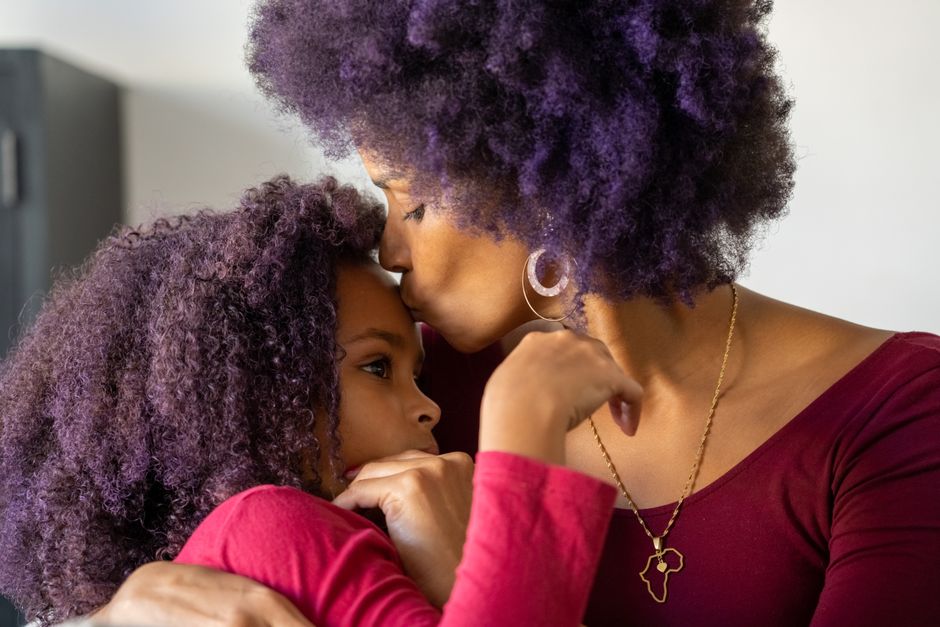
Children grieve. That is the first thing to know, and it surprises many adults. A child who loses a parent, sibling, grandparent, or friend feels the loss deeply, even if they cannot explain it. What often looks like not caring — playing, laughing, asking for a snack an hour after the funeral — is usually how a child’s brain handles grief. Children move in and out of sadness rather than staying in it the way most adults do.
How death affects a child emotionally depends on their age, their relationship to the person who died, how the adults around them respond, and what support they receive afterward. The feelings are real. The expression of those feelings changes with development.
How Does Death Affect A Child Emotionally at Different Ages?
Age shapes grief more than almost any other factor. A four-year-old and a fourteen-year-old can lose the same person and have almost nothing in common in how they respond.
Preschoolers, roughly ages three to five, often do not grasp that death is permanent. They may ask when the person is coming back, sometimes weeks after the funeral. This is not denial in the adult sense. It reflects a developing brain that has not yet built a stable concept of forever. Their grief tends to show up in behavior rather than words: clinginess, bedwetting after being dry, trouble sleeping, or sudden tantrums.
School-age children, roughly six to twelve, usually understand that death is final. They may become intensely curious about the physical details — what happens to a body, where the person is now. That curiosity can unsettle adults, but it is a normal way of trying to make sense of something that does not make sense. Children in this range may also believe, in a way they would not say out loud, that something they did or thought caused the death. This kind of self-blame is common and often goes unspoken unless an adult asks directly.
Teenagers understand death much as adults do, but they process it differently. They may pull away from family, lean hard on friends, take risks, or act as if nothing happened. Some teens throw themselves into school or sports as a way of coping. Others struggle in ways that look like ordinary teenage moodiness but are grief underneath.
Across all ages, one pattern holds. Children tend to grieve in bursts. A child may sob for twenty minutes, then go outside and play basketball. That is not a sign the sadness is gone. It is a sign the child’s system can only hold intense emotion for so long.
Why Do Children Seem to Move On So Quickly?
Children do not move on quickly. They move in and out. This is one of the most misunderstood parts of childhood grief, and misunderstanding it can cause real harm.
A grieving child who plays normally is not over the loss. Play is how children process experience. It is also how they give their nervous system a break from feelings too large to carry all at once. A child who never seemed to react to a death may fall apart six months later over something unrelated — a lost toy, a bad grade, a friend moving away.
Delayed reactions are common. So are anniversary reactions, where a child becomes anxious or withdrawn around the date of the death, a birthday, or a holiday without connecting the two.
Adults sometimes take a child’s play as permission to stop talking about the person who died. That is usually the wrong move. Children often need repeated, brief conversations rather than one long talk. They circle back to the same questions because they are still working on the same understanding.
What Signs Suggest a Child Is Struggling More Than Expected?
Most children grieve without needing professional help. Some do not, and the difference matters.
Signs worth paying attention to include:
- Sleep problems that persist for weeks — trouble falling asleep, nightmares, refusing to sleep alone when they previously did not
- Loss of appetite or eating far more than usual, lasting beyond the first few weeks
- Withdrawal from friends and activities they used to enjoy
- Falling grades or a sudden drop in school performance
- Frequent stomachaches or headaches with no medical cause
- Anger that seems out of proportion, or aggression toward others
- Regression — thumb-sucking, baby talk, or clinginess in a child who had outgrown it
- Talk of wanting to join the person who died, or statements that life is not worth living
The last item on that list is not a normal part of grief at any age. Any talk of self-harm or wanting to die should be taken seriously and evaluated by a professional right away. In the United States, the 988 Suicide and Crisis Lifeline is available by phone or text.
There is no clean line between normal grief and a clinical problem. A useful rule: if a child’s daily functioning — school, friendships, sleep, eating — stays disrupted for more than a few weeks, or if things are getting worse rather than slowly better, that is a reason to seek an evaluation.





What Makes Grief Harder or Easier for a Child?
The single biggest factor is not the death itself. It is what happens around the child afterward.
Children do better when the adults in their life are honest, when the death is explained in plain language, and when the child is allowed to ask questions without being shut down. They do worse when adults hide the truth, disappear into their own grief without explanation, or treat the topic as forbidden.
Several specific factors tend to make grief harder:
- The death of a parent or primary caregiver, especially for young children
- Sudden or violent death, including suicide, overdose, or accident
- Witnessing the death or discovering the body
- Multiple losses close together
- A prior history of anxiety, depression, or trauma
- Lack of a stable caregiver after the death
- Adults who cannot tolerate the child’s questions or feelings
The last one is often overlooked. A child who is told to be strong for a surviving parent, or who senses that questions upset the adults, learns to grieve alone. That pattern can carry into adulthood.
What helps is simpler than it sounds. Say the person’s name. Answer questions honestly, including “I don’t know.” Let the child see that grief is allowed. Keep routines steady where possible, because predictability helps a child feel safe when the world has just proven it can change without warning.
Should a Child Attend the Funeral?
Most children can attend a funeral or memorial if they are prepared and given a real choice. Excluding a child from all rituals can leave a gap that is harder to fill later.
Preparation matters more than attendance. Explain in advance what will happen — who will be there, what the room will look like, whether there will be an open casket, whether people will be crying. A child who knows what to expect handles it far better than one who walks in blind.
Give the child an exit. A trusted adult who can step out with them if they need to leave. A signal they can use. The option to not attend at all, without punishment or disappointment.
Young children, especially under six, may not get much from a formal service and may do better at a smaller, quieter gathering. Older children and teens often want to be there. Their preference should carry real weight.
Some clinicians recommend that children view the body if they choose to, because it can help make the death real. Others advise caution, especially with traumatic deaths. The evidence on which approach is better is limited, and practice varies. What is consistent across guidance is that the child should not be forced either way.
How Long Does Childhood Grief Last?
Grief does not follow a schedule, and any timeline offered with confidence should be treated with suspicion. What is well established is that grief in children is not a single event that resolves and ends.
For most children, the acute phase — the most intense sadness, confusion, and disruption — eases over weeks to months. But grief returns. It resurfaces at developmental milestones: starting middle school, graduating, getting married, having a child of their own. A five-year-old who loses a parent and seems to have adjusted may grieve that loss again at fifteen, and again at thirty.
That is not a failure of coping. It is how grief works. The loss gets integrated, not erased.
A minority of children develop lasting problems — persistent depression, anxiety, or what clinicians call prolonged grief disorder, a condition added to the standard psychiatric diagnostic manual in recent years. Prolonged grief is more than ongoing sadness. It involves intense, disabling longing for the person who died that continues well past the expected period and interferes with daily life. It is treatable, and it is not the same as ordinary grief.
What Helps a Grieving Child Most?
Presence helps more than words. A child does not need a perfect explanation of death. They need to know they are not alone in it.
What tends to help:
- Honest, simple language. “Grandma died. Her body stopped working and it cannot start again.” Avoid euphemisms like “passed away” or “went to sleep,” which young children can take literally and which can create fear around bedtime.
- Repeated, short conversations rather than one big talk.
- Permission to feel everything — sadness, anger, relief, nothing at all.
- Stable routines where possible.
- Adults who model grief openly rather than hiding it.
- Professional support when warning signs persist.
What tends to hurt: hiding the truth, punishing a child for not being sad enough, expecting a child to comfort the adults, and treating the person who died as a topic that cannot be mentioned.
Children are not fragile in the way adults often assume. They are resilient, but resilience is not built by protecting them from hard truths. It is built by walking through those truths with them, at their pace, and staying close while they do.
Frequently Asked Questions
Do young children understand death?
Children under about five usually do not grasp that death is permanent, so they may ask when the person is coming back. Their grief often shows up in behavior — clinginess, sleep problems, or regression — rather than in words.
Why does my child seem fine and then suddenly cry?
Children grieve in bursts because they cannot hold intense emotion for long stretches the way adults often do. Playing, laughing, and then breaking down days later is a normal pattern, not a sign the child is hiding something.
Should I take my child to a therapist after a death?
Not every grieving child needs therapy, and many adjust with steady support at home. Consider an evaluation if sleep, eating, school, or friendships stay disrupted for more than a few weeks, or if the child talks about wanting to die.
Can grief in childhood cause problems later in life?
Most children who lose someone close go on to live normal lives, though grief often returns at milestones like graduations and weddings. A minority develop lasting depression, anxiety, or prolonged grief disorder, which is treatable when identified.
