
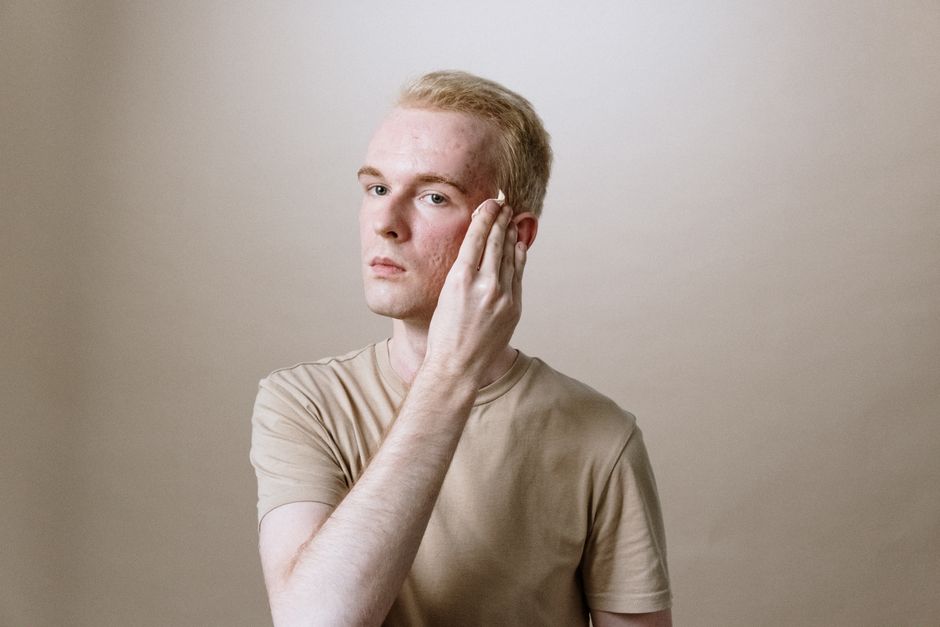
Cystic acne forms when a pore deep in your skin gets blocked by dead skin cells and oil, then infected with bacteria called Cutibacterium acnes. Hormones like testosterone trigger your oil glands to produce excess sebum, which fuels the bacteria and causes inflammation deep under the skin. This combination of clogged pores, bacterial overgrowth, and hormonal signals creates those painful, red bumps that never come to a head.
What Actually Happens Inside Your Skin When Cystic Acne Forms?
The process starts in your hair follicles. These are tiny tunnels in your skin where hair grows. Each follicle has a sebaceous gland attached to it. That gland produces oil to keep your skin moist.
Normally the oil flows out onto your skin surface. But sometimes the lining of the follicle sheds too many cells. Those cells mix with the oil and form a plug. This is called a microcomedone. You cannot see it yet.
When the plug stays below the surface and the follicle wall ruptures deep in the dermis, that is when cystic acne happens. The contents spill into the surrounding skin tissue. Your immune system responds with intense inflammation. That is why cysts are red, swollen, and painful. They are not just pimples. They are small infections deep in your skin.
How Do Hormones Drive Cystic Acne Formation?
Androgens are the main hormones involved. These include testosterone and a precursor called DHEA-S. Both men and women produce them. When androgen levels rise, your sebaceous glands get a signal to make more oil.
Research published in the Journal of Clinical Investigation found that androgen receptors are abundant on sebaceous gland cells. When activated, these receptors increase sebum production by up to 50 percent in some people. More oil means more food for bacteria and a higher chance of clogged pores.
In women, cystic acne often flares around the menstrual cycle. Estrogen drops right before your period. That leaves androgens relatively higher. The result is a surge in oil production about one week before bleeding starts. This timing is so consistent that many dermatologists use it to diagnose hormonal acne patterns.
Stress also raises cortisol levels. Cortisol can increase androgen production in your adrenal glands. This is why some people notice more cysts during high-stress periods. The mechanism is real, though the effect varies from person to person.
What Role Does Bacteria Play in Cystic Acne?
Cutibacterium acnes lives on almost everyone’s skin. It is not dangerous in normal amounts. The problem starts when the pore gets blocked. Inside that blocked follicle, the bacteria multiply in the oil-rich environment without oxygen.
As the bacteria grow, they break down sebum into fatty acids. These fatty acids irritate the follicle lining. They also trigger immune cells to release inflammatory chemicals called cytokines. That inflammation is what turns a simple clogged pore into a red, painful cyst.
Not all strains of C. acnes are equal. Research from the University of California, Los Angeles identified that certain genetic strains of the bacteria are more common in people with acne. These strains produce more proteins that trigger inflammation. Other strains are harmless and found on clear skin. So it is not just having the bacteria. It is having the wrong type.
Antibiotics can reduce C. acnes populations, which is why they are sometimes prescribed for cystic acne. But the bacteria can become resistant over time. That is one reason dermatologists now prefer combination treatments over antibiotics alone.





How Does Cystic Acne Form Hormones Bacteria More Than Other Types of Acne?
Regular whiteheads and blackheads stay close to the skin surface. They form in the upper part of the follicle. The follicle wall stays intact. Your body does not mount a major immune response. That is why they are not painful.
Cystic acne is different. The blockage and rupture happen deep in the dermis layer. That is where your blood vessels and nerve endings are. When bacteria and oil spill into this area, your immune system sends a flood of white blood cells. This causes swelling, heat, and pain.
The table below compares cystic acne to milder forms:
| Feature | Cystic Acne | Whitehead / Blackhead |
|---|---|---|
| Depth in skin | Deep dermis | Upper epidermis |
| Follicle wall | Ruptures | Stays intact |
| Pain level | Moderate to severe | None to mild |
| Inflammation | Intense immune response | Minimal |
| Scarring risk | High | Low |
Because cysts form so deep, topical creams often cannot reach them. That is why oral medications are frequently needed for cystic acne. The infection is simply too far below the surface for creams to penetrate effectively.
What Does Research Say About the Best Treatments for Cystic Acne?
The American Academy of Dermatology recommends a stepped approach. For mild to moderate cystic acne, a combination of benzoyl peroxide and a topical retinoid is first-line treatment. Benzoyl peroxide kills C. acnes bacteria. Retinoids like tretinoin speed up cell turnover to prevent clogging.
For more severe cases, oral antibiotics like doxycycline or minocycline are used. These reduce both bacteria and inflammation. But the AAD advises limiting antibiotic use to three to four months maximum to reduce resistance risk.
Spironolactone is an option for women with hormonal cystic acne. It blocks androgen receptors in the skin. A 2020 study in the Journal of the American Academy of Dermatology found that 85 percent of women taking spironolactone for hormonal acne reported improvement. It is not approved for men because of side effects like breast tenderness.
Isotretinoin, formerly sold as Accutane, remains the most effective treatment for severe cystic acne that does not respond to other therapies. It shrinks oil glands, reduces bacteria, and normalizes skin cell shedding. A single course clears cystic acne in about 85 percent of patients. But it has significant side effects including dry skin, joint pain, and birth defects if taken during pregnancy. It requires monthly monitoring.
What Common Mistakes Make Cystic Acne Worse?
Popping or squeezing cysts is the worst thing you can do. It pushes bacteria and oil deeper into the skin. This can turn one cyst into several. It also increases scarring risk dramatically. Leave cysts alone. They will eventually resolve on their own or with medical treatment.
Over-washing your face also backfires. Washing more than twice a day strips your skin of protective oils. Your sebaceous glands respond by producing even more oil to compensate. Use a gentle cleanser. Avoid harsh scrubs that irritate the skin.
Heavy moisturizers and makeup can clog pores if they are labeled “comedogenic.” This means they are formulated with ingredients known to block follicles. Look for non-comedogenic products. The label is regulated by the FDA, so it means something.
Diet is a debated topic. Some studies suggest high-glycemic foods and dairy may worsen acne in some people. A 2012 review in the Journal of the Academy of Nutrition and Dietetics found that skim milk was associated with more acne than whole milk. But the evidence is not strong enough to recommend universal dietary restrictions. If you notice a clear pattern between certain foods and your breakouts, it is reasonable to try eliminating them for a few weeks. Just know the science is not settled.
What to Avoid When Treating Cystic Acne at Home
- Hydrocolloid bandages are fine for surface pimples but do nothing for deep cysts. The cyst is too far under the skin for the bandage to absorb anything.
- Toothpaste on cysts is a myth. It can irritate and burn your skin without treating the infection underneath.
- Steaming your face opens surface pores temporarily but does not reach deep cysts. It can also dilate blood vessels and make redness worse.
- Alcohol-based toners kill surface bacteria but also destroy your skin barrier. A damaged barrier leads to more irritation and more breakouts over time.
- Essential oils like tea tree oil have some antibacterial properties in lab studies. But they are too weak to treat deep cysts and can cause allergic reactions on sensitive skin.
None of these home remedies replace medical treatment for cystic acne. If you have more than a few cysts, or if they leave dark marks or scars, see a dermatologist. Early treatment reduces permanent damage.
Frequently Asked Questions
Can cystic acne go away without treatment?
Individual cysts eventually resolve on their own over weeks to months, but new ones often keep forming without treatment. The underlying causes like hormones and bacteria do not go away without intervention.
Is cystic acne caused by poor hygiene?
No. Cystic acne forms deep in the skin and is driven by hormones and bacteria, not dirt on the surface. Washing more will not prevent or cure it.
Does birth control help cystic acne?
Combination birth control pills containing estrogen and progestin can reduce androgen levels and improve cystic acne in many women. It typically takes three to six months to see results.
How long does it take for cystic acne to heal?
A single cyst can take two to six weeks to fully resolve. Scarring or dark spots may take several months to fade. Consistent treatment reduces both healing time and scarring risk.
