
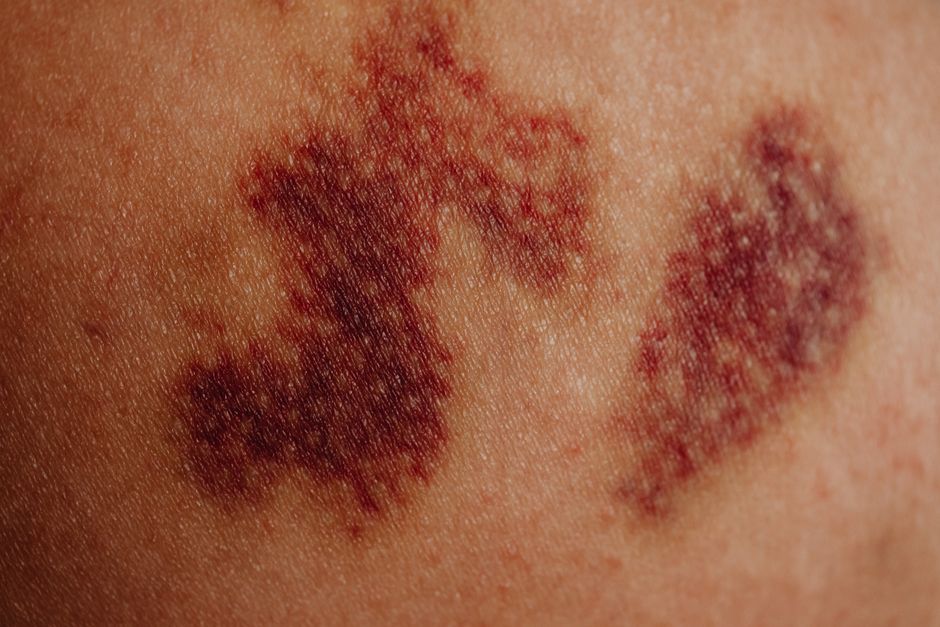
A bruise appears when small blood vessels under the skin break and leak blood into the surrounding tissue. The pooled blood shows through the skin as a flat patch that starts red or purple, shifts to blue, green, or yellow as the body clears it, and fades over roughly two weeks. The color changes are a normal part of healing, not a sign that something is wrong.
Most people get bruises from minor knocks and never think twice about them. That is usually the right response. Still, it helps to know what a normal bruise looks like, why some people bruise more easily than others, and when a bruise is worth showing to a doctor.
What Happens Under the Skin When a Bruise Forms?
A bruise is bleeding that stayed inside the body. When something strikes the skin hard enough, it can tear tiny blood vessels called capillaries without breaking the skin itself.
Blood escapes into the tissue beneath. The skin stays intact, so the blood has nowhere to drain. It collects, and hemoglobin — the red, iron-containing protein that carries oxygen in red blood cells — is what gives a fresh bruise its color.
Then the body starts cleaning up. White blood cells move in to break down the leaked blood. Hemoglobin is converted into other compounds along the way, and each one has a slightly different color. That breakdown is why a bruise changes shade over days rather than fading evenly.
This is also why bruises hurt at first. The leaked blood and the swelling around it press on nearby nerve endings. The soreness usually peaks in the first day or two and then settles.
How Does Bruises Appear and Change Color Over Time?
Bruise color follows a fairly predictable sequence, though the timing varies from person to person and depends on how deep and how large the injury is.
- First hours to a couple of days: red, pink, or purple, from fresh hemoglobin
- Roughly days two through six: blue or dark purple, as oxygen leaves the trapped blood
- Around days five through ten: green or yellow, as hemoglobin breaks down into biliverdin and then bilirubin
- Days ten through about fourteen: light yellow or pale brown, fading toward normal skin tone
These ranges are approximate. A bruise on an arm may move through the stages faster than one on a leg, where circulation is slower. Larger bruises take longer than small ones.
One detail people often get wrong: you cannot reliably date a bruise by its color. Forensic research has found that color changes overlap so much between individuals that estimating a bruise’s age from appearance alone is unreliable. Doctors sometimes try, but the science does not support precision here. If someone tells you a bruise is “exactly four days old” based on its color, that is a guess, not a measurement.
Why Do Some People Bruise More Easily Than Others?
Bruising tendency varies widely, and a lot of it comes down to factors outside your control. Age is one of the biggest. Skin and the blood vessel walls beneath it thin with age, and the cushioning layer of fat under the skin shrinks. Less padding means a knock that would have been absorbed in your twenties can leave a mark in your fifties.
Genetics matter too. Some people simply have more fragile capillaries. So does skin tone — bruises are easier to see on lighter skin, which does not mean they happen more often.
Other common factors include:
- Medications that reduce clotting, including aspirin, some anti-inflammatory drugs, and anticoagulants such as warfarin
- Low body fat or a lean build, which leaves less cushioning over bones
- Strenuous exercise or heavy lifting, which can rupture small vessels
- Sun damage, which weakens skin and vessel walls over years
- Nutritional shortfalls, particularly low vitamin C or vitamin K intake
Some of these are worth a conversation with a clinician. Blood thinners in particular make bruising more likely and more pronounced, and that is a known and expected effect rather than a sign of harm on its own.
When Should a Bruise Worry You?
Most bruises need no medical attention. A few patterns do justify a call to a doctor, and it is better to check than to wait.
Seek medical advice if you notice:
- Bruises that appear without any injury you can recall
- Bruises that keep appearing in clusters or in unusual places, such as the back or torso
- A bruise that grows larger over the first day instead of settling
- Bruising along with bleeding gums, frequent nosebleeds, or blood in urine or stool
- A bruise that is still present and unchanged after two weeks
- Swelling, warmth, or increasing pain in the area, which can suggest a collection of blood that needs draining or another problem
Easy bruising that shows up alongside fatigue, fever, or unexplained weight loss deserves prompt attention. These combinations can point to conditions affecting blood clotting or blood cell production, and they are worth ruling out rather than watching at home.
This is not a reason to panic. The large majority of people who bruise easily have a harmless explanation. But unexplained bruising is one of the situations where a simple blood test can give a clear answer quickly.
What Helps a Bruise Heal Faster?
There is no way to make a bruise disappear on command. The body has to clear the leaked blood, and that takes time. A few steps support the process and ease discomfort.
Cold first. Applying a cold pack wrapped in a cloth for short periods during the first day or two can reduce swelling and pain. Never put ice directly on the skin. Cold slows blood flow to the area, which may limit how much more blood leaks out.
Rest and elevate. If the bruise is on a limb, raising it above heart level when possible can reduce fluid buildup.
Gentle movement. Once the initial soreness fades, light activity supports circulation, which helps the body clear the breakdown products. Avoid pressing or massaging a fresh bruise — it can increase bleeding.
Over-the-counter pain relievers are commonly used for bruise discomfort, but this is where a detail matters. Some clinicians advise avoiding aspirin and other anti-inflammatory drugs in the first day or two after an injury because they can increase bleeding. Acetaminophen does not affect clotting the same way. Anyone taking a blood thinner should check with their clinician before adding any pain reliever.
Arnica creams are widely sold for bruising. The evidence for them is limited and mixed, and no large, well-controlled human trials have confirmed a meaningful benefit. Some people find them soothing. That is a reasonable thing to say and not much more.
Can You Prevent Bruises?
You cannot prevent every bruise, but you can reduce how often they happen and how severe they get.
Protective gear matters for sports and for work around the home. Padding at the shins, forearms, and hips absorbs impact before it reaches the capillaries. For older adults, reducing fall risk is the more important prevention step — clearing clutter, improving lighting, and reviewing medications that cause dizziness.
Getting enough vitamin C and vitamin K through diet supports the structure of blood vessels and normal clotting. Severe deficiency in either can cause easy bruising, though this is uncommon in people eating a varied diet. Whether extra vitamins help someone who is not deficient is not established.
If a medication seems to be causing frequent bruising, do not stop it on your own. Talk to the prescriber. Many blood thinners are prescribed to prevent serious events, and the bruising is a trade-off worth discussing rather than a reason to quit.
Do Bruises Mean Something Is Wrong With Your Blood?
Usually not. A bruise is a mechanical event — a vessel broke because something hit it. The blood itself is often entirely normal.
That said, repeated unexplained bruising is one of the ways bleeding disorders first show up. Conditions affecting platelets, the small cell fragments that help blood clot, or clotting factors can make bruises appear with minimal trauma. So can some liver conditions, since the liver makes several clotting proteins.
The key word is unexplained. If you can recall the knock, you probably do not need to worry. If you cannot, and it keeps happening, that is the pattern worth investigating.
Frequently Asked Questions
How long does a bruise usually last?
Most bruises fade within about two weeks, though larger or deeper ones can take longer. Bruises on the legs often last longer than those on the arms or face.
Should I put ice or heat on a bruise?
Cold is used first, during the initial day or two, to reduce swelling and pain. Heat is sometimes used later to support circulation, but the evidence for heat speeding healing is limited.
Why do I bruise so easily all of a sudden?
A new pattern of easy bruising can follow a medication change, an increase in physical activity, or a change in overall health. If bruises appear without a known injury, see a doctor for an evaluation.
Can low vitamin levels cause bruising?
Severe deficiency in vitamin C or vitamin K can cause easy bruising, but this is uncommon in people eating a varied diet. Ordinary bruising is rarely caused by a mild vitamin shortfall.
