
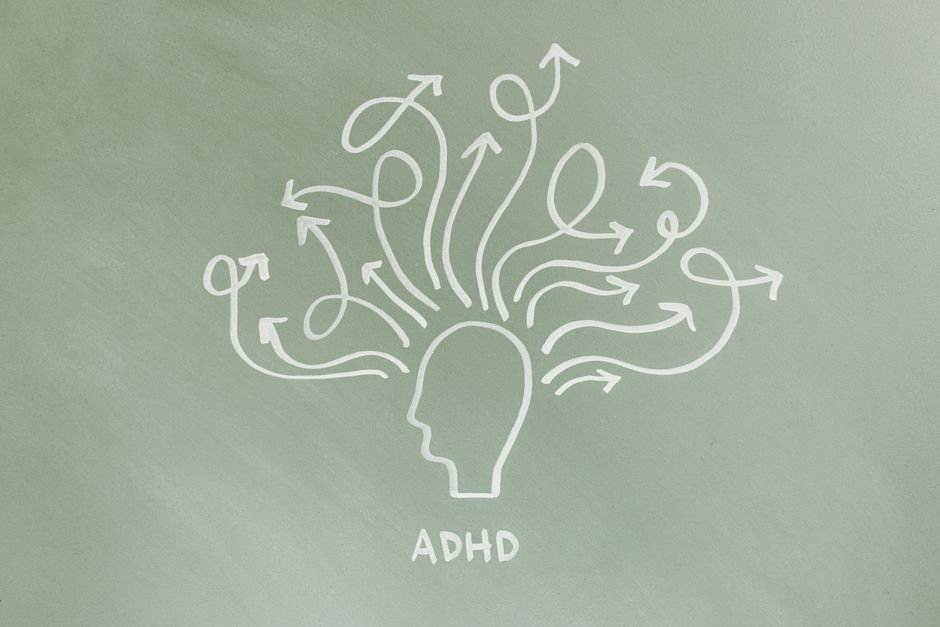
ADHD affects processing speed in a specific and measurable way: many people with ADHD take longer to complete mental tasks that require holding information in mind, filtering distractions, and producing a response. This shows up as slower reaction times on timed tests, more errors under time pressure, and a frequent gap between what someone clearly understands and how quickly they can show it.
That gap is real, but it is also widely misunderstood. Slower processing in ADHD is not a sign of low intelligence, and it is not the same thing as a learning disability. It reflects how the brain manages attention, working memory, and timing — and it often varies dramatically from one task to the next.
What Is Processing Speed, Exactly?
Processing speed is the rate at which your brain takes in information, works with it, and produces a response. It is one of the core cognitive abilities measured on standardized tests like the Wechsler Intelligence Scale for Children and the Wechsler Adult Intelligence Scale.
These tests measure how fast someone can do simple, automatic tasks. Examples include matching symbols to numbers, scanning a page to find a target, or repeating a short sequence in order. The tasks are deliberately easy. The point is not to test knowledge. The point is to test speed.
Clinicians often describe processing speed as the “output” side of thinking. You can understand something perfectly and still be slow to demonstrate it. That distinction matters enormously for people with ADHD, because it explains a common experience: knowing the answer but not getting to it in time.
Processing speed is separate from intelligence. A person can have an average or above-average IQ and a below-average processing speed score. When that pattern appears, it is sometimes called a processing speed deficit, and it is common in ADHD.
How Does ADHD Affect Processing Speed?
ADHD does not slow down every type of thinking. It tends to slow down thinking that depends on attention and working memory — the mental scratchpad you use to hold information while you work with it.
Three mechanisms appear to drive this.
Working memory load. Working memory is the ability to hold a few pieces of information in mind while using them. When a task requires juggling multiple steps, that mental scratchpad fills up quickly. In ADHD, working memory is often less efficient, so tasks that should be automatic take longer because the brain is doing more work to keep everything in place.
Attention filtering. Most environments are full of background noise, movement, and competing thoughts. A brain that struggles to filter those out spends extra effort ignoring them. That effort shows up as slower responses, especially in busy or distracting settings.
Timing and rhythm. Research suggests that people with ADHD often have differences in how they perceive and estimate time. This can make it hard to pace responses, which looks like slowness on timed tasks even when the underlying knowledge is intact.
An important nuance: processing speed in ADHD is often inconsistent rather than uniformly slow. Someone might respond quickly on one trial and slowly on the next. This variability is itself a hallmark of ADHD and is sometimes more noticeable than the average speed.
Why Does It Feel Like a Gap Between Knowing and Showing?
The gap between understanding and demonstrating is one of the most frustrating parts of ADHD. It happens because processing speed taxes the output stage, not the storage stage of knowledge.
Imagine you know a phone number but cannot dial it fast enough before you forget the last digit. The knowledge was there. The speed was not. Timed tasks work the same way for many people with ADHD.
This gap has real consequences. In school, a student who understands the material may run out of time on a test and score lower than their knowledge deserves. At work, someone may need extra seconds to organize a response in a meeting and get overlooked. In conversation, a person may lose their turn because they were still assembling their answer.
None of this reflects a lack of ability. It reflects a mismatch between how the brain processes information and how fast the environment demands a response.





Is Slower Processing Speed the Same as a Learning Disability?
No. Slower processing speed and learning disabilities are related but distinct. A learning disability involves difficulty with a specific academic skill, such as reading, writing, or math. Processing speed is a broader measure of how quickly the brain handles information across many types of tasks.
That said, the two can overlap. Some people with ADHD also have a learning disability, and processing speed difficulties can make academic challenges worse. This is why a full evaluation — not just a single score — matters when someone is struggling.
It is also worth knowing that processing speed can be affected by other conditions, including anxiety, depression, sleep problems, and certain medical issues. A slower score on a test is a clue, not a diagnosis on its own.
How Is Processing Speed Measured in ADHD?
Processing speed is usually measured with a standardized cognitive test, often as part of a broader evaluation. The most common tools are the Wechsler scales, which include subtests that specifically tap processing speed.
These subtests are timed and use simple visual or symbolic tasks. They are scored against norms for the person’s age, so the results show how someone compares to peers rather than an absolute number.
It helps to understand what a processing speed score does and does not tell you.
- It tells you how fast someone performs on simple, timed tasks compared to others their age.
- It does not measure intelligence, creativity, or how well someone understands complex ideas.
- It does not diagnose ADHD by itself. ADHD is diagnosed through a clinical history and symptom review, not a single test.
- It can change with context. Fatigue, anxiety, and sleep loss can lower scores on any given day.
Some clinicians use processing speed scores to help explain a person’s experience and to guide support strategies. Others place more weight on the overall pattern. There is no single accepted cutoff that defines a processing speed problem in ADHD.
Can Processing Speed in ADHD Change Over Time?
Processing speed is not fixed. It tends to improve through childhood and adolescence as the brain matures, and it can shift with sleep, stress, and practice.
For many people with ADHD, processing speed differences persist into adulthood, but the practical impact can shrink. Adults often build systems — extra time, written communication, prep before meetings — that reduce the demand for raw speed.
Treatment can also affect how processing speed shows up in daily life. Stimulant medications are well established for improving attention and reducing impulsivity in ADHD. Their effect on measured processing speed is less consistent. Some studies find modest improvements on timed tasks, while others find little change. The evidence here is mixed, and improvement on a lab task does not always translate into a noticeable real-world difference.
What does help, according to clinical practice, is reducing the speed demand itself. Extra time on tests, breaking tasks into smaller steps, and using written instructions are common accommodations. These are widely used and generally considered reasonable, though the strength of evidence varies by accommodation and setting.
What Helps When Processing Speed Is a Struggle?
The most effective approach is usually to change the task, not just the person. When speed is the bottleneck, removing time pressure often reveals the ability that was there all along.
Strategies that clinicians commonly recommend include:
- Requesting extra time on timed tests and assignments where eligible.
- Breaking large tasks into smaller steps with clear checkpoints.
- Using written or visual instructions instead of relying on memory.
- Reducing distractions in the environment during demanding tasks.
- Protecting sleep, since fatigue reliably slows processing.
These are practical supports, not cures. They do not raise raw processing speed. They reduce the gap between what someone knows and what they can show.
It is honest to say that no intervention has been shown to permanently “fix” processing speed in ADHD. The goal is management, not elimination. For many people, that management is enough to close most of the gap.
What Processing Speed Does Not Tell You
A processing speed score is one number among many. It does not capture persistence, creativity, pattern recognition, or the ability to think deeply about complex problems — all of which can be strengths in people with ADHD.
It also does not predict success. Many people with slower processing speed build successful careers precisely because they develop workarounds that play to their strengths.
The most useful way to think about processing speed in ADHD is as a difference in timing, not a difference in capacity. The information is there. The clock is just set differently.
Frequently Asked Questions
Does ADHD make you process information more slowly?
ADHD often slows processing on tasks that require working memory, attention filtering, and timed responses, but it does not slow all thinking. Many people with ADHD process some types of information at a normal or even fast rate.
Is slow processing speed a sign of low intelligence?
No. Processing speed and intelligence are separate measures, and it is common for someone with ADHD to have an average or above-average IQ alongside a below-average processing speed score.
Can processing speed improve with ADHD treatment?
Stimulant medications are well established for improving attention and impulsivity, but their effect on measured processing speed is inconsistent across studies. Some research finds modest gains on timed tasks, while other studies find little change.
What is the difference between processing speed and working memory in ADHD?
Working memory is the ability to hold and use information in mind, while processing speed is how quickly you take in information and respond. ADHD can affect both, and they often overlap on complex tasks.
