
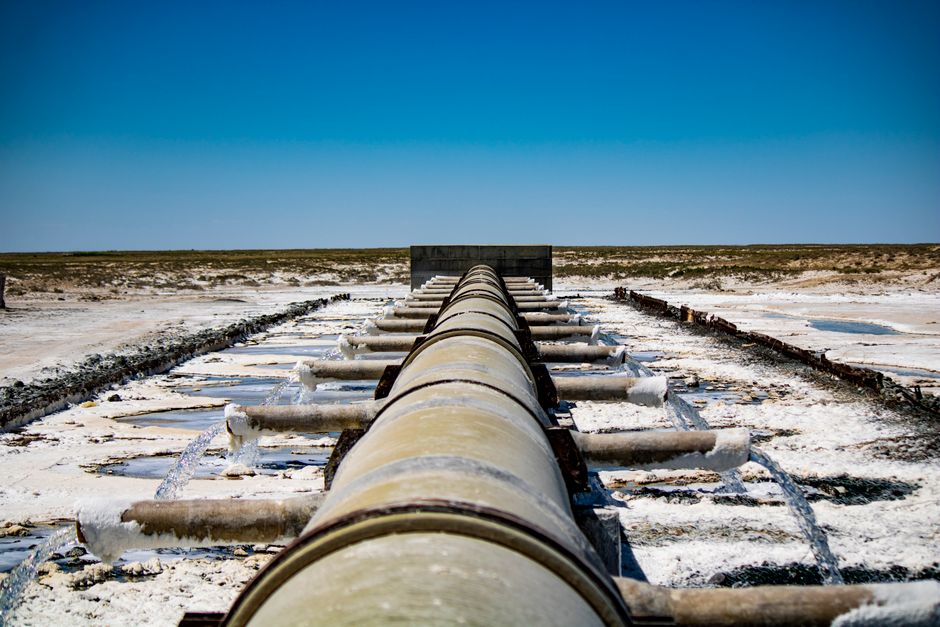
A wastewater treatment lagoon works by holding sewage or industrial wastewater in a large, shallow basin long enough for naturally occurring bacteria, algae, and gravity to break down and separate the waste. It is a slow, low-tech form of biological treatment that depends on sunlight, oxygen, temperature, and time rather than machinery and chemicals. The lagoon does not filter waste out. It creates conditions where living organisms consume it.
Lagoons are used across the United States, especially in small towns, rural communities, and industrial sites where building a conventional mechanical treatment plant would be too expensive. They are simple to build and cheap to run. They are also sensitive to weather, and they need far more land than a mechanical plant treating the same volume of waste.
What Is a Wastewater Treatment Lagoon?
A wastewater treatment lagoon is a constructed earthen basin, usually lined or sealed with compacted clay, that receives wastewater and treats it through natural biological processes. Think of it as a managed pond built for a specific job.
Most lagoons are shallow on purpose. Depth typically ranges from about three to eight feet, and that shallowness matters. Sunlight needs to penetrate the water to drive algae growth, and oxygen needs to move from the surface into the water. A deep lagoon would stratify and lose much of that function.
Lagoons fall into a few broad categories depending on how oxygen gets into the water:
- Aerobic lagoons stay oxygenated throughout, usually because they are shallow and algae produce oxygen through photosynthesis.
- Anaerobic lagoons are deeper and carry little or no dissolved oxygen. Bacteria that thrive without oxygen do the work. These are common in industrial settings with high-strength waste.
- Facultative lagoons have an oxygen-rich upper layer and an oxygen-poor lower layer, so both types of bacteria operate at once. This is the most common design for municipal sewage in small communities.
- Aerated lagoons use mechanical mixers or blowers to add oxygen, which speeds treatment and allows a smaller footprint.
The type chosen depends on the waste strength, the local climate, the available land, and the budget.
How Does a Wastewater Treatment Lagoon Actually Break Down Waste?
Treatment happens in layers, and each layer does a different part of the job. The process is biological from start to finish.
In a facultative lagoon, the top layer is where aerobic bacteria and algae work together. Algae use sunlight and nutrients from the wastewater to grow, and in the process they release oxygen into the water. Aerobic bacteria use that oxygen to consume organic matter, converting it into carbon dioxide, water, and more bacterial cells. The bacteria release carbon dioxide, which the algae use. It is a loop, and it runs on sunlight.
Below that, in the oxygen-poor bottom layer, anaerobic bacteria break down solids that settle to the bottom. This step is slower and produces gases, including methane and hydrogen sulfide, which is the source of the sulfur smell that lagoons can develop.
Solids that cannot break down settle into a sludge layer on the bottom. Over time this layer builds up. Every lagoon eventually needs sludge removed, though that may not be necessary for many years.
Pathogens, including bacteria and viruses that cause disease, are reduced over time by sunlight, temperature changes, and competition with other organisms. This reduction is gradual. It is one reason lagoons are not designed for rapid treatment.
What Happens to the Water After Treatment?
Treated water leaves the lagoon in one of a few ways, and the path it takes is regulated.
The most common routes are discharge to a nearby stream or river, evaporation, and seepage into the ground. Many lagoons are designed to hold water and let it evaporate or seep rather than release it, which is called a zero-discharge design. These are often used in dry climates where water loss to evaporation is high.
When water is discharged, it must meet permit limits set by the state environmental agency under the federal Clean Water Act. Those limits cover things like biochemical oxygen demand, suspended solids, and in some cases nutrients such as nitrogen and phosphorus. A lagoon that cannot consistently meet those limits may need upgrades or additional treatment steps.
Nutrient removal is a known weak point for lagoons. Nitrogen and phosphorus can pass through largely intact, and when discharged to surface water they can contribute to algal blooms downstream. This is one reason some communities have moved to mechanical plants or added polishing steps.





Why Do Lagoons Depend So Much on Weather and Season?
Temperature controls how fast bacteria work, and bacteria do not work fast in the cold. In winter, biological activity in a lagoon slows sharply, and treatment performance drops with it. In spring, as water warms, activity picks back up.
This seasonal swing is a real design constraint, not a minor detail. Lagoons in cold climates often need to hold water longer through winter and release it during warmer months when treatment is more effective. Some facilities store wastewater over winter and discharge in spring.
Sunlight matters too. Cloudy stretches reduce algae growth, which reduces oxygen production, which slows aerobic breakdown. Ice cover in winter blocks light entirely and can trap odors under the surface.
This is why lagoon performance is typically described in terms of average annual conditions rather than a fixed daily result. A lagoon that performs well in July may perform poorly in January.
What Problems Can Lagoons Have?
Lagoons are simple, but simple does not mean trouble-free. Several problems come up repeatedly.
Odor is the most common complaint. It usually signals that the lagoon has gone anaerobic in a layer where it should not be, often from organic overload, low oxygen, or sludge buildup. Hydrogen sulfide produces a rotten-egg smell.
Algae blooms can cause problems of their own. When algae die off in large numbers, their decomposition consumes oxygen and can push the lagoon toward anaerobic conditions. Some lagoons also discharge algae into receiving waters, where it counts as suspended solids.
Sludge accumulation reduces the working volume of the lagoon over time. Eventually the sludge must be removed, which is expensive and disruptive.
Seepage into groundwater is a concern where lagoons are not adequately lined. This is why many states require liners or set minimum clay content and compaction standards.
Overloading happens when a lagoon receives more waste than it was designed for. Growth in the community it serves, or industrial waste entering a municipal system, can push it past its capacity. When that happens, treatment quality drops.
How Do Lagoons Compare to Mechanical Treatment Plants?
Lagoons and mechanical plants treat the same kind of waste, but they do it very differently. The trade-offs are real and worth understanding.
| Factor | Lagoon | Mechanical Plant |
|---|---|---|
| Land needed | Large | Small |
| Construction cost | Lower | Higher |
| Operating cost | Lower | Higher |
| Treatment speed | Slow, days to weeks | Fast, hours |
| Weather sensitivity | High | Low |
| Nutrient removal | Limited | Better with added steps |
| Operator attention | Moderate | High |
The general pattern is that lagoons win on cost and simplicity, and mechanical plants win on consistency and control. For a small town with plenty of land and a tight budget, a lagoon often makes sense. For a dense urban area or a site with strict discharge limits, it usually does not.
One point that often gets lost: lagoons are not “natural” in the sense of being unmanaged. They are engineered systems that need monitoring, maintenance, and periodic sludge removal. They are low-tech, not no-tech.
Frequently Asked Questions
How long does wastewater stay in a treatment lagoon?
Retention time varies widely by design and climate, but facultative lagoons commonly hold wastewater for weeks rather than hours. Cold weather and higher waste strength generally require longer retention.
Do wastewater treatment lagoons smell bad?
They can, especially when the water turns anaerobic and produces hydrogen sulfide. A well-functioning aerobic or facultative lagoon typically has little odor, while odor problems usually point to an underlying issue like overload or low oxygen.
Are wastewater treatment lagoons safe for the environment?
When properly designed, lined, and operated within permit limits, they can protect water quality effectively. Risks come from seepage into groundwater, nutrient discharge to surface water, and poor management, which is why state and federal regulations govern their design and operation.
How often does sludge need to be removed from a lagoon?
There is no fixed schedule, because buildup depends on waste loading and lagoon design. Some lagoons go many years before desludging is needed, while heavily loaded ones require it sooner.
