
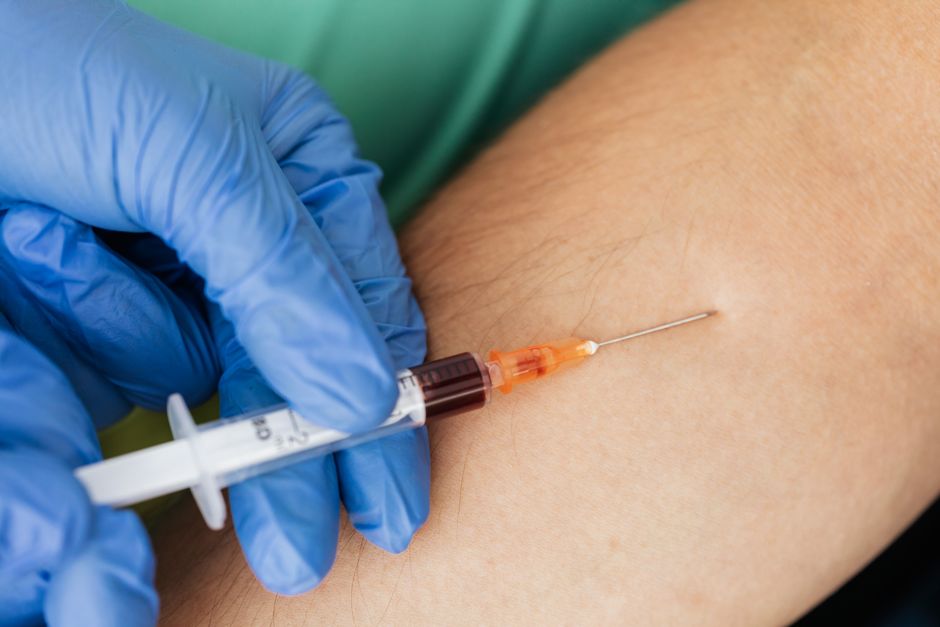
A TB skin test works by placing a small amount of purified TB proteins just under the skin of your forearm. If your immune system has ever been exposed to the bacteria that cause tuberculosis, it reacts to those proteins and a raised bump forms at the spot. The test does not tell you whether you are sick — it tells you whether your immune system recognizes TB. A health care worker measures the bump 48 to 72 hours later to read the result.
What Is a TB Skin Test and What Is It Actually Checking For?
A TB skin test checks whether your immune system has been sensitized to Mycobacterium tuberculosis, the bacterium that causes tuberculosis. The test goes by a few names: tuberculin skin test, Mantoux test, or PPD test (PPD stands for purified protein derivative).
The key thing to understand is what a positive result does and does not mean. A positive test shows that your immune system recognizes TB proteins. It does not prove you have active TB disease. Most positive tests in the US reflect latent TB infection — the bacteria are alive in the body but inactive, and the person is not sick and cannot spread TB to others.
This distinction matters because latent TB infection and active TB disease are treated very differently. Active TB causes symptoms like a persistent cough, fever, night sweats, and weight loss, and it can be transmitted to other people. Latent TB has no symptoms and is not contagious.
How Does a TB Skin Test Work Step by Step?
The test has two appointments, and both matter. Skipping the second one means the test cannot be read.
Step 1: The injection. A trained health care worker cleans the skin on the inner forearm and injects a small amount of tuberculin fluid just under the top layer of skin using a fine needle. You should see a small pale bump form right away. This is normal and usually fades within minutes.
Step 2: The waiting period. You go about your normal routine for 48 to 72 hours. Keep the area clean and dry. You can shower. Do not scratch it, and do not cover it with a bandage or lotion. Scratching can cause irritation that looks like a reaction when it is not one.
Step 3: The reading. A health care worker examines the site and measures the raised, hardened area — called induration — in millimeters. Redness alone is not measured. Only the firm, raised swelling counts.
The reaction is a delayed hypersensitivity response. Immune cells called T cells that have previously encountered TB proteins migrate to the injection site and release signals that cause localized swelling. This is why the reaction takes a day or two to fully develop rather than appearing immediately.
How Is the Result Read and What Do the Measurements Mean?
The size of the hardened bump, measured in millimeters, is compared against thresholds that vary by a person’s risk factors. A measurement that counts as positive for one person may be negative for another.
Three cutoff points are used in US clinical practice:
- 5 mm or larger is considered positive in people with weakened immune systems, people who have had close contact with someone with active TB, people with certain chest X-ray findings, and people who have received an organ transplant.
- 10 mm or larger is considered positive in people who recently arrived from countries where TB is common, people who inject drugs, people who live or work in high-risk settings such as nursing homes, homeless shelters, and prisons, laboratory workers who handle TB samples, and children under 4 years old.
- 15 mm or larger is considered positive in people with no known risk factors.
These thresholds are established public health criteria. The logic is that a larger reaction is needed to be meaningful in someone at low risk, while a smaller reaction is significant in someone at high risk.
Reading the test requires skill. The measurement is taken across the widest part of the hardened area, perpendicular to the forearm. A person who is not trained may measure only the red area or may misjudge the firmness of the swelling. This is why the test should always be read by a health care professional, not at home.
What Can Cause a False Result?
TB skin tests are not perfect, and both false positives and false negatives happen.
False positives can occur if you have been vaccinated with BCG, a TB vaccine given in many countries but rarely used in the US. BCG can cause a reaction even without TB exposure. However, the effect of BCG on the test tends to decrease over time, and in people vaccinated as infants, it often does not cause a positive result decades later. False positives can also come from infection with other mycobacteria that are common in the environment and not dangerous.
False negatives can occur if your immune system is weakened. Conditions and treatments that suppress immunity — including HIV, certain cancers, organ transplants, and medications that suppress the immune system — can prevent the skin from reacting even when TB infection is present. A negative result in someone with a weakened immune system may not be reliable.
Recent TB infection is another cause of false negatives. It can take several weeks after exposure for the immune system to become sensitized enough to react to the test.
What Happens If Your TB Skin Test Is Positive?
A positive skin test is not a diagnosis of active TB. It is a signal that more testing is needed.
The next steps usually include a chest X-ray to look for signs of active disease in the lungs and a medical evaluation for symptoms. In many cases, a blood test called an interferon-gamma release assay (IGRA) may be used to confirm the result, especially in people who have received the BCG vaccine. Blood tests are not affected by BCG vaccination.
If active TB disease is ruled out and latent TB infection is confirmed, a health care provider may recommend treatment to prevent the infection from ever becoming active. Several treatment options exist, and the choice depends on individual factors including age, health status, and potential drug interactions. This is a decision that should be made with a clinician, not from a general article.
If active TB disease is found, it is treatable with a combination of antibiotics taken for several months. Treatment for active TB typically involves multiple drugs to prevent the bacteria from becoming resistant.
TB Skin Test vs. TB Blood Test: What Is the Difference?
Both tests detect whether your immune system has been exposed to TB, but they work differently.
| Feature | TB Skin Test | TB Blood Test (IGRA) |
|---|---|---|
| Method | Injection under the skin; requires a return visit | Blood draw; single visit |
| Time to result | 48 to 72 hours | Usually 1 to 2 days for lab processing |
| Affected by BCG vaccine? | Yes, can cause false positive | No |
| Requires return visit? | Yes | No |
| Reading subjectivity | Measurement depends on reader technique | Lab-based, less subjective |
Neither test can distinguish latent TB infection from active TB disease on its own. Both require follow-up evaluation if positive.
The blood test is generally preferred in people who have received the BCG vaccine and in people who may have difficulty returning for the second appointment. The skin test remains widely used and is often the only option in some settings.
Who Should Get a TB Skin Test?
TB skin tests are used for screening, not for everyone. They are typically recommended for people with specific risk factors.
- People who have spent time with someone who has active TB disease
- Health care workers who may be exposed on the job
- People who live or work in crowded settings such as shelters, prisons, or nursing homes
- People who have recently moved from a country where TB is common
- People with HIV or other conditions that weaken the immune system
- People who inject drugs
- Children who have been in contact with someone with TB
Routine testing is not recommended for people without risk factors. The test is not useful as a general health screen, and a positive result in a low-risk person often leads to unnecessary worry and further testing.
If you are unsure whether you need a TB test, the most reliable answer comes from your health care provider or local health department, who can assess your individual situation.
Frequently Asked Questions
How long does it take to get TB skin test results?
Results are read 48 to 72 hours after the injection. If you do not return within that window, the test may need to be repeated.
Can I shower after a TB skin test?
Yes, you can shower and keep the area clean. Just avoid scratching the site or covering it with lotions or bandages before the reading.
What does a positive TB skin test mean?
A positive result means your immune system has been exposed to TB bacteria at some point. It does not mean you have active TB disease or that you are contagious.
Can I get a TB skin test if I had the BCG vaccine?
Yes, but the BCG vaccine can cause a false positive on the skin test. A TB blood test is often preferred for people who have received BCG.
