
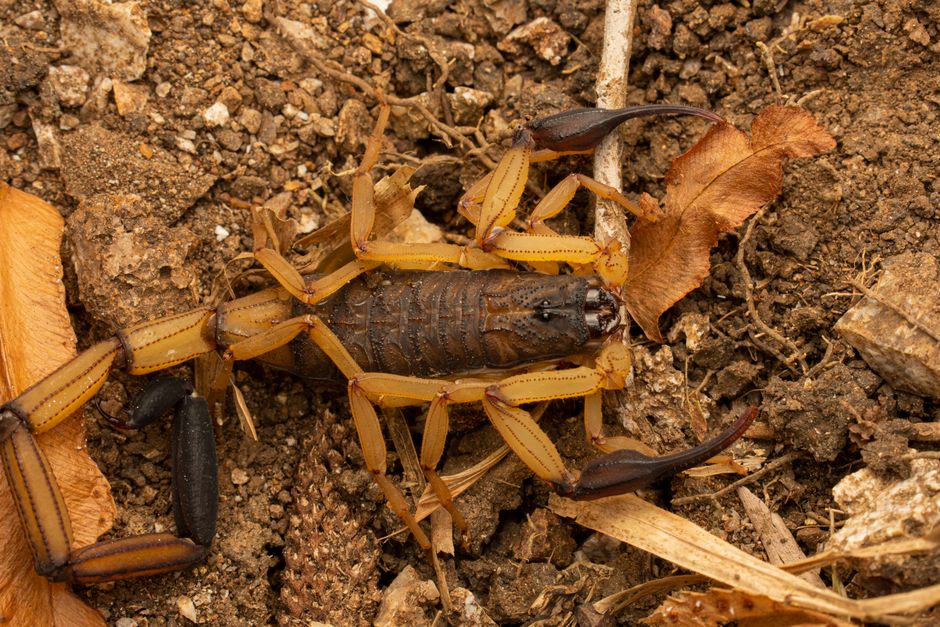
A scorpion sting injects venom through its tail, causing immediate pain, numbness, or tingling at the site. Symptoms range from mild local swelling to severe muscle twitching, difficulty breathing, or blurred vision. First aid involves cleaning the wound, applying a cool compress, and seeking emergency care if symptoms are severe, especially in children. Antivenom is the only specific treatment for dangerous stings, and it must be given in a hospital.
What Actually Happens When a Scorpion Stings You?
The scorpion uses its stinger at the end of its tail to inject venom. This is a defense mechanism and a way to catch prey. The venom is a mix of neurotoxins that affect nerve cells.
Most scorpions in the United States are not dangerous. The main exception is the bark scorpion, found in Arizona and parts of the Southwest. According to the CDC, only about 30 of the 1,500 scorpion species worldwide produce venom strong enough to kill a human.
When the stinger goes in, the venom begins to interact with sodium channels in nerve cells. This causes nerves to fire uncontrollably. That is what creates the pain, tingling, and muscle effects people experience.
What Are the Symptoms of a Scorpion Sting?
Symptoms depend on the type of scorpion and how much venom was injected. Most stings cause only local symptoms.
Local symptoms include sharp burning pain at the site. You may see redness, warmth, and mild swelling. Numbness or tingling that spreads beyond the sting area is common.
Severe symptoms happen with venomous species like the bark scorpion. These include muscle twitching or jerking, drooling, sweating, blurred vision, slurred speech, and trouble swallowing. In children, symptoms can escalate quickly. A child may become agitated, have rapid eye movements, or struggle to breathe.
Research published in the Journal of Medical Toxicology found that about one third of bark scorpion stings in children cause severe symptoms requiring hospital care. Adults generally have milder reactions unless they are elderly or have other health conditions.
How Does A Scorpion Sting Venom Symptoms First Aid Work?
First aid for a scorpion sting is straightforward but has clear limits. It manages symptoms while you wait for medical help. It does not neutralize the venom.
Start by washing the sting site with mild soap and water. This prevents infection. Apply a cool compress to reduce pain and swelling. Keep the area still and below heart level if possible. This slows venom spread.
Do not cut the wound or try to suck out venom. That does not work and can cause infection. Do not apply a tourniquet. It can damage tissue without stopping venom from moving through the body.
Pain relief is tricky. Acetaminophen (Tylenol) is safer than ibuprofen or aspirin because those can affect blood clotting. Antihistamines like Benadryl may help with itching but do not stop neurotoxic effects. Never give sedatives or alcohol. They can worsen breathing problems.


When Should You Go to the Emergency Room?
Any sting on a child under 6 years old needs immediate medical evaluation. Children have smaller bodies and less tolerance for venom. The same goes for older adults and people with heart or lung conditions.
Go to the ER if you experience any of these symptoms: trouble breathing, muscle twitching that does not stop, drooling, difficulty swallowing, blurred vision, or uncontrolled eye movements. These are signs of systemic venom effects.
Research from the American College of Medical Toxicology shows that most people who need antivenom receive it within 4 hours of the sting. The earlier it is given, the better it works. Delays can mean more severe symptoms and longer hospital stays.
If you are in an area where bark scorpions live, call ahead to the hospital. Not all hospitals stock scorpion antivenom. They may need to transfer you to a larger facility.
| Severity Level | Symptoms | Action Needed |
|---|---|---|
| Mild | Local pain, redness, mild swelling, tingling at site | Home care, monitor for 4 hours |
| Moderate | Numbness spreading, sweating, mild muscle twitching | Call poison control, consider ER |
| Severe | Trouble breathing, drooling, eye movements, seizure | Call 911 immediately |
What Does the Research Say About Scorpion Antivenom?
Antivenom is the only treatment that directly counteracts scorpion venom. It is made from antibodies produced in horses or sheep. When injected, it binds to venom molecules and stops them from causing damage.
A study published in Pediatrics looked at 450 children treated with antivenom for bark scorpion stings. Symptoms resolved within 2 hours for most. Without antivenom, symptoms often lasted 12 to 24 hours. The study concluded that antivenom is safe and effective when used properly.
Antivenom does have risks. About 5% of people have allergic reactions, ranging from mild rash to anaphylaxis. That is why it is only given in a hospital where doctors can manage reactions. It is not given for mild stings.
There is no evidence that home remedies, herbal treatments, or electric shocks help with scorpion venom. The FDA has approved exactly one antivenom for scorpion stings in the US: Anascorp. Everything else is unproven.
Common Misconceptions About Scorpion Stings
One widespread myth is that all scorpion stings are deadly. This is false. In the United States, there have been zero reported deaths from scorpion stings in over a decade. Globally, deaths occur mostly in rural areas of Mexico, North Africa, and the Middle East where antivenom is not available.
Another myth is that applying heat or ice directly to the sting helps. Ice can worsen numbness. Heat can increase blood flow and spread venom faster. A cool compress is best.
Some people believe that scorpions always sting when provoked. In reality, scorpions prefer to flee or hide. They sting only when trapped or threatened. Most stings happen when someone accidentally steps on them or reaches into a dark space where one is hiding.
There is also a claim that drinking milk or taking vitamin C neutralizes venom. There is no clinical evidence for either. The only way to neutralize venom in the body is through antivenom or time.
- Do not apply ice directly to the sting – use a cool cloth instead
- Do not cut the wound or attempt to suck out venom
- Do not apply a tourniquet or tight bandage
- Do not give alcohol or sedatives to someone stung
- Do not wait to see if symptoms get worse in children – go to the ER
What to Avoid After a Scorpion Sting
Avoid panic. Panic raises heart rate and can spread venom faster. Stay calm and move slowly.
Avoid home remedies like vinegar, baking soda, or essential oils. None of these have been shown to affect scorpion venom. They can irritate the skin and delay proper treatment.
Avoid taking painkillers that thin the blood, like aspirin or ibuprofen, if you might need antivenom. These can increase bleeding risk if an IV is placed. Stick with acetaminophen.
Avoid waiting to see if symptoms get worse. If you or your child has been stung by a bark scorpion, go to the ER immediately. Do not wait for symptoms to become severe. By the time breathing becomes difficult, the venom has already spread throughout the body.
Frequently Asked Questions
How long does a scorpion sting last?
Mild stings usually resolve within 24 to 48 hours. Severe stings treated with antivenom often improve within 2 hours.
Can you die from a scorpion sting in the United States?
No deaths from scorpion stings have been reported in the US since 2010. Bark scorpion stings can be very dangerous but are treatable with antivenom.
What does a scorpion sting feel like?
Most people describe it as a sharp, burning pain similar to a bee sting. Numbness or tingling that spreads beyond the sting site is common.
Is antivenom safe for children?
Yes, antivenom is safe for children when given in a hospital. Studies show it resolves symptoms quickly with low risk of serious side effects.
