
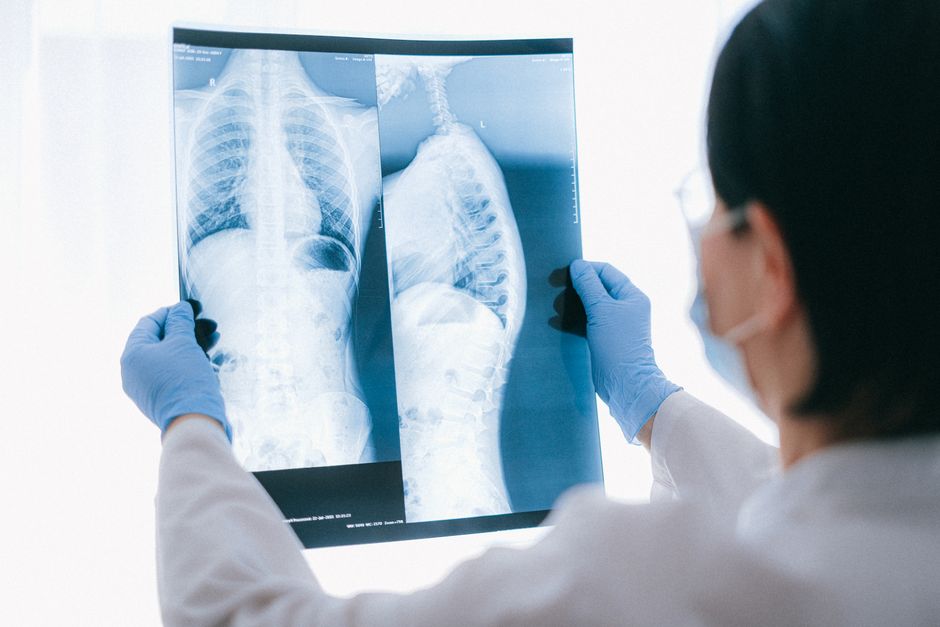
A lung collapse, known medically as a pneumothorax, happens when air leaks into the space between your lung and your chest wall. This air pushes on the outside of your lung, causing it to partially or fully deflate, much like letting air out of a balloon. The severity ranges from a small collapse that heals on its own to a complete collapse that requires emergency medical treatment.
How Does A Lung Collapse Actually Happen?
Your lungs are not attached directly to your chest wall. A thin layer of fluid keeps them gently pressed against the inner lining of your ribcage. This creates a vacuum-like seal called negative pressure. When that seal breaks, air rushes into the space between the lung and chest wall — the pleural space — and the lung collapses.
There are two main ways this happens. The first is trauma. A broken rib, a knife wound, or a car accident can puncture the chest wall and let air in. The second is spontaneous. The lung develops a small blister-like spot called a bleb that pops on its own, often without any clear reason. Spontaneous pneumothorax is more common in tall, thin people and smokers.
A third type, called tension pneumothorax, is a medical emergency. Air keeps entering the pleural space but cannot escape. Pressure builds up and can push the heart and windpipe to the opposite side of the chest. This requires immediate needle decompression in a hospital.
What Are the First Signs of a Collapsed Lung?
Sudden sharp chest pain on one side is the most common symptom. People often describe it as a stabbing sensation that gets worse when they take a deep breath or cough. The pain may travel to the shoulder or back on the same side.
Shortness of breath follows, ranging from mild to severe depending on how much of the lung has collapsed. Some people feel like they cannot catch their breath even while sitting still. Others only notice it during physical activity.
Other symptoms include a dry hacking cough, rapid breathing, and a bluish tint to the skin or lips in severe cases. The chest may also feel tight or heavy on the affected side. If you have any of these symptoms after a chest injury or even without one, seek medical attention right away.
How Is a Collapsed Lung Diagnosed?
Doctors start with a physical exam. They listen to your breathing with a stethoscope. A collapsed lung produces decreased or absent breath sounds on the affected side. They may also tap on your chest and notice a hollow sound instead of the normal dull thud.
A chest X-ray is the standard test for confirming a pneumothorax. It shows the air pocket clearly and helps doctors measure how much of the lung has collapsed. In some cases, a CT scan provides more detail, especially if the cause is unclear or if the collapse is very small.
Ultrasound is increasingly used in emergency rooms because it is fast and does not involve radiation. Research published in the New England Journal of Medicine found that ultrasound can detect pneumothorax with over 90 percent accuracy when performed by trained clinicians. Blood tests are not used to diagnose a collapsed lung, but they may help rule out other conditions like a heart attack or pulmonary embolism.





What Treatment Options Are Available?
Treatment depends on the size of the collapse and whether symptoms are severe. Small collapses — less than about 20 percent of the lung volume — often heal on their own. The body reabsorbs the trapped air over days or weeks. Doctors may recommend rest, pain relief, and a follow-up X-ray to confirm healing.
| Collapse Size | Typical Treatment | Hospital Stay |
|---|---|---|
| Small (under 20%) | Observation, rest, oxygen | Usually none or 1 day |
| Moderate (20-40%) | Needle aspiration or chest tube | 1-3 days |
| Large (over 40%) | Chest tube with suction | 3-7 days |
| Recurring | Surgery to prevent future collapses | 3-5 days |
For moderate to large collapses, doctors insert a chest tube. This is a flexible plastic tube placed between the ribs into the pleural space. The tube connects to a drainage system that removes the air and allows the lung to re-expand. The tube stays in place until the air leak stops, which usually takes a few days.
Oxygen therapy helps speed up reabsorption of the trapped air. High-flow oxygen can increase the rate of air absorption by four to six times. This is why patients with pneumothorax often receive supplemental oxygen even if their blood oxygen levels are normal.
What Happens After Treatment? Recovery and Risks
Most people recover fully from a collapsed lung. The lung re-expands once the air is removed, and normal breathing returns. However, the underlying weakness that caused the collapse may remain. About 30 percent of people who have a spontaneous pneumothorax will have another one within five years, according to data from the American College of Chest Physicians.
Recurrence risk is higher in smokers and people with underlying lung disease. For those who have a second collapse, doctors often recommend surgery. The most common procedure is called a pleurodesis. The surgeon creates inflammation between the lung and chest wall, causing them to stick together. This eliminates the pleural space and prevents future collapses.
After a chest tube is removed, most people can return to normal activities within two to four weeks. Heavy lifting, contact sports, and scuba diving should be avoided for at least six to eight weeks. Scuba diving is permanently discouraged for anyone who has had a pneumothorax because the pressure changes underwater can trigger a recurrence.
- Smoking: Quitting smoking reduces recurrence risk by up to 50 percent. Smoking weakens lung tissue and increases the chance of blebs forming.
- Air travel: Most doctors recommend waiting two to three weeks after a pneumothorax before flying. The cabin pressure changes can cause a small residual air pocket to expand.
- Follow-up: A repeat chest X-ray is standard to confirm the lung has fully re-expanded before clearing someone for normal activity.
What Myths About Lung Collapse Should You Ignore?
A common myth is that a collapsed lung happens only from injury. In reality, spontaneous pneumothorax accounts for roughly half of all cases. It can happen in healthy young adults with no warning, especially tall thin men between the ages of 20 and 40.
Another widespread claim is that coughing or sneezing hard can cause a lung to collapse. This is not supported by evidence. While violent coughing may worsen an existing small pneumothorax, it does not cause one in a healthy lung. The pressure from a cough is not enough to rupture a normal lung bleb.
Some people believe that a collapsed lung is always a medical emergency requiring immediate surgery. This is false. Many small pneumothoraxes resolve without any intervention. The body reabsorbs the air naturally over time. Only tension pneumothorax and large collapses with severe breathing difficulty are true emergencies.
There is also a persistent idea that you can “pop” a lung back into place by holding your breath or bearing down. This has no basis in physiology. The lung re-expands only when the trapped air is removed, either naturally or through a chest tube. No amount of breath-holding or positioning will fix it.
Frequently Asked Questions
Can a collapsed lung heal on its own?
Yes, small collapses often heal without treatment as the body reabsorbs the trapped air over one to two weeks.
How painful is a collapsed lung?
Most people describe the pain as sudden and sharp on one side of the chest, worsening with deep breaths or coughing.
Can you fly after a collapsed lung?
Most doctors recommend waiting two to three weeks after full recovery before flying, and you should get medical clearance first.
What is the main cause of a spontaneous collapsed lung?
The main cause is a ruptured bleb, a small air-filled blister on the lung surface, which is more common in tall thin people and smokers.
