
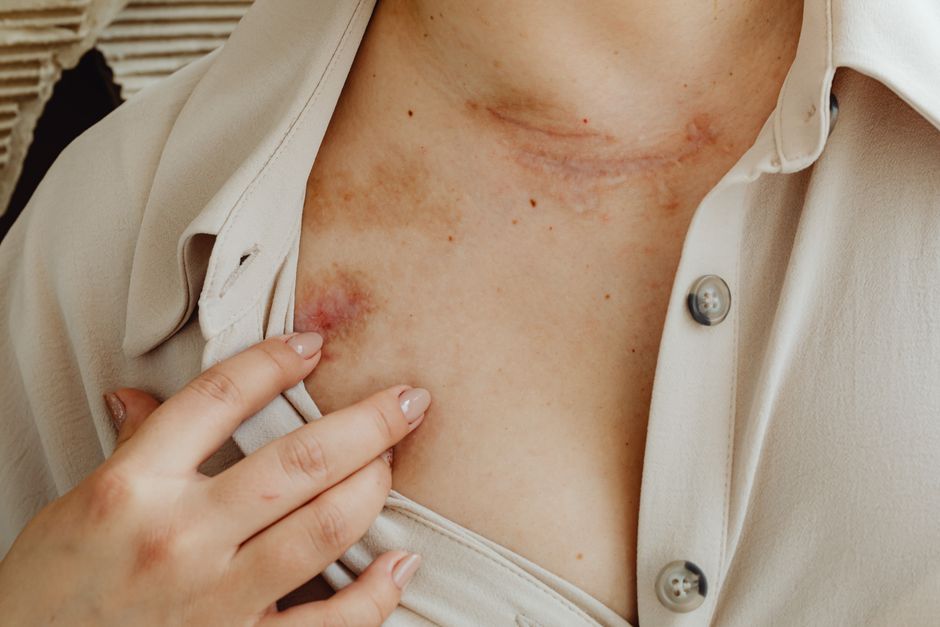
A degloving injury happens when skin and the layer of tissue just beneath it are torn away from the muscles, tendons, or bone underneath — like a glove being pulled off a hand. The damage is usually caused by a forceful, rolling, or pulling motion, most often in workplace accidents, motorcycle crashes, or machinery entanglements. It is a medical emergency, and the severity depends on how much tissue is lost, where the injury is, and how quickly the person receives surgical care.
How Does a Degloving Skin Injury Happen?
Degloving occurs when a high-force shearing or avulsion injury separates the skin and subcutaneous tissue from the deeper fascia — the tough layer that covers muscle. The force doesn’t cut cleanly. It pulls, rolls, and strips tissue away in a way that damages blood vessels along the way.
The mechanics matter because they explain why these injuries are so serious. When skin is pulled off, the small blood vessels that feed it are stretched and torn. Skin that has been separated from its blood supply starts to die within hours if circulation isn’t restored or the tissue isn’t removed.
Common scenarios include:
- Hands or arms caught in rotating machinery, conveyor belts, or rollers
- Motorcycle or bicycle crashes where limbs slide along pavement
- Rings caught on protruding objects, pulling skin off a finger
- Industrial accidents involving ropes, chains, or heavy equipment
- Vehicle collisions where a limb is dragged or compressed
The ring avulsion injury is a well-known example. A ring catches on something as the hand moves away, and the force strips skin and soft tissue from the finger. Even a relatively low-speed event can cause this if the ring acts as an anchor point.
What Is the Difference Between Degloving and Other Skin Injuries?
A degloving injury is defined by tissue separation, not by a cut or scrape. Lacerations slice through skin. Abrasions scrape the surface. Degloving pulls full-thickness skin and the layer beneath it away from the structures underneath.
There are two main types. In an open degloving, the skin is completely torn away and the underlying muscle, tendon, or bone is exposed. In a closed degloving, sometimes called a Morel-Lavallée lesion, the skin stays intact on the surface but separates from the tissue beneath, creating a pocket that fills with blood and fluid. Closed degloving is easy to miss because the skin looks normal at first.
Closed degloving most often occurs over areas where skin sits loosely over bone, such as the outer hip, thigh, or lower back. It typically follows a blunt impact or crush. Over hours to days, swelling develops and the collection of blood and fluid can become a problem if not drained or treated.
This distinction matters for treatment. Open degloving requires immediate surgical management. Closed degloving may not be obvious right away and can be misdiagnosed as a simple bruise.
Which Parts of the Body Are Most Commonly Affected?
The legs, hands, and fingers are the most frequently injured areas, largely because of how these body parts interact with machinery and vehicles. The anatomy of each area affects both the pattern of injury and the treatment approach.
Lower leg degloving often happens when a limb is caught between a moving vehicle and a stationary surface, or when a motorcycle slides along the road. The skin over the shin and calf can be stripped in a sheet-like pattern.
Hand and finger degloving is common in workplace accidents. Ring avulsion is a specific pattern where a ring catches and the finger is stripped. The thumb and index finger are frequently involved because of how the hand grips objects.
Scalp degloving is less common but well documented. Hair caught in rotating machinery can pull the scalp away from the skull. This is a serious injury because the scalp has a rich blood supply, and avulsion can cause significant bleeding.
Genital and perineal degloving injuries occur in specific accident patterns, including machinery accidents and some types of falls. These injuries require specialized surgical care and carry additional risks related to infection and function.
What Happens to the Body After a Degloving Injury?
The immediate danger is blood loss. Skin and subcutaneous tissue contain blood vessels, and when they’re torn, bleeding can be substantial. The deeper concern is that the separated tissue loses its blood supply.
Skin needs continuous blood flow to survive. When it’s pulled away from the underlying tissue, the perforating vessels that connect the skin to the deeper circulation are torn. Without blood flow, skin tissue begins to die. How quickly depends on the size of the area and the remaining blood supply.
Infection is a major risk. Exposed muscle, tendon, and bone are vulnerable to bacteria. Even with prompt treatment, infection rates in these injuries are significant. Tetanus is a specific concern if the wound was contaminated with soil or debris.
Fluid loss is another issue. Large areas of damaged tissue can lead to significant fluid shifts, and in severe cases, this can contribute to shock. Pain is often severe, though some people report less pain than expected if nerve endings are also damaged.
The long-term consequences depend on how much tissue is lost and how well reconstruction restores function. Scarring, loss of sensation, and reduced range of motion are common outcomes, especially when the injury involves joints or the hand.
How Are Degloving Injuries Treated?
Treatment begins with emergency care: controlling bleeding, assessing for other injuries, and preventing infection. The person is typically taken to surgery as soon as possible.
The surgical approach depends on the extent and location of the injury. Options include:
- Skin grafting — taking skin from another part of the body and placing it over the wound
- Flap surgery — moving tissue with its own blood supply to cover the defect
- Replantation — reattaching the avulsed tissue if it’s viable and the blood supply can be restored
- Debridement — removing dead or damaged tissue to prevent infection and prepare the wound for reconstruction
In some cases, the avulsed skin can be used as a graft if it’s healthy enough. In others, it’s too damaged and must be discarded. Surgeons assess the tissue’s viability based on color, bleeding, and other factors.
Antibiotics are typically given to reduce infection risk. Tetanus prophylaxis is standard if the person isn’t up to date. Pain management and wound care are ongoing concerns during recovery.
Recovery timelines vary widely. Some people need multiple surgeries. Physical therapy is often necessary to restore function, especially after hand or limb injuries. The evidence on long-term outcomes is limited because these injuries are relatively uncommon and vary so much from case to case.
Can Degloving Injuries Be Prevented?
Most degloving injuries are preventable because they happen in predictable situations. Workplace safety practices are the most effective prevention strategy.
Machinery guards, emergency stop mechanisms, and proper training reduce the risk of hand and arm injuries. Loose clothing, jewelry, and long hair should be secured around rotating equipment. Rings are a specific hazard — removing them before working with machinery or participating in certain sports reduces the risk of ring avulsion.
Motorcycle safety gear, including gloves and protective clothing, can reduce the severity of road rash and avulsion injuries. While no gear can prevent all injuries, it can limit tissue damage in a crash.
In industrial settings, following lockout-tagout procedures and maintaining equipment reduces the chance of entanglement. The Occupational Safety and Health Administration has guidelines for machinery safety that address these risks, though specific requirements vary by industry.
For closed degloving, prevention is harder because the injury often results from blunt trauma that’s difficult to avoid. Early recognition is key — swelling over the hip or thigh after a fall or impact should be evaluated, especially if it doesn’t improve.
What Should You Do If You Witness a Degloving Injury?
Call 911 immediately. This is a medical emergency that requires surgical care. Do not attempt to clean or reposition the tissue.
Control bleeding with direct pressure using a clean cloth or bandage. If the tissue is completely separated, wrap it in clean, moist gauze and place it in a sealed bag on ice — but do not let ice touch the tissue directly. Sometimes the avulsed tissue can be reattached, and preserving it gives surgeons the option.
Keep the person still and calm. Do not give them anything to eat or drink in case surgery is needed. Monitor for signs of shock, including pale skin, rapid pulse, and confusion.
Do not try to push the skin back into place or apply anything other than a clean dressing. Improper handling can worsen the injury or increase infection risk.
Frequently Asked Questions
What is the difference between an open and closed degloving injury?
In an open degloving injury, the skin is completely torn away and deeper tissue is exposed. In a closed degloving injury, the skin remains intact on the surface but separates from the tissue beneath, creating a pocket that fills with blood and fluid.
Can a degloved finger be saved?
Sometimes, but it depends on how much tissue is damaged and how quickly surgery is performed. Replantation is more likely to succeed when the blood supply can be restored and the tissue is not crushed.
How long does recovery from a degloving injury take?
Recovery varies widely based on the size and location of the injury, the number of surgeries needed, and the person’s overall health. Some people recover in weeks, while others need months of rehabilitation and multiple procedures.
Is a degloving injury the same as an avulsion?
Degloving is a specific type of avulsion injury where skin and subcutaneous tissue are torn away from the underlying structures. All degloving injuries are avulsions, but not all avulsions are degloving injuries.
