
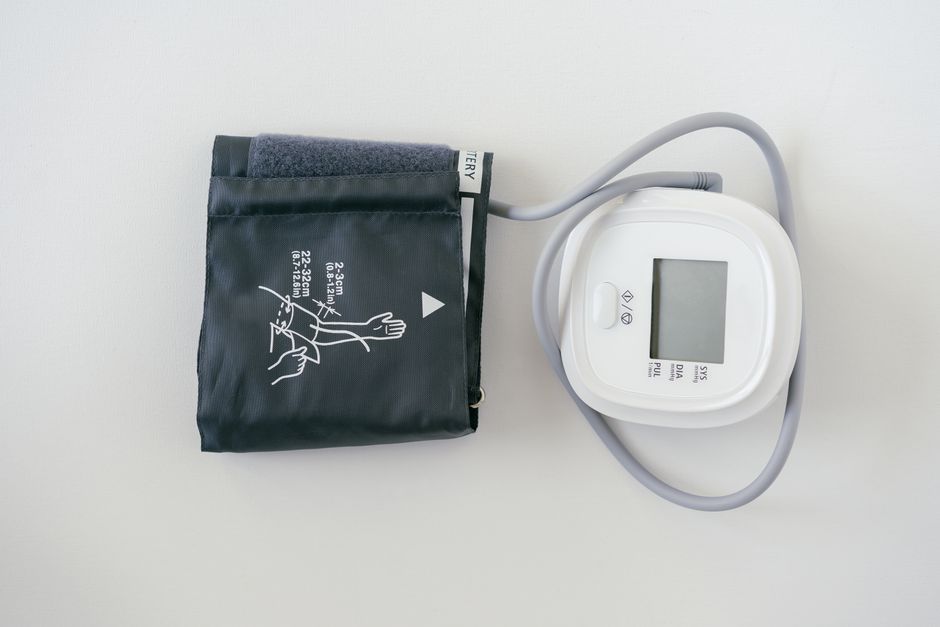
A blood pressure monitor measures the force of blood pushing against the walls of your arteries as your heart pumps. It works by inflating a cuff around your upper arm to temporarily stop blood flow, then slowly releasing the pressure while sensors detect when blood starts flowing again. The device calculates two numbers: systolic pressure (when your heart beats) and diastolic pressure (when your heart rests between beats). Most home monitors use a method called oscillometric measurement, which detects vibrations in the artery wall rather than listening for sounds like a doctor does with a stethoscope.
What Exactly Does a Blood Pressure Reading Mean?
Your blood pressure reading has two numbers. The top number is systolic pressure. It measures the force in your arteries when your heart contracts and pushes blood out. The bottom number is diastolic pressure. It measures the pressure when your heart relaxes and refills with blood.
These numbers are recorded in millimeters of mercury, written as mmHg. A normal reading is generally considered less than 120/80 mmHg. High blood pressure, also called hypertension, is diagnosed when readings consistently reach 130/80 mmHg or higher. This is a well-established clinical threshold used by healthcare providers across the United States.
How Does A Blood Pressure Monitor Work Step By Step
Understanding the step-by-step process helps you use the device correctly and trust its results. Here is what happens inside the monitor during a measurement.
Step 1: The cuff inflates. When you press the start button, a small pump inside the monitor fills the cuff with air. The cuff wraps around your upper arm and tightens. It presses firmly enough to temporarily stop blood flow through the brachial artery, the main artery in your upper arm.
Step 2: The pressure holds briefly. The cuff stays inflated for just a moment. During this time, the artery is fully compressed. No blood flows through it.
Step 3: The cuff deflates gradually. The monitor releases air slowly and steadily. As the pressure in the cuff drops, blood begins to push through the artery again. This is where the measurement actually happens.
Step 4: Sensors detect vibrations. Home monitors use the oscillometric method. A pressure sensor in the cuff detects tiny vibrations in the artery wall as blood starts flowing. The first noticeable vibration corresponds to your systolic pressure. As the cuff continues to deflate, the vibrations become stronger and then suddenly weaken. The point where they weaken significantly corresponds to your diastolic pressure.
Step 5: The monitor calculates your reading. The device’s internal software converts these vibration patterns into the two numbers displayed on the screen. The entire process typically takes 30 to 60 seconds.
Why Does Cuff Size and Placement Matter So Much?
Cuff size directly affects the accuracy of your reading. A cuff that is too small can produce a reading that is artificially high. A cuff that is too large can produce one that is artificially low. The bladder inside the cuff should wrap around at least 80 percent of your upper arm circumference.
Placement matters equally. The cuff should sit on bare skin, not over clothing. Its bottom edge should be about one inch above the crease of your elbow. Your arm should rest on a flat surface at heart level. If your arm hangs down at your side, gravity increases the pressure in your arteries and can raise the reading by several points.
Many monitors come with a single standard cuff size. If your arm circumference is larger or smaller than average, you may need to purchase a different cuff size separately. Check the monitor’s packaging for the recommended arm range before buying.



How Accurate Are Home Blood Pressure Monitors?
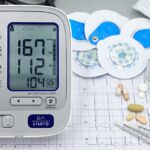
Home monitors are reasonably accurate when used correctly, but they are not perfect. Studies have shown that readings from validated home devices generally fall within 5 mmHg of readings taken by a healthcare professional. This level of accuracy is clinically useful for tracking trends over time.
Not all monitors on the market are validated for clinical accuracy. Organizations like the American Medical Association maintain lists of validated devices that have passed independent testing. Look for monitors that mention validation on their packaging.
Even a validated monitor gives inaccurate readings if you use it incorrectly. Common errors include smoking or drinking caffeine within 30 minutes before measuring, having a full bladder, crossing your legs, or talking during the measurement. Each of these can raise your reading by 5 to 10 mmHg.
What Is the Difference Between Upper Arm and Wrist Monitors?
Upper arm monitors are the gold standard for home use. The brachial artery in your upper arm is large and close to the surface, which makes measurements reliable. Clinical guidelines consistently recommend upper arm devices over wrist devices for most people.
Wrist monitors are more convenient and portable, but they have significant limitations. The arteries in your wrist are smaller and more difficult to measure accurately. Wrist monitors are highly sensitive to the position of your wrist. It must be held exactly at heart level during the measurement. Even a small deviation can change the reading substantially.
Some research suggests wrist monitors may be acceptable for people with very large arm circumferences that cannot fit a standard upper arm cuff. However, the evidence for their routine use is limited. Most healthcare providers recommend upper arm monitors unless there is a specific reason to use a wrist device.
How Often Should You Measure Your Blood Pressure?
For people managing hypertension, most clinicians recommend measuring twice daily. Take one reading in the morning before taking medication or eating, and one in the evening. Each time, take two or three readings one minute apart and record the average.
For people simply monitoring their health without a diagnosis, taking a reading a few times per week is sufficient. Measuring too frequently can lead to unnecessary anxiety, which itself raises blood pressure temporarily.
Blood pressure naturally fluctuates throughout the day. It is typically lower during sleep and higher in the morning. It rises with physical activity, stress, and even conversation. A single high reading does not mean you have hypertension. Healthcare providers base diagnoses on multiple readings taken over several days or weeks.
Keep a log of your readings with the date and time. Bring this log to your medical appointments. It provides far more useful information than a single reading taken in a clinic, where anxiety about being measured can artificially elevate your numbers. This phenomenon is so common that it has a name: white coat hypertension.
What Can Cause an Inaccurate Reading?
Several factors can distort your reading even when you use the monitor correctly. Irregular heart rhythms, such as atrial fibrillation, can confuse the oscillometric method. The irregular beats create inconsistent vibration patterns that some monitors cannot interpret accurately.
Recent food intake can affect readings. Digestion redirects blood flow to your stomach and intestines, which can temporarily alter blood pressure. Measure on an empty stomach or at least 30 minutes after eating.
Your posture matters more than most people realize. Sit with your back supported and your feet flat on the floor. Do not cross your legs. Crossing your legs can raise your systolic reading by 2 to 8 mmHg. Rest quietly for five minutes before taking a measurement. This allows your blood pressure to return to its resting baseline.
When Should You Trust a Home Reading Over a Clinic Reading?
Home readings are often more representative of your typical blood pressure than clinic readings. This is because you are relaxed in a familiar environment rather than anxious in a medical setting. For many people, home readings run 5 to 10 mmHg lower than clinic readings for this reason alone.
However, home readings are only useful if your monitor is validated and you use correct technique. A poorly positioned cuff or an unvalidated device produces unreliable data that can mislead both you and your healthcare provider.
If your home readings consistently differ from clinic readings by more than 10 mmHg, discuss this with your healthcare provider. The discrepancy may indicate a technique problem, a device problem, or an underlying condition requiring further evaluation.
Frequently Asked Questions
How often should I replace my blood pressure monitor?
Most manufacturers recommend replacing home monitors every two to three years. You should also have your monitor checked for accuracy if you drop it or if readings suddenly seem inconsistent with how you feel.
Can I use a blood pressure monitor on my wrist instead of my upper arm?
Upper arm monitors are more accurate and recommended by clinical guidelines for most people. Wrist monitors can be used but are highly sensitive to wrist position and must be held exactly at heart level during measurement.
Why is my home blood pressure reading different from the doctor’s office reading?
This is normal and expected. Anxiety about being in a medical setting can raise your blood pressure, a phenomenon called white coat hypertension. Home readings taken in a relaxed environment often run 5 to 10 mmHg lower than clinic readings.
What time of day should I take my blood pressure?
Most clinicians recommend taking readings in the morning before eating or taking medication, and again in the evening. Take two to three readings one minute apart each time and record the average.
