
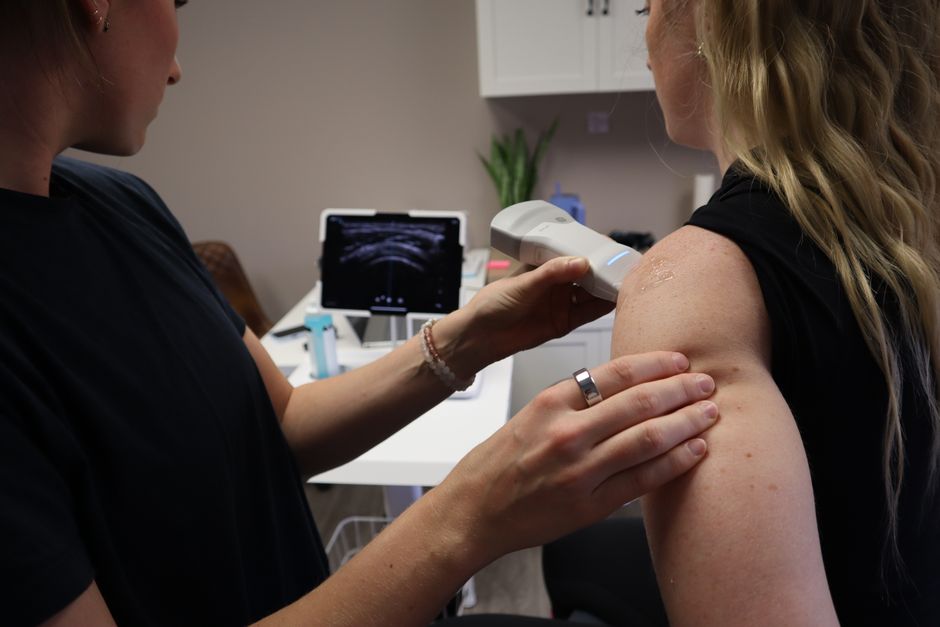
Tendonitis is treated by calming the irritated tendon first, then rebuilding its strength with gradual loading. Most cases improve with rest from the aggravating activity, ice or heat for comfort, over-the-counter pain relievers, and a structured physical therapy program. The single most important step is a progressive exercise plan that loads the tendon without overwhelming it.
Tendonitis means inflammation of a tendon, the tough cord of tissue that connects muscle to bone. It shows up most often in the elbow, shoulder, wrist, knee, and heel. The word itself is a bit misleading, and that matters for treatment. More on that below.
What Is Tendonitis and Why Does It Hurt?
Tendons are built to handle load. They attach muscle to bone and transmit the force that lets you move. When a tendon is asked to do more than it is conditioned for, the tissue responds with pain and reduced function.
The pain usually comes on gradually. It may start as a dull ache after activity and progress to pain during activity, then pain at rest. Common sites include the outside of the elbow (tennis elbow), the shoulder (rotator cuff), the wrist, the kneecap, and the heel (Achilles).
Here is the clarification that changes how you think about treatment. What doctors call “tendonitis” is often not true inflammation. Research over the past two decades has shown that many chronic tendon problems involve a process called tendinopathy — a breakdown and disorganization of tendon tissue with very few inflammatory cells present. Some researchers describe it as a failed healing response rather than active inflammation.
This distinction is not academic. It helps explain why rest alone often fails and why anti-inflammatory drugs, while useful for short-term comfort, do not fix the underlying problem. The tendon needs to be reloaded and rebuilt, not just quieted.
How Do You Treat Tendonitis?
Treatment works in two phases: reduce the acute pain, then progressively strengthen the tendon. Skipping the second phase is the most common reason tendonitis keeps coming back.
Phase 1: Calm the Irritation
In the first days to weeks, the goal is to settle symptoms without complete immobilization. Prolonged total rest can weaken the tendon further and make return to activity harder.
- Relative rest: Avoid the specific activity that triggered the pain, but keep moving in ways that do not provoke it.
- Ice or heat: Ice can ease pain after activity. Heat can loosen stiffness before activity. Neither changes the underlying tendon condition, but both are reasonable for comfort.
- Over-the-counter pain relievers: Nonsteroidal anti-inflammatory drugs (NSAIDs) such as ibuprofen or naproxen can reduce pain short term. Use them according to the label and check with a pharmacist or doctor if you take other medications or have stomach, kidney, or heart conditions.
- Activity modification: Change how you do the task — adjust your grip, your workstation, or your training volume — rather than stopping everything.
Some clinicians recommend a short course of NSAIDs and others caution against relying on them, because reducing pain can tempt you to overload a tendon that is not ready. The evidence here is mixed. Pain relief is legitimate; using it to push through pain is not.
Phase 2: Rebuild the Tendon
Progressive loading is the core of tendon rehabilitation. The tendon adapts to controlled stress by becoming stronger and better organized. This is why physical therapy is the mainstay of treatment for most tendinopathies.
A typical program uses slow, controlled exercises that load the tendon without sharp pain. Isometric holds, eccentric (lowering) exercises, and eventually heavier strength work are common approaches. A physical therapist can tailor the load, volume, and progression to the specific tendon and to your baseline strength.
Expect this to take time. Tendon tissue has a limited blood supply and heals slowly. Many people notice meaningful improvement over weeks to a few months, and full recovery can take longer. That timeline is well established in clinical practice, though individual courses vary widely.
What About Cortisone Shots and Other Medical Treatments?
Cortisone injections can reduce pain in the short term. The evidence on long-term benefit is less encouraging. Some studies suggest that corticosteroid injections may relieve symptoms early but are associated with worse outcomes at longer follow-up compared with exercise-based treatment, particularly for certain tendons. This does not make injections wrong, but it means they are best viewed as a tool for short-term relief rather than a cure.
Other options your doctor may discuss include:
- Physical therapy: The best-supported treatment for most tendinopathies.
- Extracorporeal shockwave therapy: Some evidence supports its use for certain chronic tendon problems, though results vary by tendon and study.
- Platelet-rich plasma (PRP) injections: Evidence is mixed. Some trials show benefit and others do not, and it is generally not a first-line treatment.
- Surgery: Reserved for cases that do not improve after a reasonable course of conservative treatment. It is not a first step.
Be cautious with any clinic advertising a guaranteed fix. No treatment is guaranteed, and many marketed tendon therapies have limited or no high-quality human trial support.
When Should You See a Doctor?
See a clinician if pain is severe, follows a sudden injury, or does not improve after a few weeks of self-care. Also seek care if you cannot bear weight, have swelling, redness, or warmth over the tendon, or notice a sudden pop with loss of function — that last pattern can indicate a tendon rupture, which needs prompt medical assessment.
Certain situations warrant earlier evaluation. If you have diabetes, take fluoroquinolone antibiotics, or use corticosteroids, your risk of tendon problems can be higher, and a doctor should be involved. Pregnant women and people with underlying inflammatory conditions should also discuss symptoms with a clinician rather than self-treating for long periods.
Red flags that need urgent attention include fever with a swollen, hot joint, and inability to move the affected limb. These can signal infection or other serious problems and are not typical tendonitis.
Can You Prevent Tendonitis From Coming Back?
Recurrence is common, and the best prevention is the same principle that treats it: gradual, consistent loading. Tendons respond to steady increases in demand and struggle with sudden spikes.
- Increase training volume or activity intensity slowly rather than in jumps.
- Warm up before demanding activity and cool down after.
- Vary repetitive movements and take breaks during sustained tasks.
- Keep strength work in your routine, especially for shoulders, forearms, and calves.
- Address ergonomics at work if your symptoms are linked to a repetitive task.
There is no single stretch or supplement proven to prevent tendonitis. Claims otherwise are not supported by strong evidence. Consistency with loading and sensible progression is what the evidence supports.
How Long Does Tendonitis Take to Heal?
Minor cases can settle within days to a few weeks. Chronic tendinopathy often takes several weeks to months to improve, and some people manage symptoms for longer. The timeline depends on the tendon involved, how long the problem has been present, and how consistently rehabilitation is followed.
Pain often improves before the tendon fully adapts. That gap is why returning to full activity too quickly is a common setback. A gradual return, guided by how the tendon responds over the following day, tends to work better than pushing through pain.
Frequently Asked Questions
Should you rest completely with tendonitis?
No. Complete rest can weaken the tendon and delay recovery. Relative rest from the aggravating activity, combined with gentle movement and progressive loading, is generally better.
Is ice or heat better for tendonitis?
Either can help with comfort. Ice is often used after activity to ease pain, and heat is often used before activity to reduce stiffness. Neither treats the underlying tendon problem.
Can tendonitis go away on its own?
Mild cases can improve with activity modification and time. Chronic tendinopathy often needs structured loading exercise to resolve, and some cases persist without rehabilitation.
Do cortisone shots cure tendonitis?
No. They can reduce pain in the short term, but evidence suggests they do not reliably improve long-term outcomes and may be associated with worse results at longer follow-up for some tendons.
