
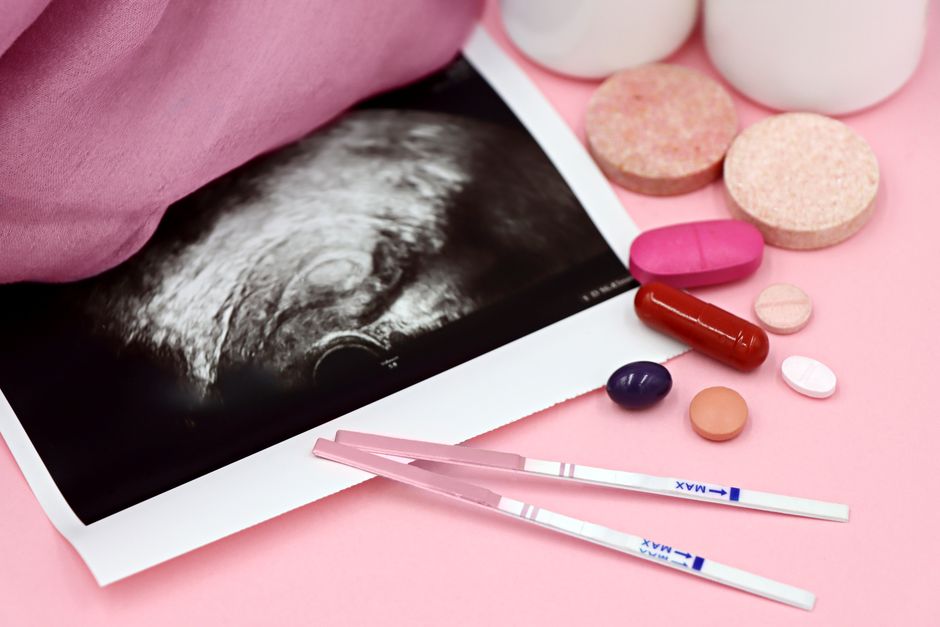
If you and your partner have been trying to conceive without success, the next step is usually a fertility evaluation. Testing for infertility typically starts with a conversation about your health history, followed by blood tests, semen analysis, and imaging. For women, that often means bloodwork to check hormones and ovulation plus an ultrasound to look at the uterus and ovaries. For men, the first and most important test is a semen analysis. Most people complete the basic workup within a few weeks, though some tests need to be timed to your cycle.
When Should You Get Tested For Infertility?
Infertility is generally defined as not getting pregnant after 12 months of regular, unprotected sex. But that timeline shifts depending on your age and health history.
For women under 35, most doctors recommend starting an evaluation after 12 months of trying. For women 35 and older, the threshold is usually 6 months. If you have irregular periods, known conditions like endometriosis or polycystic ovary syndrome (PCOS), a history of pelvic surgery, or previous cancer treatment, testing may begin right away.
For men, there is no age-based timeline that changes the recommendation. If a couple is being evaluated, the male partner should be tested at the same time — not after the female partner’s tests come back normal. Research consistently shows that male factors contribute to roughly half of all infertility cases, either alone or combined with female factors. Waiting to test the male partner delays answers and treatment.
Some couples have what doctors call unexplained infertility. That means standard tests come back normal but pregnancy still does not happen. This is a real diagnosis, not a sign that nothing is wrong. It means the available tests cannot identify the specific cause.
What Does the Initial Fertility Workup Include?
A fertility evaluation is not one test. It is a series of tests that look at different parts of the reproductive system. The goal is to find out whether eggs are being released, sperm are healthy, the fallopian tubes are open, and the uterus can support a pregnancy.
Both partners are evaluated at the same time. This is standard practice and it saves months of waiting.
For women, the core tests include:
- Ovulation testing — blood tests that measure progesterone levels, usually drawn about a week after ovulation
- Hormone panel — including follicle-stimulating hormone (FSH), luteinizing hormone (LH), estradiol, thyroid-stimulating hormone (TSH), and prolactin
- Anti-Müllerian hormone (AMH) — a blood test that gives information about ovarian reserve, meaning the number of eggs remaining
- Transvaginal ultrasound — to examine the uterus, ovaries, and follicle development
- Hysterosalpingography (HSG) — an X-ray procedure that checks whether the fallopian tubes are open
For men, the core test is a semen analysis. It measures sperm count, movement (motility), and shape (morphology). If results are abnormal, a repeat test is usually done before any conclusions are drawn. Semen quality can vary between samples.
How Do You Test For Infertility What To Expect During Each Test?
Knowing what each test involves can ease a lot of anxiety. Most are quick, low-risk, and done on an outpatient basis.
Blood Tests
Blood draws are the most common part of the workup. For women, the timing matters. FSH and estradiol are usually checked on day 2 or 3 of your menstrual cycle. Progesterone is checked about 7 days after ovulation — which for a 28-day cycle means around day 21. AMH can be drawn any day of the cycle.
These are standard blood draws from a vein in your arm. Results typically come back within a few days to a week.
Semen Analysis
The sample is collected at the clinic or at home and brought in within a specified time. You will be asked to avoid ejaculation for 2 to 5 days before the test. The analysis itself takes a few hours. Results are usually available within a day or two.
A normal semen analysis does not guarantee fertility, and an abnormal one does not guarantee infertility. It is one piece of the picture.
Transvaginal Ultrasound
A thin ultrasound probe is placed in the vagina to get clear images of the uterus and ovaries. It takes about 15 to 30 minutes. You may feel mild pressure but it is not painful for most people. This test can detect fibroids, ovarian cysts, and structural problems in the uterus.
Hysterosalpingography (HSG)
During an HSG, a contrast dye is injected through the cervix into the uterus. X-ray images track whether the dye flows through the fallopian tubes. If the dye spills out the ends of the tubes, they are open. If it does not, there may be a blockage.
The procedure takes about 15 to 30 minutes. Many women report cramping during and after the test. Some doctors recommend taking an over-the-counter pain reliever beforehand. Ask your doctor what they recommend for you.
What Do the Results Mean?
Fertility test results are not pass-or-fail. They paint a picture of what might be making conception difficult.
For women, abnormal results might point to:
- Problems with ovulation — the most common cause of female infertility
- Blocked or damaged fallopian tubes
- Uterine issues such as fibroids or polyps
- Low ovarian reserve, meaning fewer eggs than expected for your age
- Hormonal imbalances affecting the thyroid or prolactin
For men, abnormal semen analysis results might indicate:
- Low sperm count (oligospermia)
- Poor sperm movement (asthenospermia)
- Abnormal sperm shape (teratospermia)
- No sperm in the ejaculate (azoospermia), which may require further testing
Sometimes results are normal across the board and no cause is found. That is unexplained infertility. It does not mean there is no chance of pregnancy — it means the current tests cannot identify the reason.
How Long Does Fertility Testing Take?
The basic workup usually takes 2 to 4 weeks, but it can stretch longer depending on your cycle and which tests are needed. Some tests must be timed to specific days of your menstrual cycle, which means waiting for your next cycle if the timing is missed.
Here is a general timeline:
- Initial consultation and blood work — within the first week or two
- Semen analysis — results within a few days
- Cycle-dependent blood tests — may require waiting for day 2-3 or day 21 of your cycle
- Ultrasound — usually scheduled within days
- HSG — typically scheduled after your period ends but before ovulation
If all tests are done in one cycle, you could have a full picture within a month. If testing is spread across two cycles, it may take 6 to 8 weeks.
What Happens After Testing?
Once results are in, your doctor will discuss what they found and what options exist. Treatment depends entirely on the cause. Some issues can be addressed with medication, such as ovulation-inducing drugs. Others may require surgery, like removing fibroids or opening blocked tubes. Some couples may be referred for assisted reproductive technology like intrauterine insemination (IUI) or in vitro fertilization (IVF).
If all tests are normal, your doctor may still recommend treatment or further observation. Unexplained infertility does not mean no treatment is available.
It is also worth knowing that fertility testing is not a one-time event. If you pursue treatment and it does not work, your doctor may repeat certain tests or order additional ones. Fertility can change over time.
What About At-Home Fertility Tests?
At-home fertility tests have become popular. They typically measure hormones in urine or saliva, or they may offer semen analysis kits. Some also provide AMH testing through a finger-prick blood sample.
These tests can give you some information, but they are not a substitute for a clinical evaluation. No at-home test can check whether your fallopian tubes are open. No at-home test can fully assess semen quality the way a lab analysis can. And interpreting hormone results without a doctor’s context can be misleading.
If an at-home test shows something abnormal, the next step is still to see a doctor. If it shows something normal, that does not rule out infertility.
Frequently Asked Questions
How do you test for infertility?
Testing starts with a medical history and physical exam, then moves to blood tests, semen analysis, ultrasound, and sometimes an HSG to check the fallopian tubes. Both partners are tested at the same time because male and female factors each contribute to about half of cases.
How long does fertility testing take?
The basic workup usually takes 2 to 4 weeks if tests can be done in one cycle, but it may take 6 to 8 weeks if testing spans two menstrual cycles. Some tests must be timed to specific days of your cycle.
Is infertility testing painful?
Most tests are not painful — blood draws and ultrasound cause minimal discomfort. The HSG procedure can cause cramping during and after the test, and some doctors recommend taking an over-the-counter pain reliever beforehand.
Can you test for infertility at home?
At-home tests can measure some hormones or provide a basic semen analysis, but they cannot check whether fallopian tubes are open or fully evaluate semen quality. A clinical evaluation is still needed for a complete picture.
