
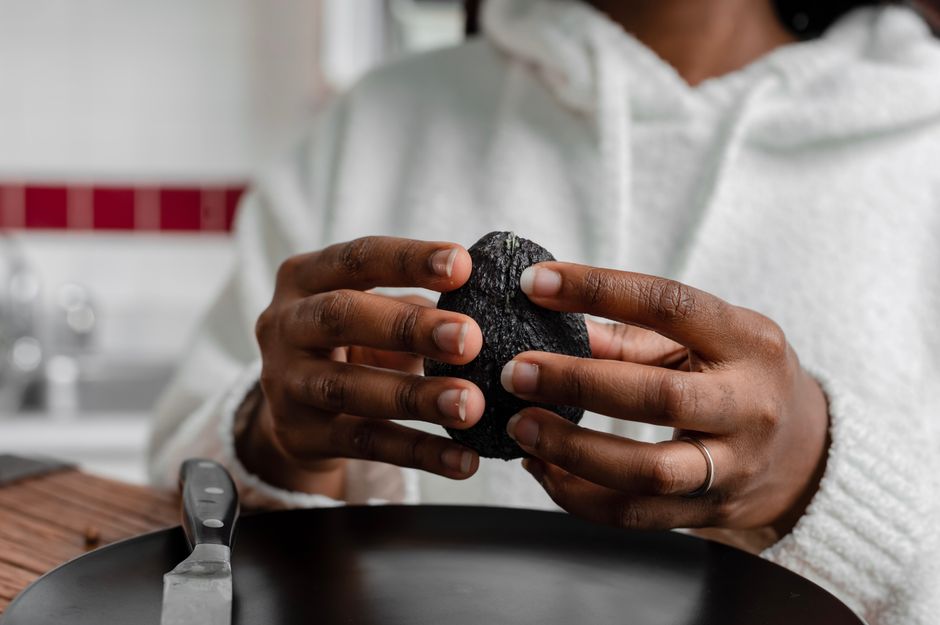
You squeeze it gently near the stem end. If it yields to light pressure without feeling mushy, it is ready. The stem cap should pop off easily, revealing green underneath — not brown. Color alone will fool you. Dark skin does not guarantee ripeness, and some varieties stay green when perfectly ripe. The real test is a soft squeeze and a peek under the stem.
Does the Color of an Avocado Tell You If It Is Ripe?
Many people pick avocados by color alone. It is the most common method and also the least reliable. Hass avocados turn from bright green to dark purple-black as they ripen, but the change happens at different rates depending on growing conditions, storage, and handling.
A dark avocado can still be rock hard inside. A green one can be perfectly soft and ready to eat. The Hass variety is the most common in US grocery stores, and its darkening skin is a rough guide at best. Fuerte and other green-skin varieties never turn dark at all, even when fully ripe.
Color is a starting point, not a decision maker. Use it to narrow your choices, then apply the touch test. If you only look at color, you will bring home hard avocados or bruised ones equally often.
What Is the Best Way to Squeeze an Avocado Without Bruising It?
Place the avocado in the palm of your hand, not in your fingertips. Fingertip pressure creates bruises in the soft flesh. Your palm distributes the pressure evenly, letting you feel firmness without damaging the fruit.
Apply gentle pressure with the base of your thumb and the heel of your palm. If the avocado feels hard and does not give at all, it needs more time. If it feels soft and a little springy, it is ready. If it feels mushy or your finger leaves a dent, it is overripe.
Never squeeze the body of the avocado with your thumb and index finger. That is the fastest way to ruin a good avocado. The brown spots you see inside are often from shoppers squeezing too hard.
How Do You Tell When an Avocado Is Ripe Using the Stem Test?
The stem test is the most reliable single method. Flick the small brown stem cap off the top of the avocado. If it comes off easily and the flesh underneath is bright green, the avocado is ripe.
If the stem cap does not come off, the avocado is not ready. If it comes off and the flesh underneath is brown, the avocado is overripe or has internal bruising. Brown under the stem means the fruit is past its prime even if the rest feels okay.
This test works because the stem area is the last part of the avocado to ripen. When that spot is ready, the rest usually is too. The USDA and avocado growers recommend this method as the most accurate home test. It takes two seconds and saves you from cutting into an unripe fruit.




What Does the Ripeness Feel Like for Different Avocado Uses?
The right ripeness depends on what you are making. You do not want the same avocado for guacamole that you want for slicing on toast. Most people do not think about this, and it is why their avocado dishes disappoint.
| Use | Ripeness Level | Firmness Test |
|---|---|---|
| Guacamole or mashing | Very ripe, soft | Yields easily to palm pressure, slightly mushy |
| Slicing for sandwiches or toast | Medium ripe, firm-soft | Yields to gentle pressure but holds shape |
| Dicing for salads or bowls | Just ripe, firm | Slight give when squeezed, still holds firm |
| Stuffed or baked avocado | Under-ripe, firm | Hardly any give when squeezed |
For guacamole, you want the avocado so soft it almost falls apart when you cut it. For avocado toast slices, you want it soft enough to eat but firm enough to hold a knife cut. For salads, a firmer avocado holds its shape and does not turn into mush when tossed.
Stuffed avocados and baked avocado recipes actually call for under-ripe fruit. The heat softens them, so starting with a ripe avocado leaves you with a mushy mess. Most recipes do not mention this, but it makes a real difference.
How Can You Speed Up or Slow Down Avocado Ripening?
If your avocado is hard and you need it today, put it in a paper bag with an apple or banana. Both fruits release ethylene gas, which is the natural plant hormone that triggers ripening. The bag traps the gas and speeds the process by one to three days.
Do not use plastic bags. Plastic traps moisture and causes mold before the avocado ripens. Paper lets the fruit breathe while holding the gas. Keep the bag at room temperature, not in the fridge. Cold stops the ripening process entirely.
If your avocado is ripe and you are not ready to eat it, put it in the refrigerator immediately. Cold temperatures slow the ethylene production and keep the avocado at its current ripeness for two to three days. A ripe avocado in the fridge will stay good longer than one left on the counter.
Once you cut an avocado, the flesh browns from oxidation. Lemon juice, lime juice, or vinegar slows this down. So does pressing plastic wrap directly against the surface so no air touches the flesh. The pit does not help — that is a myth. Leaving the pit in the bowl only protects the flesh directly under it.
What Common Mistakes Do People Make When Checking Avocado Ripeness?
The biggest mistake is squeezing too hard. You see people in grocery stores pinching avocados with their fingers, leaving bruises that turn brown. The avocado is ruined before anyone buys it. Use your palm, not your fingers.
Another mistake is relying on the stem cap color alone. Some people pop the stem off and if it is brown, they assume the whole avocado is bad. A small brown spot under the stem can sometimes be just a surface blemish. Cut into it to check before throwing it away.
People also buy avocados that are too hard thinking they will ripen perfectly at home. That works, but only if you have patience. An avocado that is rock hard today needs three to five days at room temperature. If you need it tomorrow, buy one that is already soft.
Storing avocados in the fridge before they are ripe is another common error. Cold stops the ripening process. Once an avocado has been refrigerated, it will never ripen properly. Only refrigerate avocados that are already ripe.
Some people wash avocados before storing them. This introduces moisture that speeds spoilage and mold growth. Wash avocados right before you cut them, not before you store them.
Can You Eat an Avocado That Is Slightly Brown Inside?
Yes, in most cases. Small brown spots inside an avocado are usually bruises from handling or pressure damage during shipping. They are not harmful. You can cut them out and eat the rest of the avocado without any issue.
Extensive browning or blackening throughout the flesh is different. This is usually from overripeness or storage at the wrong temperature. The avocado may have an off flavor or a fermented taste. It is not dangerous to eat, but it will not taste good.
If the avocado has any signs of mold on the skin or a sour smell when you cut it open, throw it away. Mold can penetrate the flesh even if you only see it on the skin. The same goes for avocados with mushy spots that collapse when touched lightly. These are signs of decay, not just ripeness.
The USDA states that minor bruising in fruits is safe to eat. Cut away the brown parts and use the green parts normally. If more than half the avocado is brown, the texture and flavor will be poor even if it is safe.
Frequently Asked Questions
How do you tell when an avocado is ripe without squeezing it?
Flick off the small stem cap at the top. If it comes off easily and the flesh underneath is green, the avocado is ripe.
Can you ripen an avocado in the microwave?
No. The microwave cooks the avocado unevenly and ruins the texture. Use a paper bag with an apple or banana instead.
How long does it take for a hard avocado to ripen at room temperature?
Hard avocados typically ripen in three to five days at room temperature. Warmer rooms speed the process slightly.
Is it safe to eat an avocado that has brown strings inside?
Yes. Those strings are vascular tissue and are harmless. They are more common in larger avocados and do not affect safety or flavor.
