
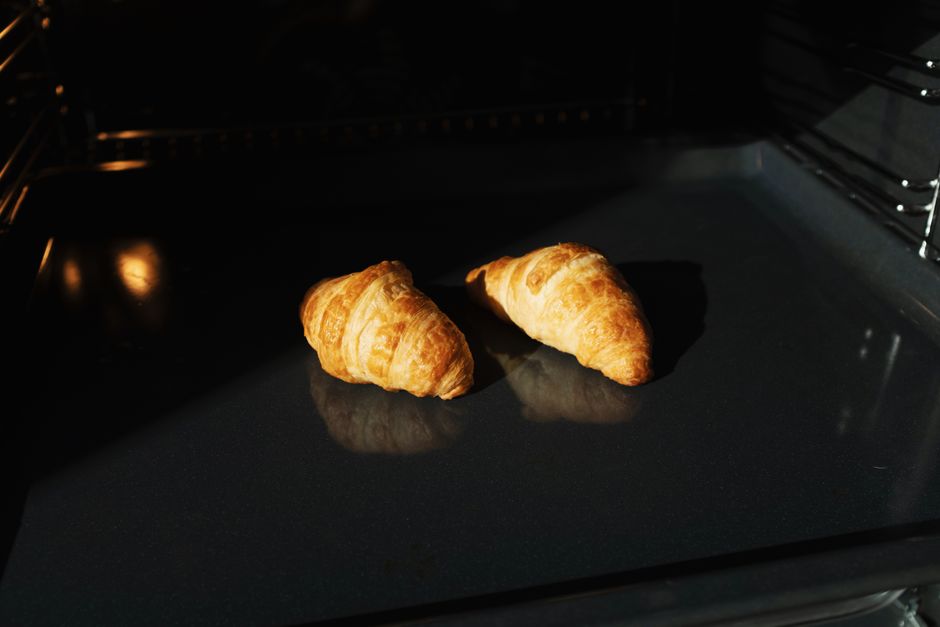
Reheating food in the oven means warming it with dry, circulating heat rather than the concentrated energy of a microwave. Set the oven to a moderate temperature, usually between 300°F and 350°F, place the food in an oven-safe dish, and cover it loosely so the outside does not dry out before the center heats through. The exact time depends on the food, its thickness, and whether it went into the oven cold or at room temperature.
The oven is slower than a microwave. That trade-off is the point. Dry heat and a little patience restore texture that a microwave can ruin — crisp crusts, firm proteins, and vegetables that do not turn to mush. This guide covers how to do it without drying food out, which foods reheat well and which do not, and the food-safety rules that matter more than any technique.
What Temperature Should You Reheat Food In The Oven?
Most foods reheat best between 300°F and 350°F. That range is hot enough to bring the center of the food up to a safe temperature in a reasonable time, but not so hot that the surface scorches or dries before the middle warms through.
Some foods want a different setting. Bread and pastry reheat better at a lower temperature, around 300°F, to crisp the outside without hardening the interior. A whole roasted chicken benefits from a slightly lower oven, closer to 300°F, so the breast meat does not dry out while the thicker parts catch up. Dense, thick foods like a casserole or a large portion of lasagna need more time rather than more heat — raising the temperature just overcooks the edges.
The one number that actually matters for safety is internal temperature, not oven setting. The USDA recommends reheating leftovers to an internal temperature of 165°F. That figure applies to all reheated food, whether it comes out of the oven, the microwave, or a skillet.
How Do You Reheat Food In The Oven Without Drying It Out?
Covering the food is the single most effective step. A lid, a sheet of foil, or an inverted oven-safe bowl traps steam around the food, and that moisture keeps the surface from drying as the center warms. Leave a small gap or a corner open so some steam can escape; a tightly sealed cover can make certain foods soggy.
Add a little moisture before you cover. A splash of water, broth, or the food’s own sauce in the bottom of the dish creates steam that circulates around the food. This matters most for rice, pasta, and lean meats, which dry out quickly.
Reheat in a dish that fits the food. A large pan with a small portion of food exposes more surface area to dry oven air. A snug dish keeps the environment humid.
For foods that should be crisp rather than soft — pizza, fried chicken, roasted potatoes — do the opposite. Leave them uncovered on a rack or a baking sheet so the surface can dry and re-crisp instead of steaming. The choice between covered and uncovered comes down to whether you want the food moist or crisp, and you generally cannot have both at once.
How Long Does It Take To Reheat Food In The Oven?
Most individual portions reheat in 15 to 25 minutes at 325°F to 350°F. Larger dishes, whole pieces of meat, and food taken straight from the refrigerator take longer, often 30 to 45 minutes or more.
These are general ranges, not rules. Ovens vary, and so does the starting temperature of the food. A portion that sat on the counter for 20 minutes will reheat faster than one pulled straight from a 40°F refrigerator. The reliable check is a food thermometer inserted into the thickest part of the food, which should read 165°F.
Time is the safer lever than temperature. If food is browning too fast on the outside while the center stays cold, lower the oven temperature and give it more time rather than turning the heat up.
Which Foods Reheat Well In The Oven — And Which Do Not?
The oven suits foods that benefit from dry heat and can tolerate a slow warm-up. It is a poor fit for foods that dry out easily or that a microwave handles better.
- Reheats well: Pizza, roasted vegetables, fried chicken, baked pasta, casseroles, roasted or braised meats, quiche, and bread.
- Reheats with care: Rice and pasta (add moisture and cover), lean chicken breast (lower heat, cover, do not overcook), and fish (reheat gently or the texture suffers).
- Poor fit for the oven: Soups and stews, which reheat faster and more evenly on the stovetop; delicate sauces, which can split under dry heat; and leafy greens, which wilt and lose texture.
One clarification worth knowing: reheating food in the oven does not make it safe to eat indefinitely. The oven warms food, but it does not reset the clock on how long leftovers keep. The USDA’s guidance is to eat refrigerated leftovers within 3 to 4 days. Reheating does not extend that window.
What Are the Food-Safety Rules for Reheating Leftovers?
Reheating is a food-safety step, not just a texture step. The goal is to bring the food through the temperature range where bacteria multiply fastest — roughly 40°F to 140°F — quickly, and to reach 165°F throughout.
Several rules follow from that:
- Reheat leftovers only once. Repeated reheating gives bacteria more chances to multiply during each cooling and warming cycle.
- Use a food thermometer. Visual cues and timing are unreliable; the internal temperature is the only dependable measure.
- Refrigerate leftovers within 2 hours of cooking. Food left in the “danger zone” of 40°F to 140°F for longer than that is riskier.
- Do not thaw food on the counter. Thaw it in the refrigerator, and reheat from cold in the oven.
A slow oven reheat spends more time in the danger zone than a fast method, which is one reason the oven is not the best choice for every food. For large, dense dishes, the center can take a while to reach a safe temperature. Keeping the oven at 325°F or above and using a thermometer to confirm 165°F addresses that concern.
Oven vs. Microwave vs. Stovetop: Which Should You Use?
The best reheating method depends on the food, not on a single rule. Each method trades speed against texture and evenness.
| Method | Best for | Trade-off |
|---|---|---|
| Oven | Pizza, roasted vegetables, fried foods, baked dishes, meats | Slower; can dry food out if uncovered |
| Microwave | Quick single portions, soups, rice, vegetables | Fast and even, but softens crisp textures |
| Stovetop | Soups, stews, sauces, grains | Good control, but needs attention and stirring |
The oven wins when texture matters — when you want a crust to stay crisp or a roasted vegetable to keep its bite. The microwave wins on speed. The stovetop wins for anything liquid, where it heats evenly and lets you stir. There is no single best method; matching the method to the food is the practical answer.
Does Reheating Food in the Oven Kill Bacteria?
Reaching 165°F kills most bacteria that cause foodborne illness, which is why that internal temperature is the target. But heat does not destroy everything, and it does not undo spoilage.
Some toxins that bacteria produce before they are killed can survive reheating. This is why food that has been left out too long, or leftovers kept beyond a few days, are not made safe by reheating. The oven reduces risk; it does not erase it. If food smells off, looks slimy, or has been in the refrigerator longer than the recommended window, reheating it is not a fix.
Frequently Asked Questions
What temperature should I set the oven to reheat leftovers?
Most foods reheat well at 300°F to 350°F, with 325°F a good middle setting. The internal temperature of the food should reach 165°F.
How long does it take to reheat food in the oven?
Individual portions usually take 15 to 25 minutes, while larger dishes or whole pieces of meat can take 30 to 45 minutes or more. Always confirm the center reaches 165°F with a food thermometer.
Should I cover food when reheating it in the oven?
Cover foods you want to stay moist, like rice, pasta, and meat, to trap steam. Leave pizza, fried food, and roasted vegetables uncovered so they can re-crisp.
Can you reheat food in the oven more than once?
No, leftovers should be reheated only once. Repeated reheating increases the time food spends in the temperature range where bacteria multiply.
