
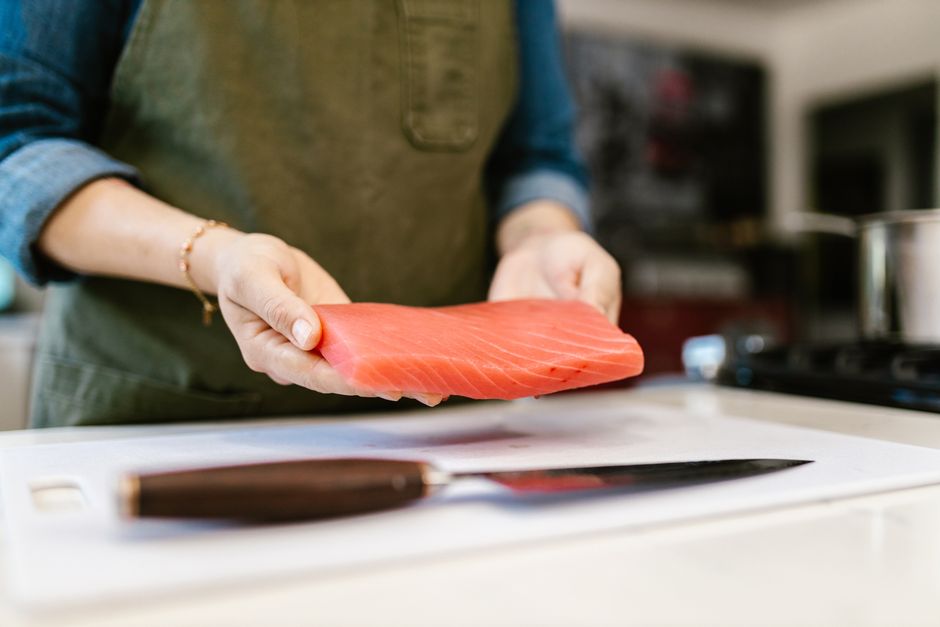
Salmon is one of the most forgiving fish to cook at home. The best method for most people is baking a fillet at 400°F for 12-15 minutes with salt, pepper, and olive oil. This produces a tender, flaky result every time without requiring constant attention. For those who want more control, pan-searing gives you a crispy skin and moist interior in under 10 minutes.
How Do You Prepare Salmon for Cooking?
Start with the right fillet. Look for bright orange-pink flesh with no brown edges or fishy smell. If the skin is on, it should look shiny and metallic. The USDA recommends cooking salmon to 145°F internally, though many chefs prefer 125-130°F for a more tender texture.
Before cooking, run your fingers over the fillet to find pin bones. These small white bones run along the center of most fillets. Use clean tweezers or needle-nose pliers to pull them out in the direction they point. Missing one is common and not dangerous, but it ruins the eating experience.
Pat the salmon dry with paper towels. This is not optional. Wet skin will steam rather than crisp, and moisture prevents seasoning from sticking. Once dry, season generously with salt at least 15 minutes before cooking. This gives the salt time to penetrate the flesh, not just sit on top.
For the most consistent results, let the salmon sit at room temperature for 10-15 minutes before cooking. A cold fillet straight from the fridge will cook unevenly, leaving the outside done while the center stays raw.
What Is the Best Way to Cook Salmon?
There is no single best method because it depends on what you want. Baking is the most reliable for beginners. It requires no flipping and produces consistent results across different oven temperatures. The CDC reports that proper cooking to 145°F kills harmful bacteria like Salmonella and Listeria, which are rare in farmed salmon but possible.
Pan-searing gives you the best texture contrast. A hot stainless steel or cast iron skillet creates a brown crust while the inside stays moist. Start skin-side down in cold oil, then press gently with a spatula for 10 seconds to prevent curling. Cook for 4-6 minutes on the skin side, then flip for 2 minutes on the flesh side.
Broiling is faster than baking but requires attention. Place the fillet 4-6 inches from the heating element and cook for 6-8 minutes. This works well for thinner fillets under one inch thick. Thicker fillets may burn on top before the center is done.
Poaching is the gentlest method. Simmer the salmon in seasoned water, broth, or wine at 180°F for 10-15 minutes. The fish never reaches high heat, so it stays extremely tender. This method works best for people who dislike crispy textures or want to add the salmon to salads and pastas.
How Do You Prepare Salmon Without Overcooking It?
Overcooking is the most common mistake. Salmon goes from perfectly done to dry and chalky in about 60 seconds. The easiest way to avoid this is to use a thermometer. Insert it into the thickest part of the fillet. Pull the salmon at 135-140°F if baking or searing, because carryover cooking will raise the temperature another 5-10 degrees after you remove it from heat.
Without a thermometer, use the flake test. Press gently on the side of the fillet with a fork. If the flesh separates easily into large flakes and looks opaque all the way through, it is done. If it still looks translucent in the center, it needs more time. If it crumbles into small pieces, it is overcooked.
Thickness matters more than weight. A one-inch fillet takes about 12 minutes at 400°F. A two-inch fillet takes about 18 minutes. Adjust your timing based on thickness, not the total weight of the fish. A thin tail section will cook much faster than the thick center cut from the same fillet.
Rest the salmon for 2-3 minutes after cooking. This allows the juices to redistribute through the flesh. Cutting into it immediately lets those juices run out onto the plate, leaving dry fish behind.





What Seasonings Work Best on Salmon?
Salt is the only non-negotiable seasoning. Use kosher salt or sea salt, not table salt which contains anti-caking agents that can leave a metallic taste. The American Heart Association notes that a 3-ounce serving of salmon provides 22 grams of protein and is naturally low in sodium, so seasoning with salt is safe for most people.
Black pepper adds mild heat without overpowering the fish. Lemon juice brightens the flavor and helps balance the natural oils. Garlic powder, onion powder, and paprika are common spice additions that work well with the fish’s natural richness.
Dill is the classic herb pairing for salmon. Fresh dill has a delicate anise-like flavor that complements the fish without competing. Thyme and parsley also work well. Avoid rosemary and oregano which can overpower salmon’s mild flavor.
Sweet and savory combinations work surprisingly well. A light brush of maple syrup or honey mixed with soy sauce creates a glaze that caramelizes under heat. Brown sugar and mustard is another popular combination. The key is using sweeteners sparingly — too much will burn before the fish is cooked through.
How Do You Prepare Salmon With Skin?
Cooking salmon with the skin on provides several advantages. The skin acts as a protective barrier that prevents the flesh from drying out. It also contains healthy fats, though most of the omega-3 fatty acids are in the flesh, not the skin. Research published in the Journal of Food Science found that cooking salmon with the skin on retains more moisture than skinless fillets.
To get crispy skin, you need high heat and patience. Heat your pan until a drop of water sizzles and evaporates immediately. Add oil with a high smoke point like avocado or grapeseed oil. Place the salmon skin-side down and do not move it for at least 4 minutes. The skin releases naturally from the pan when it is ready to flip. If it sticks, it is not ready.
Scoring the skin helps. Use a sharp knife to make shallow cuts through the skin but not into the flesh, spaced about one inch apart. This prevents the fillet from curling as the skin contracts during cooking. It also allows heat to reach the skin more evenly.
If you prefer skinless salmon, the easiest way to remove the skin is after cooking. The skin peels off easily when the fish is warm. Removing it raw requires a sharp knife and steady hand, and it is easy to waste good flesh.
How Do You Prepare Salmon for Meal Prep?
Cooked salmon keeps well in the refrigerator for 3-4 days. The key to good meal prep is cooking it slightly underdone so reheating does not dry it out. Pull the salmon at 130-135°F instead of 145°F. When you reheat it in the microwave or oven, it will finish cooking without becoming dry.
Store cooked salmon in an airtight container with a paper towel at the bottom. The paper towel absorbs excess moisture that would make the skin soggy. Change the paper towel after the first day for best results.
Flaked salmon works better than whole fillets for meal prep. Remove the skin, break the flesh into large chunks, and use it in salads, grain bowls, or wraps throughout the week. Whole fillets tend to dry out faster when reheated.
Do not freeze cooked salmon if you can avoid it. The texture changes significantly upon thawing and becomes mushy. Raw salmon freezes well for up to 3 months if wrapped tightly in plastic wrap and then foil. Thaw it overnight in the refrigerator, never on the counter.
| Method | Temperature | Cook Time | Best For |
|---|---|---|---|
| Baking | 400°F | 12-15 minutes | Even cooking, beginners |
| Pan-searing | Medium-high | 6-8 minutes | Crispy skin, fast meals |
| Broiling | High | 6-8 minutes | Thin fillets, quick cooking |
| Poaching | 180°F | 10-15 minutes | Tender texture, salads |
- Always pat salmon dry before seasoning
- Cook to 135-145°F depending on preference
- Use a thermometer for consistent results
- Rest salmon 2-3 minutes before serving
- Cook skin-side down first for crispy skin
What Are Common Mistakes When Preparing Salmon?
The biggest mistake is cooking cold salmon straight from the refrigerator. The outside cooks too quickly while the inside stays raw. Let it sit at room temperature for 10-15 minutes before cooking. This is safe for salmon that has been properly refrigerated and will be cooked immediately.
Overcrowding the pan is another common error. Salmon needs space for steam to escape. If the fillets touch each other or the pan walls, they will steam instead of sear. Cook in batches if necessary, or use a larger pan.
Using too much oil creates a greasy result. A thin coating is enough. The oil is there to conduct heat, not to fry the fish. Excess oil also prevents the skin from crisping properly.
Flipping salmon too often breaks the fillet apart. Flip once, and only when the skin is golden brown and releases easily from the pan. For baking, do not flip at all. The fish cooks evenly on one side.
Frequently Asked Questions
Should I rinse salmon before cooking?
No. Rinsing salmon spreads bacteria around your sink and does not remove anything that cooking will not kill. Pat it dry instead.
Can I eat salmon raw at home?
Only if you buy sushi-grade salmon from a trusted source. Regular grocery store salmon may contain parasites that cooking kills but freezing at -4°F for 7 days also eliminates.
How do I know when salmon is done without a thermometer?
Use the flake test. Press gently with a fork. If the flesh separates into large flakes and looks opaque throughout, it is done.
What is the white stuff that comes out of salmon?
That is albumin, a protein that solidifies and pushes to the surface when salmon is cooked at high heat. It is harmless and does not affect flavor.
