
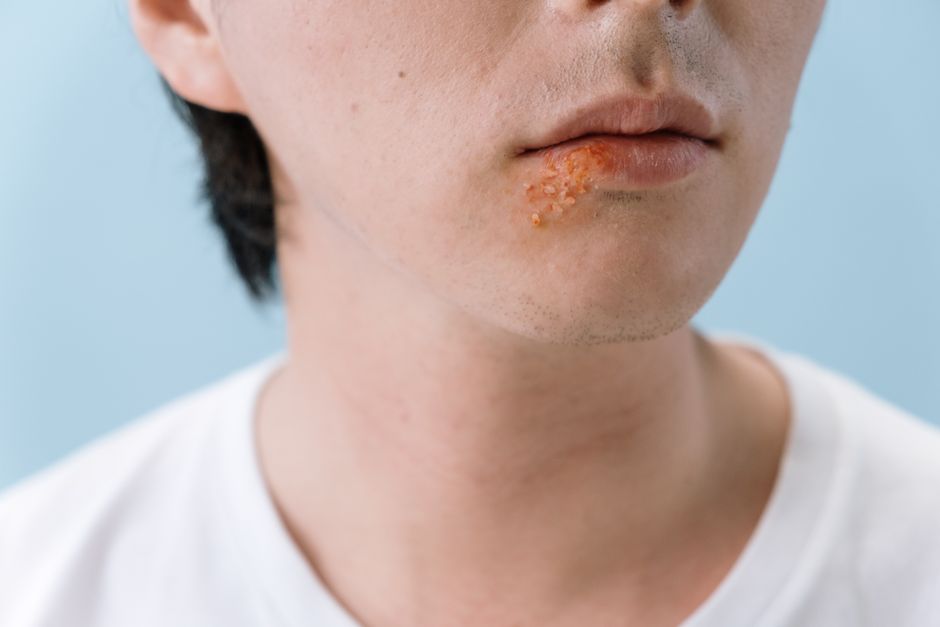
Oral herpes, also called cold sores, is caused by the herpes simplex virus. The most obvious sign is a group of small, painful blisters on or around the lips. These blisters usually appear after a tingling or burning feeling in that spot. However, many people carry the virus without ever having visible symptoms.
How Do You Know If You Have Herpes In Your Mouth?
Recognizing oral herpes starts with the pattern of symptoms. The first sign is often a prodrome — a tingling, itching, or burning sensation in one area of the lip or mouth. Within 24 to 48 hours, small, fluid-filled blisters form. They look like a cluster of tiny bubbles. Over the next few days, the blisters break open, leak clear or yellow fluid, and become shallow, open sores. Eventually, a yellowish crust forms over the sore, which later falls off, revealing new skin underneath. This entire process typically takes 7 to 14 days.
During a first infection, called primary herpes, symptoms can be more severe. Some people develop fever, headache, muscle aches, and swollen lymph nodes in the neck. The inside of the mouth may have multiple sores on the gums and the roof of the mouth. Recurrent outbreaks are usually milder and shorter.
Many people infected with HSV‑1 never have a noticeable outbreak. They carry the virus silently. That is why blood tests show that over half of adults have antibodies to HSV‑1, even if they cannot recall ever having a cold sore.
What Does a Cold Sore Look Like?
A classic cold sore starts as a small, red bump. Within hours, the bump becomes a blister filled with clear fluid. The blister may be single but more often appears in a cluster. The fluid turns cloudy as the blister ages. After a day or two, the blister bursts, leaving a shallow, weeping ulcer. A honey‑colored crust then forms over the ulcer. The crust gradually dries and flakes off as the skin heals underneath.
Cold sores almost always appear on the outer border of the lips, at the edge of the skin and lip. They can also appear on the chin, the nostrils, or inside the nostril. On the mouth itself, they usually occur on the hard gums or the roof of the mouth — areas where the tissue is tough and keratinized. Softer areas like the inside of the cheek or the floor of the mouth are less common sites for HSV‑1 lesions.
How Is Oral Herpes Different From a Canker Sore?
Canker sores, also called aphthous ulcers, are often confused with cold sores. But they are completely different conditions. Canker sores are not caused by herpes virus, are not contagious, and appear only inside the mouth on soft tissue. Cold sores are caused by HSV, are highly contagious, and typically appear on the lips or on hard, keratinized surfaces inside the mouth.
| Feature | Cold Sore (Herpes) | Canker Sore (Aphthous Ulcer) |
|---|---|---|
| Cause | Herpes simplex virus (HSV‑1) | Not viral cause; immune, stress, injury |
| Location | Lips, nostrils, gums, hard palate | Inside cheeks, lips, soft palate, tongue |
| Appearance | Blisters that crust over | Round or oval white or yellow sore with red border |
| Contagious | Yes | No |
| Recurrence | Often in same spot | May recur but not always same spot |
If you are unsure whether a sore is a cold sore or a canker sore, remember: if it blisters and then crusts, it is likely herpes. If it is a painful white or yellow ulcer without a preceding blister, it is likely a canker sore.




How Do Doctors Diagnose Oral Herpes?
In most cases, a doctor or dentist can diagnose oral herpes just by looking at the sore. The appearance and location are often enough. If the diagnosis is uncertain — for example, if the sore looks unusual or the patient is immunocompromised — the doctor may take a swab of the fluid from a fresh blister. The swab can be tested by viral culture or polymerase chain reaction (PCR) to confirm HSV.
Blood tests can detect antibodies to HSV‑1, but they cannot tell when the infection happened. A positive blood test means you have been infected at some point, but it does not mean the current sore is herpes. Many people have antibodies with no active symptoms. Blood tests are not routinely used to diagnose an active cold sore.
What Triggers an Outbreak of Oral Herpes?
Once you have the herpes virus, it stays in your body for life. It hides in nerve cells near the cheekbone. Certain events can reactivate the virus, causing it to travel back to the skin and produce a cold sore. Common triggers include:
- Illness or fever (cold, flu)
- Emotional stress or fatigue
- Sun exposure or windburn on the lips
- Hormonal changes, such as during menstruation
- Injury to the lips or mouth area (dental work, cuts)
- A weakened immune system
Not everyone has obvious triggers. Some people have outbreaks without any clear cause. Over time, many people find that outbreaks become less frequent.
How Can You Treat Oral Herpes?
Oral herpes has no cure. Treatment focuses on reducing the severity of symptoms and shortening the healing time. Prescription antiviral medications, such as acyclovir, valacyclovir, or famciclovir, are the most effective option. They work best when taken at the first sign of a prodrome — the tingling or burning sensation before blisters appear. For people with frequent outbreaks, daily suppressive therapy can reduce the number of episodes.
Over‑the‑counter creams containing docosanol (brand name Abreva) can also help speed healing when applied early. Lip balms with sunscreen can prevent sun‑triggered outbreaks. A cold compress applied to the sore can ease pain and reduce swelling. Pain relievers like ibuprofen or acetaminophen can help if the sore is very painful.
Some people try supplements like lysine. The evidence is mixed. Some studies suggest lysine may help prevent recurrence, but results are not consistent. No large clinical trial has confirmed that lysine reliably treats an outbreak. It is reasonable to discuss with your doctor, but it should not replace standard antiviral therapy when needed.
How Long Is Oral Herpes Contagious?
Oral herpes is most contagious when you have an active sore. The contagious period starts with the first symptoms — the tingle or itch — and lasts until the sore is completely healed and new skin has formed. That usually means 7 to 10 days. The virus can still be present in the fluid of unbroken blisters, so avoid kissing, sharing utensils, cups, lip balm, or towels during this time.
It is also possible to spread the virus even when you have no visible sores. This is called asymptomatic shedding. It happens on a small number of days each year, and the risk of transmission is lower than during an outbreak. However, you can never be 100% sure you are not shedding the virus. For this reason, many people who know they have HSV‑1 avoid intimate contact when they feel an outbreak coming on, and are aware that transmission is possible even without symptoms.
If you have a cold sore, you can also transmit the virus to someone’s genitals through oral sex. This is a common way that HSV‑1 causes genital herpes.
When Should You See a Doctor for a Cold Sore?
Most cold sores heal on their own and do not require a doctor visit. But you should consider seeing a healthcare provider if:
- This is your first outbreak and it is severe — you have many sores, fever, or difficulty eating or drinking.
- You have outbreaks more than six times a year.
- The sore does not heal within two weeks.
- The sore spreads to your eye area. Herpes infection of the eye is a medical emergency that can damage vision.
- You have a weakened immune system due to chemotherapy, organ transplant, or HIV.
- The sores are not typical and you are unsure of the diagnosis.
A doctor can prescribe antiviral medication that shortens the outbreak and reduces pain. For people with rare or mild outbreaks, the benefit of antivirals is small. The decision depends on how much the outbreaks affect your quality of life.
Frequently Asked Questions
Can you get cold sores on your tongue?
Yes, but it is less common. Herpes lesions inside the mouth typically appear on the gums and hard palate. On the tongue, they usually occur on the top surface rather than the underside, because the top is tougher.
Is oral herpes the same as genital herpes?
No. Oral herpes is usually caused by HSV‑1 and affects the mouth and lips. Genital herpes is usually caused by HSV‑2 and affects the genital area. However, HSV‑1 can cause genital herpes through oral sex, and HSV‑2 can occasionally cause oral herpes.
Can you get herpes from sharing a drink?
Yes, it is possible. The herpes virus can survive for a short time on surfaces. Sharing a cup, straw, or lip balm with someone who has an active cold sore can transmit the virus, especially if you have a cut or crack on your lip.
