

A collapsed lung happens when air leaks into the space between your lung and your chest wall. That air pushes on the outside of the lung, causing it to deflate partially or completely. The medical name is pneumothorax. The most common signs are sudden chest pain and trouble breathing. If you feel a sharp chest pain that started quickly and you cannot catch your breath, you need medical help right away. This is not something to wait out at home.
What Does a Collapsed Lung Feel Like?
The pain is usually sudden and sharp. Many people describe it as a stabbing sensation on one side of the chest. The pain often gets worse when you take a deep breath, cough, or move around.
Shortness of breath is the other main symptom. How severe it is depends on how much air has leaked out. A small collapse may cause only mild breathlessness. A large one can make it feel impossible to get enough air.
Some people also notice other symptoms. Your skin may look pale or bluish. You might feel your heart racing. You could feel dizzy or lightheaded. In more severe cases, people feel extreme fatigue or a sense of dread. These symptoms mean the body is struggling to get oxygen.
How Do You Know If You Have A Collapsed Lung: The Step By Step Signs
Here is how to recognize the warning signs in order of how they usually appear.
Step one: Notice the pain. A sudden, sharp chest pain on one side is the classic first sign. It is not usually a dull ache. It feels more like a stab or a tearing sensation.
Step two: Check your breathing. Shortness of breath follows the pain closely. You may feel like you cannot take a full breath. Breathing becomes shallow because deep breaths hurt.
Step three: Look at your skin color. Pale or bluish skin, especially around the lips or fingernails, means oxygen levels are dropping. This is a serious sign.
Step four: Feel your heart rate. A rapid heartbeat is common. Your body is working harder to deliver oxygen with less lung capacity.
Step five: Assess the severity. If you can speak in full sentences and only have mild discomfort, the collapse may be small. If you are gasping for air, cannot speak, or feel like you are about to pass out, the collapse is likely large. Both situations need medical evaluation, but the second one is an emergency.
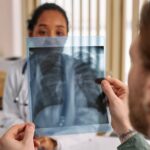
No home test can diagnose a collapsed lung. Stethoscopes, pulse oximeters, and breathing tests cannot confirm it. Only imaging — usually a chest X-ray — can show whether air has collected around the lung.
Who Is Most at Risk?
Anyone can have a collapsed lung, but some people are at higher risk. Tall, thin young men have the highest risk of a spontaneous collapse. This type happens without any injury. It is often caused by a small air sac on the surface of the lung that bursts.
People with lung disease are also at risk. Conditions like COPD, asthma, and cystic fibrosis weaken lung tissue. That makes it easier for air to leak out.
Smoking increases the risk substantially. Some research suggests that long-term smokers have a much higher chance of a spontaneous pneumothorax than nonsmokers. The exact numbers vary by study, but the link is well established.
Injury is another common cause. A broken rib, a stab wound, or a car accident can puncture the lung. Certain medical procedures can also cause a collapse. Mechanical ventilation, lung biopsies, and central line placements carry a small risk.



What Happens in the Emergency Room?
When you arrive, the doctor will listen to your lungs. They will likely order a chest X-ray to confirm the diagnosis. In some cases, a CT scan is needed for a more detailed view.
Treatment depends on the size of the collapse. A small pneumothorax may heal on its own. The body reabsorbs the trapped air over days or weeks. The doctor may simply monitor you with repeat X-rays.
A larger collapse needs intervention. The most common treatment is inserting a chest tube. This is a thin plastic tube placed between your ribs. It connects to a suction device that removes the trapped air and allows the lung to re-expand.
Some people need surgery. This is more common if the collapse keeps happening. Surgeons can repair the weak spot on the lung and attach the lung to the chest wall to prevent future collapses.
Most people recover fully. The lung usually re-expands completely once the air is removed. Recovery time varies. Some people go home the same day. Others stay in the hospital for several days, especially if a chest tube is needed.
Can a Collapsed Lung Heal Without Treatment?
Yes, but only in specific cases. A very small pneumothorax — sometimes called a “tiny” collapse — can resolve on its own. The body gradually absorbs the air. Doctors may recommend rest and follow-up X-rays to confirm healing.
This is not something to decide on your own. A small collapse can become larger. What feels minor at first can turn into a medical emergency. Always get evaluated by a doctor before assuming it will heal on its own.
Even after treatment, there is a chance of recurrence. The risk is highest in the first few months after a spontaneous collapse. Some studies suggest the recurrence rate is significant, though exact numbers vary. If you have had one collapse, you are more likely to have another.
When Is a Collapsed Lung an Emergency?
Some situations require immediate emergency care. Call 911 or go to the nearest emergency department if you have any of these signs.
- Severe shortness of breath that makes it hard to speak
- Chest pain that is getting worse
- Bluish or gray skin, especially on the lips or face
- Rapid breathing or a racing heart that will not slow down
- Confusion, dizziness, or fainting
These symptoms can indicate a tension pneumothorax. This is a life-threatening version where air keeps leaking in but cannot escape. The pressure builds up and can shift your heart and windpipe. This requires immediate emergency treatment.
Do not drive yourself to the hospital if you have severe symptoms. Have someone else drive you or call an ambulance. The risk of passing out behind the wheel is real.
What Is the Difference Between a Collapsed Lung and Other Chest Pain?
Chest pain has many causes. Heart attacks, acid reflux, muscle strain, and anxiety can all cause chest discomfort. Knowing the difference matters.
Collapsed lung pain is usually sharp and localized to one side. It worsens with breathing or coughing. Heart attack pain is often described as pressure or squeezing in the center of the chest. It may spread to the arm, jaw, or back.
Acid reflux pain is typically burning and comes after eating. Muscle strain hurts when you press on the area or move in a specific way. Anxiety chest pain often comes with a feeling of panic and rapid breathing.
No symptom list is perfect. If you are unsure what is causing your chest pain, treat it as an emergency. The risk of waiting is far greater than the inconvenience of a false alarm.
Frequently Asked Questions
Can a collapsed lung happen without you knowing?
A very small collapse can cause minimal symptoms that you might dismiss as a muscle pull or mild indigestion. However, any sudden chest pain with breathing difficulty should be evaluated by a doctor.
How long can you wait before seeking treatment for a collapsed lung?
You should not wait at all. A collapsed lung can worsen quickly, and a small leak can become a large one that requires emergency intervention.
Will a collapsed lung show up on a home pulse oximeter?
Not reliably. Oxygen levels can remain normal in the early stages of a small collapse. A normal reading does not rule out a pneumothorax.
Can you fly after a collapsed lung?
Doctors generally recommend waiting several weeks after treatment before flying. Cabin pressure changes can affect a healing lung, and the trapped air may expand at altitude. Your doctor should clear you before any flight.
