

You cannot confirm whether Plan B worked by how you feel. There is no symptom, cramp, or lack of one that tells you. The only reliable sign is your next period arriving roughly on time. Plan B, known generically as levonorgestrel emergency contraception, works mainly by delaying ovulation. If ovulation has already happened, it does not undo it. That single fact explains most of the confusion around whether it “worked.”
The waiting period is the hard part. You take a pill, and then nothing happens that confirms anything. This guide explains what the medication actually does, why the timing of your cycle matters more than the timing of the dose, and when a pregnancy test will give you a real answer.
How Do You Know If Plan B Really Worked?
You know it worked when your period comes within about a week of when you expected it, and a pregnancy test is negative if you take one. There is no earlier confirmation.
Levonorgestrel emergency contraception is most effective when taken as soon as possible after unprotected sex. The label directs users to take it within 72 hours, and it is more effective the sooner it is taken within that window. Some evidence indicates it retains some effectiveness up to 120 hours, though effectiveness declines as time passes. The medication delays the release of an egg from the ovary. If that delay prevents sperm from meeting an egg, pregnancy does not begin.
Here is the part many people do not know. Levonorgestrel does not stop a fertilized egg from implanting. That claim appeared in older product labeling, and it has been corrected in the medical literature. Research on how the drug works indicates its effect is on ovulation, not on the uterine lining after fertilization. This matters because it means the pill is not doing anything to an established pregnancy. It also means if you had already ovulated before taking it, the drug had no mechanism to prevent conception.
So the answer to “did it work” is really “did your cycle produce an egg that could be fertilized in the days after sex.” You cannot see that directly. You can only wait and test.
Why Your Cycle Timing Matters More Than You Think
Levonorgestrel works by holding back ovulation. Its window of usefulness depends entirely on where you are in your cycle when you take it.
Sperm can survive in the reproductive tract for up to about five days. An egg, once released, survives roughly 12 to 24 hours. If you have unprotected sex in the days just before ovulation, sperm may still be present when the egg is released. Plan B taken in that window can delay ovulation long enough for those sperm to die off. That is the scenario where it helps most.
If ovulation has already occurred, delaying it is no longer possible. The egg has been released. Levonorgestrel cannot reverse that. This is why the same pill, taken the same way, can work in one situation and fail in another. It is not about the pill being defective. It is about biology that has already moved past the point where the drug acts.
This also explains a frustrating reality: the people at highest risk of pregnancy from a given act of unprotected sex are often the ones for whom emergency contraception is least likely to work, because they are closest to ovulation. The method does not fail them for lack of trying. It simply has nothing left to delay.
What Symptoms Tell You (And What They Don’t)
Side effects from Plan B do not indicate whether it worked. Nausea, fatigue, headache, breast tenderness, and spotting are common after taking it, and they can happen whether or not pregnancy is prevented.
Some people feel nothing at all after taking it. That is also normal and does not mean the pill failed. Others notice a change in their next period, which may come earlier, later, or with different flow than usual. Levonorgestrel can shift the timing of your period, and that shift is not a signal either way.
What you should not do is read meaning into cramps, a missed day of spotting, or how you feel. None of these have been shown to predict the outcome. The only reliable information comes from time and a test.

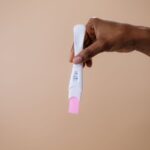



When to Take a Pregnancy Test After Plan B
Take a pregnancy test if your period is more than about a week late. Testing earlier than that can produce a false negative.
Home pregnancy tests detect a hormone called hCG, which the body produces after an embryo implants. That hormone takes time to reach levels a test can detect. Testing too soon after sex, before implantation has occurred or before hCG has risen enough, can give a negative result even when pregnancy is beginning. Waiting until your period is late gives the test the best chance of being accurate.
If your period comes roughly on time, you generally do not need to test. If it is more than a week late, test. If the first test is negative but your period still has not come, some clinicians suggest testing again a few days later, because hCG levels rise over time. If you have concerns, contact a healthcare provider. They can confirm with a blood test and discuss your options.
One more point on timing. Emergency contraception is not a substitute for ongoing birth control, and it does not protect against sexually transmitted infections. If you are concerned about exposure to an infection, that is a separate conversation with a provider, and it has its own testing timeline.
What Affects How Well Plan B Works
Body weight appears to affect how well levonorgestrel works. Evidence indicates that emergency contraception with levonorgestrel is less effective in people with higher body weight, particularly above roughly 70 to 80 kilograms (about 155 to 175 pounds). The exact threshold is debated, and the data are not precise enough to give a firm cutoff.
This is one of the areas where guidance has shifted. Some organizations have noted reduced effectiveness at higher body weight and point toward alternatives. A copper IUD, placed by a clinician, is the most effective form of emergency contraception and works regardless of body weight. It must be inserted within a set window after unprotected sex, which varies by device and provider guidance. An oral option containing ulipristal acetate is another prescription alternative that some evidence suggests remains effective across a wider weight range, though it also requires a prescription and a clinician’s input.
Other factors matter too. Timing since sex is the biggest one. Vomiting within a few hours of taking the pill can reduce absorption, and the label advises checking with a provider if that happens. Certain medications, including some used for epilepsy and some HIV treatments, can reduce how well levonorgestrel works. If you take any regular medication, mention it to a pharmacist or clinician.
What If Plan B Fails?
If you become pregnant after taking Plan B, the medication did not cause harm to the pregnancy. There is no evidence that levonorgestrel emergency contraception increases the risk of birth defects or harms an established pregnancy.
This is a common fear, and the evidence does not support it. Because the drug acts before ovulation and does not affect implantation, it has no known mechanism for damaging a pregnancy that is already underway. Research on pregnancy outcomes after failed emergency contraception has not found an increased risk of malformation.
If a pregnancy test is positive, the next step is to see a healthcare provider. They can confirm the pregnancy, discuss timing, and walk through your options without judgment. Emergency contraception is designed to prevent pregnancy, but no method is perfect, and a positive test is information, not a failure.
The Bottom Line on Confirming It Worked
You confirm Plan B worked by waiting for your period and testing if it is late. There is no shortcut and no symptom to read.
The medication is most useful when taken early and when ovulation has not yet occurred. It cannot undo ovulation that has already happened, and it does not interrupt a pregnancy that has already begun. Those limits are not flaws in the drug. They are simply how it works.
If you are unsure whether Plan B was the right choice for your situation, or if your period is late, a healthcare provider or pharmacist can help you sort through the next steps. That conversation is worth having. Waiting alone is harder than it needs to be.
Frequently Asked Questions
How soon after taking Plan B will I know it worked?
You will know when your next period arrives within about a week of when you expected it, and a pregnancy test is negative if you take one. There is no earlier way to confirm it.
Can Plan B make my period late even if I’m not pregnant?
Yes. Levonorgestrel can shift the timing of your period, so it may come earlier or later than usual even when pregnancy is prevented. A late period alone does not mean the pill failed.
Does Plan B work if I already ovulated?
No. Levonorgestrel works mainly by delaying ovulation, so if an egg has already been released, it has no mechanism to prevent pregnancy. This is why timing within your cycle matters so much.
Should I take a pregnancy test if my period is a few days late after Plan B?
Wait until your period is more than about a week late before testing, because testing too early can give a false negative. If it is more than a week late, take a test and contact a provider if you have concerns.
