
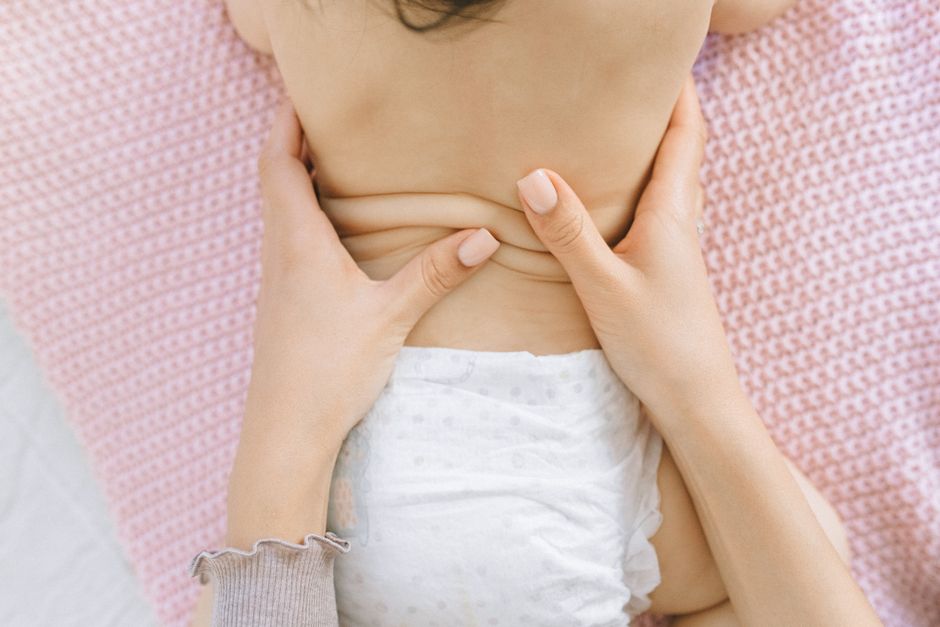
Dehydration in a newborn is serious and can happen fast. You check for it by watching how many wet diapers they have, looking at their mouth and eyes, and checking their soft spot on the head. Fewer than six wet diapers in 24 hours, a dry mouth, sunken eyes, or a sunken soft spot are clear warning signs that need medical attention right away.
How Do You Know If A Newborn Is Dehydrated by Counting Wet Diapers?
Wet diapers are your best daily check. A well-hydrated newborn has at least six wet diapers in 24 hours after the first week of life. In the first few days, expect one or two wet diapers as milk intake increases.
The urine should be light yellow or clear. Dark yellow urine can mean your baby needs more milk. If you see fewer than six wet diapers or no wet diaper for six hours, this is a strong sign of dehydration.
Some parents worry about the orange or pink “brick dust” stain in early diapers. This is normal in the first week and is not dehydration. It is urate crystals that clear up once milk supply increases.
What Are the Physical Signs of Dehydration in a Newborn?
The mouth and lips tell you a lot. A dehydrated newborn will have a dry, sticky mouth and dry lips. A well-hydrated baby has a moist mouth and pink tongue.
Tears are another clue. Most newborns produce tears when crying by two to three weeks old. If your baby cries without tears, dehydration may be present.
The soft spot on top of the head, called the fontanelle, should feel flat and firm. When a baby is dehydrated, this soft spot can look sunken or dip inward. You can gently feel it with a clean finger. A sunken fontanelle needs immediate medical evaluation.
How Does Skin Elasticity Change With Dehydration?
Skin turgor is the medical term for how quickly skin snaps back after being pinched. For newborns, this test is useful but not as precise as wet diaper counts.
To check, gently pinch a small bit of skin on the baby’s belly or thigh. In a hydrated baby, the skin springs back immediately. In a dehydrated baby, the skin stays tented or returns slowly.
Research from the American Academy of Pediatrics notes that skin turgor is more reliable in children over two years old than in newborns. Newborn skin is naturally loose, so this test alone can be misleading. Use it alongside wet diaper counts and other signs.





What Does the Research Say About Dehydration Signs in Newborns?
A 2019 study in the journal Pediatrics looked at how parents and doctors identify newborn dehydration. The study found that the most reliable signs are fewer than six wet diapers per day and weight loss of more than seven percent from birth weight.
The same study found that dry mouth and sunken eyes were strong indicators but less common in mild dehydration. Sunken fontanelle was a reliable sign of moderate to severe dehydration.
The Centers for Disease Control and Prevention (CDC) recommends tracking wet diapers as the primary home monitoring tool. They advise calling a doctor if your newborn has fewer than four wet diapers in 24 hours or shows any of the physical signs mentioned above.
When Is Dehydration Dangerous Enough for Emergency Care?
Some signs require immediate emergency room care. Call 911 or go to the ER if your newborn has any of these:
- No wet diaper for eight hours or more
- A sunken soft spot on the head
- Sunken eyes that look deep in the sockets
- Crying without any tears
- Unusual sleepiness or difficulty waking
- Cold or mottled hands and feet
- Rapid breathing or a fast heart rate
Severe dehydration can lead to shock, organ damage, and serious complications if not treated quickly. Do not wait to see if it improves on its own. Newborns lose fluids faster than older children and adults because their bodies are smaller and their kidneys are not fully mature.
If your baby is vomiting or has diarrhea, dehydration risk goes up even faster. A newborn with vomiting and fewer than four wet diapers in 24 hours needs medical attention within hours, not days.
What Causes Dehydration in Newborns Most Often?
The most common cause is not getting enough milk. This can happen with breastfeeding difficulties, latching problems, or low milk supply. A 2020 review in Breastfeeding Medicine found that about five percent of newborns experience dehydration from insufficient milk intake in the first week.
Illness is the second most common cause. A stomach virus with vomiting and diarrhea can drain fluids fast. Fever also increases fluid loss because the body uses more water to cool itself.
Heat exposure is less common but real. If a newborn is overdressed in a hot room or left in direct sun, they can lose fluids through sweating. The American Academy of Pediatrics warns against bundling babies in too many layers indoors.
How Does Dehydration Compare Between Breastfed and Formula-Fed Newborns?
Both groups can become dehydrated, but the patterns differ slightly. The table below summarizes key differences based on current evidence.
| Factor | Breastfed Newborns | Formula-Fed Newborns |
|---|---|---|
| Wet diaper count | 6+ per day after week one | 6+ per day after week one |
| Common cause | Low milk supply or latch issues | Incorrect formula mixing or illness |
| Weight loss risk | Higher in first week (up to 7% normal) | Lower in first week (usually under 5%) |
| Signs appear | Often gradual over 48-72 hours | Often faster with illness |
Breastfed newborns need frequent feeding, especially in the first week. If your baby is nursing fewer than eight times in 24 hours, dehydration risk goes up. Formula-fed newborns can become dehydrated if formula is mixed with too much water, because the extra water dilutes the nutrients and can actually cause electrolyte imbalances.
What Should You Do If You Suspect Dehydration?
If you see one or two mild signs, offer the breast or bottle immediately. Try feeding every two hours for the next 12 hours. Track wet diapers closely. If the next diaper is wet within six hours, the situation may be improving.
If you see a sunken fontanelle, sunken eyes, or no wet diaper in six hours, call your pediatrician or go to urgent care. Do not give water to a newborn under six months old. Water can fill their stomach without providing calories or electrolytes, and it can cause a dangerous condition called water intoxication.
Pediatricians can check hydration with a weight measurement, physical exam, and sometimes a blood test. Treatment for mild dehydration is more frequent feeding. Moderate to severe dehydration may require intravenous fluids in a hospital setting.
Some parents try giving oral rehydration solutions like Pedialyte to newborns. Check with your doctor first. The American Academy of Pediatrics recommends against giving these to newborns under one month old without medical guidance because the electrolyte balance needs to be precise.
Common Misconceptions About Newborn Dehydration
One common myth is that a baby who cries must be dehydrated. Crying is a late sign of hunger or discomfort, not a reliable dehydration signal. A dehydrated baby may actually be too weak to cry loudly.
Another misconception is that thirst alone means dehydration. Newborns cannot tell you they are thirsty. By the time they show fussiness or rooting behavior, they may already be mildly dehydrated.
Some people believe that dry skin alone means dehydration. Newborn skin can be dry from the environment, especially in winter or dry climates. Dry skin alone without other signs is not a reliable indicator of dehydration.
A third myth is that all weight loss in the first week is normal. While losing up to seven percent of birth weight is typical, losing more than that or continuing to lose weight after day five is a red flag. The CDC recommends weighing your baby within three to five days of birth and again by day seven.
Frequently Asked Questions
How many wet diapers is normal for a newborn?
Six or more wet diapers in 24 hours after the first week is normal. Fewer than four is a sign of possible dehydration.
Can a newborn get dehydrated from not feeding enough?
Yes, insufficient milk intake is the most common cause of newborn dehydration. This often happens with breastfeeding difficulties or low milk supply.
Is it safe to give water to a dehydrated newborn?
No, do not give plain water to a newborn under six months old. It can cause water intoxication and electrolyte imbalances.
How fast can a newborn become dehydrated?
Dehydration can develop within 12 to 24 hours in a newborn, especially if they have vomiting, diarrhea, or fever. Their small bodies lose fluids rapidly.
