
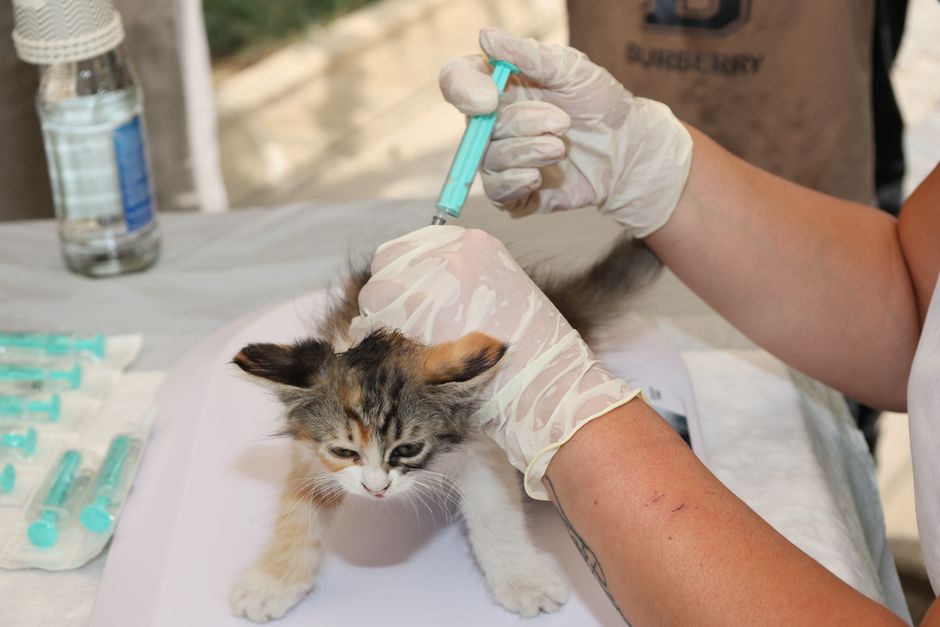
Rabies in kittens is a medical emergency, not a wait-and-see situation. If a kitten has been bitten by a wild animal and starts showing neurological signs—like sudden behavior changes, drooling, or trouble walking—rabies is a real possibility. The only way to confirm rabies is through laboratory testing of the brain after death, but you can recognize the symptoms and act immediately to protect both the kitten and the people around it.
What Are the First Signs of Rabies in a Kitten?
Rabies does not show up instantly. After a bite from an infected animal, the virus travels through nerves toward the brain. This incubation period in cats usually lasts from a few weeks to several months.
Early symptoms are vague and easy to miss. A kitten may seem quieter than usual, hide more, or lose interest in food. Some kittens become unusually affectionate, while others become restless. A slight fever can occur. These signs look like many other kitten illnesses, so they are not enough to diagnose rabies on their own.
The key difference is what happens next. If the kitten has rabies, these mild signs progress quickly to serious neurological symptoms within days.
How Do You Know If A Kitten Has Rabies Symptoms Specifically?
Rabies in kittens progresses through distinct phases, though not every kitten passes through all of them. The furious form and the paralytic form are the two main types, and a kitten can show signs of either.
Furious rabies is what most people picture. The kitten becomes agitated, aggressive, and may attack without provocation. It might bite at objects, chew on its own paws, or seem to have trouble swallowing. Disorientation and seizures can occur.
Paralytic rabies, also called dumb rabies, is more common in cats. The kitten’s face may droop, its jaw can hang open, and it may drool excessively because it cannot swallow. The meow may sound different or become weak. Weakness in the back legs often spreads forward until the kitten cannot stand.
Both forms lead to paralysis, coma, and death. Once neurological symptoms appear, the disease is almost always fatal in cats.
What Does a Rabid Kitten Look Like in the Final Stage?
The final stage of rabies is unmistakable. The kitten cannot walk, eat, or drink. It may have seizures or lie still with muscle tremors. Coma follows, and death occurs within days of the first neurological symptoms.
Hypersalivation—excessive drooling—is common because the throat muscles stop working. This is not the same as foaming at the mouth. Rabid animals do not always foam. The drool is simply saliva that the kitten cannot swallow.
Hydrophobia, the fear of water, does not occur in animals. That symptom is specific to human rabies. Do not wait for a kitten to show fear of water before suspecting rabies.





Can a Kitten Spread Rabies Before Showing Symptoms?
Yes, and this is the most dangerous part of the disease. The virus is present in saliva several days before the kitten shows any signs of illness. This is why any bite from a stray or unvaccinated kitten is treated seriously, even if the kitten looks completely healthy.
Rabies is transmitted through saliva, typically via a bite. It can also enter through broken skin or mucous membranes if infected saliva contacts an open wound, the eyes, nose, or mouth. Scratching can transmit the virus if the claws are contaminated with saliva from grooming.
The virus is fragile outside the body. It does not survive long in the environment. You cannot get rabies from touching a surface a rabid kitten touched, or from its blood, urine, or feces.
What to Do If You Suspect Rabies in a Kitten
Do not touch the kitten with bare hands. Do not attempt to examine its mouth or handle it if it is acting aggressively. Rabid animals often bite the person trying to help them.
Call your local animal control or health department immediately. They will advise you on how to safely contain the kitten. If the kitten must be moved, use heavy gloves, a towel, or a sturdy carrier. But remember, a rabid kitten can be unpredictable. Professional help is always the safest option.
If the kitten has bitten or scratched a person, wash the wound immediately with soap and warm water for at least 15 minutes. Then go to a doctor or emergency room right away. Post-exposure treatment works best when started quickly, ideally within 24 hours of the bite.
If the kitten has bitten another pet, contact your veterinarian. An unvaccinated pet that is bitten by a suspected rabid animal may face strict quarantine rules or euthanasia, depending on local laws. These decisions are made by public health authorities, not by veterinarians alone.
Is There a Test for Rabies in a Living Kitten?
No test exists for rabies in a living animal. The only definitive test, called the direct fluorescent antibody test, requires brain tissue. That means the animal must be euthanized for testing.
Because of this, public health officials often use quarantine instead of testing. A healthy, vaccinated cat that bites someone may be observed for 10 days. If the cat remains healthy during that time, it did not have transmissible rabies when it bit.
This 10-day rule is based on solid science. The virus must reach the brain and then travel to the salivary glands before it can be transmitted. This takes only a few days once symptoms start. A cat that is healthy and normal 10 days after a bite could not have been shedding the virus at the time of the bite.
For an unvaccinated kitten with suspected rabies, euthanasia and testing is usually recommended. This is not a decision made lightly, but it is the only way to get a certain answer.
How Is Rabies in Kittens Prevented?
Vaccination is the only reliable prevention. Kittens can receive their first rabies vaccine at 12 to 16 weeks of age, depending on local laws and the specific vaccine used. A second dose is given one year later, then boosters every one to three years.
Keep kittens indoors. Indoor cats have a dramatically lower risk of encountering rabid wildlife. If your kitten goes outside, supervise it and do not allow it to roam freely.
Do not handle wild animals, especially bats, raccoons, skunks, and foxes. These are the most common rabies carriers in the United States. If you find a bat in your home, do not release it. Contact animal control so it can be tested.
Rabies vaccines for cats are highly effective. A vaccinated kitten that is exposed to rabies will need a booster shot and observation, but the risk of developing the disease is very low.
Frequently Asked Questions
Can a kitten get rabies without being bitten?
Rabies requires direct contact with infected saliva, usually through a bite. It is extremely unlikely for a kitten to get rabies any other way.
How long after a bite do rabies symptoms appear in kittens?
Symptoms typically appear within 2 to 8 weeks after the bite, but the incubation period can range from days to several months. The time depends on where the bite occurred and how much virus entered the wound.
Do kittens with rabies foam at the mouth?
Some do, but many do not. Excessive drooling from an inability to swallow is more common than actual foaming. Do not rule out rabies just because there is no foam.
Can a kitten survive rabies?
No. Once neurological symptoms appear, rabies is almost always fatal in kittens and adult cats. There is no effective treatment after symptoms start.
