
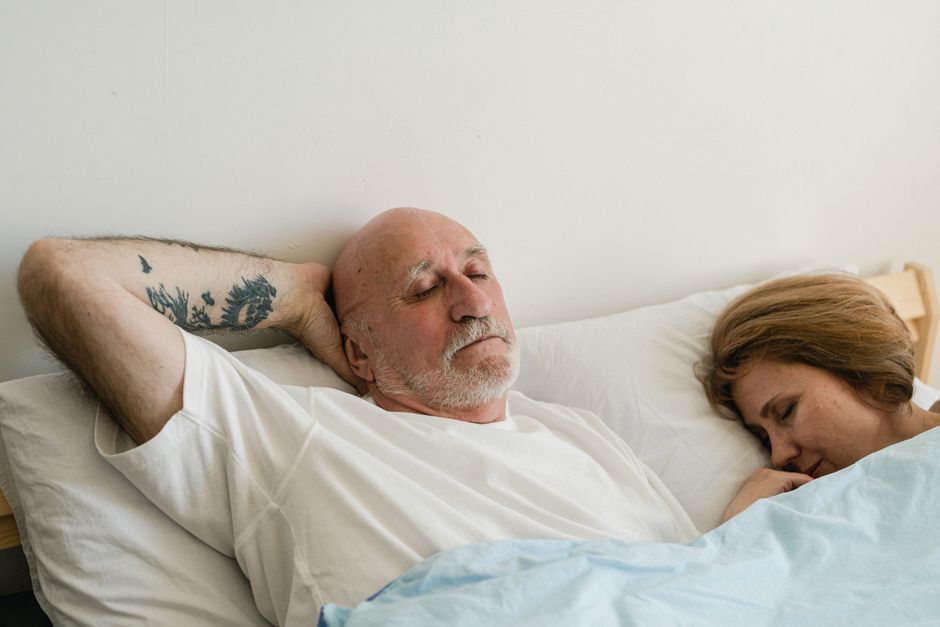
Most adults need seven to nine hours of sleep a night, and that range comes from decades of research on how much sleep keeps people healthy and functioning. You cannot train yourself to need less. The amount you personally need sits somewhere in that range, and your body gives you clear signals about where. The tricky part is that those signals get muffled by caffeine, alarm clocks, and busy weeks — so many people genuinely do not know how much sleep they need.
How Do You Know How Much Sleep You Need?
You find your number by testing it. The most reliable method sleep researchers use is simple: give yourself a window of about eight hours in bed for several nights in a row, with no alarm clock, and see when you wake up naturally. If you wake up feeling rested and stay alert through the afternoon without caffeine, you are probably close to your personal requirement.
This takes more than one night. If you have been short on sleep for weeks, the first few nights of unrestricted sleep often run long — nine or ten hours — as your body works off accumulated sleep debt. Only after that catch-up period does your natural wake time stabilize and become informative.
The seven-to-nine-hour range for adults is a broad population guideline, not a prescription for any one person. Some healthy adults genuinely function well on seven hours. Others need closer to nine. Both can be normal. What is not normal is needing six or fewer hours on a regular basis and feeling fine — that pattern is rare, and most people who believe they are in that group are actually chronically sleep-deprived and no longer noticing it.
Why Can’t I Just Train Myself to Need Less Sleep?
Sleep need is largely biological, not a matter of discipline. It is influenced by genetics, age, health, and physical activity, and it does not shrink because you want it to.
The “I only need five hours” claim is one of the most persistent sleep myths. A small number of people do carry rare genetic variants that allow them to function on short sleep without apparent harm. Researchers who study these people describe them as extremely uncommon. For almost everyone else, sleeping five or six hours a night produces measurable problems even when the person feels adjusted to it.
That last point matters. Sleep deprivation blunts your ability to judge your own impairment. Studies that track people during restricted sleep have found that participants’ self-rated sleepiness stops increasing after a few days, while their performance on attention tests keeps declining. In other words, you adapt to feeling tired without adapting to being impaired. Feeling “used to it” is not evidence that you are getting enough.
What Happens When You Don’t Get Enough Sleep?
Short sleep affects nearly every system in the body. The effects build up quietly, which is part of why chronic sleep loss is easy to miss.
In the short term, insufficient sleep impairs attention, reaction time, memory consolidation, and emotional regulation. The impairment is well documented and can be substantial — research on drowsy driving has found that going many hours without sleep produces reaction-time deficits comparable to alcohol intoxication. This is why drowsy driving is dangerous in a way that feels disproportionate to how sleepy you think you are.
Over the longer term, chronic short sleep is associated with higher risk of high blood pressure, type 2 diabetes, weight gain, and cardiovascular disease. The relationships are well established in large population studies, though the exact mechanisms are still being worked out. Sleep affects blood sugar regulation, blood pressure rhythms, appetite hormones, and immune function — all plausible pathways connecting short sleep to these conditions.
Mood is affected too. Insufficient sleep raises irritability and is a recognized contributor to depression and anxiety, though the relationship runs in both directions — poor sleep can worsen mood, and mood disorders can disrupt sleep.
How Does Sleep Need Change With Age?
Sleep need shifts across the lifespan, and it generally declines from childhood into adulthood before leveling off.
Newborns sleep most of the day. School-age children need substantially more sleep than adults. Teenagers have a biologically delayed sleep schedule — their bodies release melatonin later in the evening — which is why early school start times conflict with adolescent biology. This is a well-documented physiological shift, not laziness.
For adults, sleep need stays fairly stable through middle age. What changes is sleep quality and architecture. Older adults spend less time in deep sleep and wake more often during the night. Total sleep time often decreases modestly, but the need for adequate sleep does not disappear. The common assumption that older people simply need less sleep is partly true and partly a misunderstanding — they often need the same amount but have more trouble getting it.
What Signs Suggest You’re Not Getting Enough Sleep?
Your body signals short sleep in ways that are easy to dismiss as normal. Watch for these patterns:
- Needing an alarm clock to wake up most mornings, and hitting snooze repeatedly
- Feeling sleepy during quiet moments — reading, watching TV, riding in a car as a passenger
- Falling asleep within minutes of lying down at night (a sign of accumulated sleep debt, not good sleep health)
- Relying on caffeine to get through the afternoon
- Irritability, low patience, or trouble concentrating that improves on weekends
- Getting sick more often than usual, or recovering slowly
One useful test: if you fall asleep within about five minutes of your head hitting the pillow most nights, you are probably not getting enough sleep. People who are well rested typically take ten to twenty minutes to fall asleep.
How Do You Find Your Own Sleep Number?
Run a simple experiment. Pick a stretch of nights when you can go without an alarm — a vacation or a few days off work. Go to bed at a consistent time and let yourself wake naturally. Track when you wake and how you feel during the day.
After the catch-up phase passes, most people settle into a stable pattern. The amount of sleep you get on those natural nights, averaged over several days, is a reasonable estimate of your personal need. If you wake naturally after about seven and a half hours and feel good all day, that is likely your number. If you sleep nine hours and still feel groggy, something else may be going on — a sleep disorder, a medical condition, or poor sleep quality rather than insufficient quantity.
One clarification worth making: time in bed is not the same as time asleep. If you spend eight hours in bed but lie awake for an hour, you are getting seven hours of sleep. The experiment measures sleep, not just time under the covers.
When Should You Talk to a Doctor About Sleep?
Talk to a clinician if you are getting what should be adequate time in bed but still feel exhausted during the day. Persistent daytime sleepiness despite sufficient opportunity for sleep is a reason to look for an underlying cause.
Loud snoring, gasping or choking during sleep, witnessed pauses in breathing, or falling asleep unintentionally during the day are signs worth evaluating promptly. These can point to sleep apnea, a common and treatable condition that is frequently undiagnosed.
Trouble falling asleep or staying asleep for weeks, especially with daytime consequences, is also worth discussing. Insomnia is common and treatable, and cognitive behavioral therapy for insomnia is considered a first-line treatment — more effective over the long term than sleep medication for most people with chronic insomnia.
Sleep need is not a mystery you solve by guessing. It is something you can measure with a few nights of honest observation, and something worth taking seriously given how much of your health depends on it.
Frequently Asked Questions
How many hours of sleep do adults actually need?
Most adults need seven to nine hours of sleep per night, according to broad population guidance. Your individual need falls somewhere in that range and stays fairly stable through adulthood.
Can you catch up on sleep on the weekend?
Some recovery is possible, but weekend catch-up sleep does not fully reverse the effects of a week of short sleep. Consistent nightly sleep is more protective than relying on weekend recovery.
Is it normal to wake up during the night?
Brief awakenings are normal, and most people fall back asleep without noticing. Waking frequently and struggling to return to sleep, especially with daytime fatigue, is worth discussing with a doctor.
Does your body need less sleep as you get older?
Sleep need stays roughly stable in adulthood, but sleep quality often declines with age. Older adults may spend less time in deep sleep and wake more often, even when their need for sleep has not changed.
