
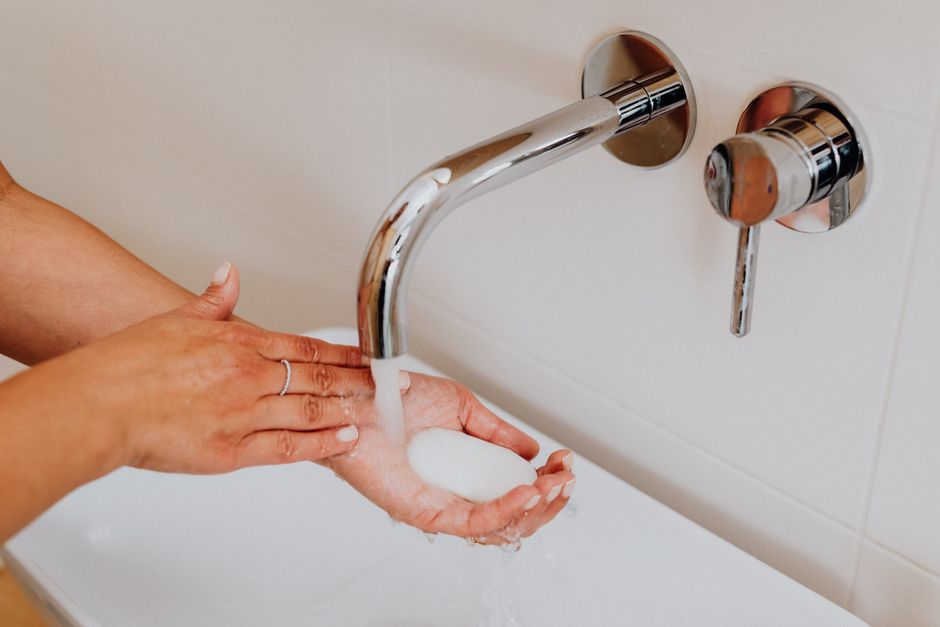
Hand washing is simple: wet your hands with clean running water, apply soap, and rub every surface — palms, backs, between fingers, and under nails — for at least 20 seconds. Then rinse and dry with a clean towel or air dryer. Done correctly and often, it is one of the most effective ways to stop the spread of infectious germs.
How Do You Hand Wash Step by Step?
The steps are straightforward, but most people skip parts of them without realizing it. The goal is to cover the whole hand evenly with soap and give the friction time to work.
- Wet your hands with clean running water. Warm or cold both work — the temperature does not affect how well soap removes germs.
- Apply enough soap to cover both hands.
- Rub your palms together. Then rub the back of each hand with the palm of the other, fingers interlaced.
- Clean between your fingers by interlocking them and rubbing back and forth.
- Scrub your thumbs by clasping each one with the opposite hand and rubbing in a circle.
- Rub your fingertips against the opposite palm to clean under the nails.
- Keep going for at least 20 seconds. A rough guide is humming “Happy Birthday” twice.
- Rinse well under running water.
- Dry your hands with a clean towel or let them air dry.
The 20-second figure comes from public health guidance, and it is a minimum, not a target to beat. The friction and soap do the work. Time matters because it takes a while to reach every surface of the hand.
Why Does 20 Seconds Matter?
Soap does not kill germs outright. It surrounds them, lifts them off the skin, and lets running water carry them away. That takes contact time and mechanical rubbing across every part of the hand.
Short washes tend to miss the same spots: fingertips, thumbs, and the spaces between fingers. Those are exactly the areas that touch your eyes, nose, and mouth — the main routes germs use to enter the body.
Here is a point that surprises many people. Soap works better than water alone because of its chemistry, not because it is a disinfectant. The soap molecule has one end that clings to water and one end that clings to oils and dirt. Germs get caught in that structure and rinsed away. This is why plain soap is enough for everyday hand washing, and why antibacterial soap offers no proven extra benefit for the general public.
What Kind of Soap Should You Use?
Plain soap and water are enough for routine hand washing. The US Food and Drug Administration reviewed the evidence on consumer antibacterial soaps and concluded that there is no data showing they are more effective than plain soap at preventing illness in the general public.
That finding led the FDA to ban several antibacterial ingredients, including triclosan, from over-the-counter consumer wash products. The concern was twofold: no demonstrated benefit for everyday use, and questions about long-term effects, including antibiotic resistance.
What matters more than the type of soap is whether you use it correctly and often. A cheap bar of plain soap used properly outperforms an expensive antibacterial wash used carelessly.
Alcohol-based hand sanitizer is a reasonable substitute when soap and water are not available. It does not work well when hands are visibly dirty or greasy, and it does not remove certain germs that soap and water can rinse away. Soap and water remain the first choice when you have the option.
When Should You Wash Your Hands?
Frequency and timing matter as much as technique. The key moments are when germs are most likely to enter your body or spread to others.
- Before, during, and after preparing food
- Before eating
- After using the toilet or changing a diaper
- After blowing your nose, coughing, or sneezing
- After touching animals, animal food, or animal waste
- After handling garbage
- Before and after caring for someone who is sick
- Before and after treating a cut or wound
- After touching surfaces that many people handle, such as door handles in public places
Health care settings follow stricter protocols, but the same principle applies at home: wash at the moments when your hands are about to meet your face or someone else’s food.
Does Hand Washing Actually Prevent Illness?
Yes. Hand washing is one of the best-supported public health measures there is. Research consistently shows that proper hand hygiene reduces the spread of respiratory and diarrheal infections.
The evidence is strongest for gastrointestinal illness and respiratory infections spread through contact. Studies of hand hygiene interventions in schools, workplaces, and communities have found reductions in illness rates, though the size of the effect varies by setting and how well people follow the practice.
What the evidence does not support is the idea that hand washing prevents everything. It reduces risk. It does not eliminate it. That distinction matters, because some marketing implies a level of protection that no hand hygiene practice can deliver.
Common Hand Washing Mistakes
Most failed hand washes share a few predictable problems. Fixing them is easy once you know what to look for.
- Rushing. A quick rinse under the tap does very little. The scrub is where the work happens.
- Skipping the backs of hands and thumbs. These areas are frequently missed, even by people who think they are thorough.
- Turning off the tap with clean hands. If you touch the faucet handle after washing, you may recontaminate your hands. Use a paper towel to turn it off when you can.
- Not drying properly. Wet hands transfer germs more easily than dry ones. Drying is part of the process, not an optional extra.
- Assuming sanitizer replaces washing. It does not, especially when hands are visibly soiled.
One more thing worth knowing. Long nails and artificial nails can harbor more germs under and around them, and they are harder to clean effectively. This matters most for people in health care or food service, but it is relevant for anyone trying to wash thoroughly.
Hand Washing in Public Restrooms
Public restrooms raise a common worry: is it worth washing if the sink or dryer looks dirty? The answer is still yes. The benefits of washing outweigh the small risks of touching shared surfaces.
Use a paper towel to turn off the faucet and open the door if you can. If the only option is a hand dryer, use it — drying matters. If there are no towels and the dryer is broken, air-drying by shaking your hands is better than leaving them wet.
Do not skip washing because you are in a hurry or because the facilities seem unpleasant. The germs on your hands from the restroom are far more likely to reach your face than anything you pick up from a faucet handle.
What About Hand Sanitizer?
Alcohol-based hand sanitizer with at least 60% alcohol is effective at reducing many germs on hands when soap and water are unavailable. The Centers for Disease Control and Prevention recommends this concentration for hand sanitizers used in community settings.
Apply enough to cover all surfaces of your hands and rub until dry. Do not wipe it off. The drying time is part of how it works.
Sanitizer has real limits. It does not remove dirt, grease, or certain germs that soap and water physically rinse away. It is also less effective when hands are visibly soiled. Use it as a backup, not a replacement.
Frequently Asked Questions
How long should you wash your hands?
At least 20 seconds, which is roughly the time it takes to hum “Happy Birthday” twice. The scrub time is what allows soap and friction to reach every surface of the hand.
Does water temperature matter when washing hands?
No. Warm and cold water work equally well for removing germs, because soap and friction do the work, not heat. Comfortable water simply makes it easier to wash for the full time.
Is antibacterial soap better than regular soap?
No evidence shows it is more effective for everyday use in the general public. The FDA found no data supporting an advantage and banned several antibacterial ingredients from consumer wash products.
Can hand sanitizer replace hand washing?
Only when soap and water are not available. Sanitizer with at least 60% alcohol reduces many germs, but it does not remove dirt or work well on visibly soiled hands.
