
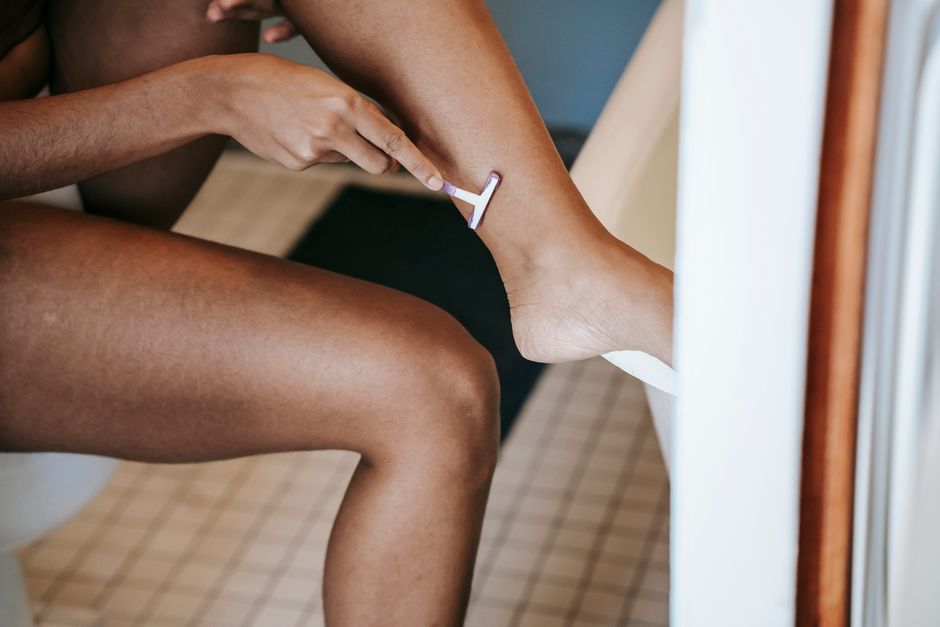
An ingrown pubic hair happens when a hair curls back into the skin or grows sideways instead of out. Most cases clear up on their own within a few days to a couple of weeks with simple home care. The key steps are to stop shaving or waxing the area, apply warm compresses, and let the hair grow out. Do not dig at it with fingernails or needles.
What Causes an Ingrown Pubic Hair?
Hair grows from a follicle beneath the skin. Normally it pushes up through the surface. An ingrown hair happens when the tip of the hair gets trapped below the skin or curls back and re-enters it. The body responds with redness, swelling, and sometimes a small bump that looks like a pimple.
Several things make this more likely in the pubic area:
- Shaving. Cutting hair very short leaves a sharp edge that can poke back into the skin as it grows. This is the most common trigger.
- Waxing and tweezing. Pulling hair out by the root can cause the new hair to grow back at an odd angle.
- Tight clothing. Friction pushes hair against the skin and can force it inward.
- Curly or coarse hair. Hair with more curl has a natural tendency to loop back.
Pubic hair is coarser and more tightly curled than most body hair. That texture is a big part of why ingrown hairs show up there so often.
How Do You Get Rid Of A Ingrown Pubic Hair?
Most ingrown hairs resolve without medical treatment. The goal is to reduce irritation and give the hair a chance to reach the surface on its own.
What actually helps:
- Stop removing hair in that area. Shaving, waxing, and tweezing make ingrown hairs worse. Give the area a break for several weeks.
- Apply warm compresses. A clean washcloth soaked in warm water, held against the area for a few minutes several times a day, can soften the skin and help the hair work its way out.
- Keep the skin clean. Wash gently with mild soap and water. Do not scrub.
- Let it be. Resist squeezing or picking. This is the single most important step and the hardest one to follow.
If a hair is visibly at the surface and looping back in, some clinicians suggest gently lifting it free with a clean, sterile needle or tweezers. This is not something to force. If the hair is not right at the surface, digging for it can push bacteria into the skin and turn a minor bump into an infection.
Over-the-counter products containing salicylic acid or glycolic acid are sometimes used to exfoliate the skin and reduce the chance of new ingrown hairs. The evidence for these specifically in the pubic area is limited. They may help with surface skin turnover, but they are not a guaranteed fix.
What Does an Ingrown Hair Look Like — and What Else Could It Be?
An ingrown pubic hair usually appears as a small, red, raised bump. It may itch or feel tender. Sometimes you can see a dark line or loop under the skin where the hair is trapped.
Here is where it gets tricky. Several other conditions can look almost identical:
- Folliculitis. Inflammation or infection of the hair follicle itself. It often looks like a cluster of small red bumps or pus-filled pimples.
- Genital herpes. Causes painful blisters or sores. It can be mistaken for ingrown hairs, especially early on.
- Molluscum contagiosum. A viral skin infection that causes small, firm, dome-shaped bumps.
- Epidermoid cysts. Firm lumps under the skin that may or may not be tender.
You cannot reliably tell these apart just by looking. If bumps are painful, spreading, filled with pus, or not improving after a week or two, see a doctor. A clinician can examine the area and, if needed, test for infections that require specific treatment.





When Should You See a Doctor?
Most ingrown hairs are harmless and go away on their own. Some situations need medical attention:
- The area becomes increasingly painful, hot, or swollen
- You see spreading redness or red streaks
- Pus or fluid drains from the bump
- You develop a fever
- The bump grows larger or does not improve after one to two weeks
- You have diabetes or a weakened immune system
These signs suggest a possible infection that may need antibiotics or drainage. A skin abscess — a pocket of pus under the skin — often will not resolve with home care alone. A doctor may need to open and drain it.
If you are unsure whether a bump is an ingrown hair or something else, getting it checked is reasonable. Genital sores from herpes, for example, need different treatment than an ingrown hair, and delaying care can prolong symptoms.
How Can You Prevent Ingrown Pubic Hairs?
Prevention comes down to how you remove hair — or whether you remove it at all.
If you shave:
- Shave in the direction the hair grows, not against it
- Use a sharp, clean razor. Replace it often.
- Wet the skin and use shaving cream or gel
- Do not pull the skin tight while shaving
- Rinse the razor after each stroke
Other options may reduce the risk:
- Trim instead of shave. Keeping hair short with scissors or an electric trimmer leaves the follicle intact and lowers the chance of ingrown hairs.
- Laser hair removal. This damages the follicle so hair grows back thinner or not at all. It is the most effective long-term option for people who keep getting ingrown hairs. It requires multiple sessions and is typically done by a dermatologist or trained technician.
- Chemical depilatories. These dissolve hair at the surface. They can irritate sensitive skin, so test on a small area first.
Looser underwear and clothing reduce friction, which helps. So does regular gentle exfoliation of the skin surface — though scrubbing too hard can make things worse.
Does Hair Removal Cause Other Problems?
Pubic hair removal is common, but it is not risk-free. Beyond ingrown hairs, shaving and waxing can cause:
- Small cuts that can become infected
- Skin irritation and rash
- Folliculitis, which is inflammation or infection of the hair follicles
- Spread of certain skin infections through shared razors or contaminated wax
Some research suggests that removing pubic hair, particularly by shaving, is associated with a higher rate of minor skin injuries and infections in that area. The evidence does not show that hair removal causes sexually transmitted infections, but breaks in the skin could theoretically make it easier for some infections to enter. This is an area where more research is needed.
Pubic hair itself serves a purpose. It reduces friction during movement and may play a role in trapping particles and reducing skin-to-skin contact. Whether to remove it is a personal choice, not a medical necessity.
What About Popping or Squeezing an Ingrown Hair?
Do not do it. Squeezing pushes bacteria deeper into the skin and can turn a minor bump into an infected cyst or abscess. It also increases the risk of scarring and dark spots that can last months.
If an ingrown hair has formed a visible pus-filled head, a warm compress may help it drain on its own. If it does not drain or gets worse, see a doctor. Medical drainage is done under sterile conditions and is far safer than doing it at home.
Frequently Asked Questions
How long does an ingrown pubic hair take to go away?
Most ingrown hairs resolve within one to two weeks without treatment. If it has not improved after two weeks, or if it is getting worse, see a doctor.
Can I pop an ingrown pubic hair?
No. Popping or squeezing pushes bacteria deeper into the skin and raises the risk of infection and scarring. Use warm compresses instead.
Should I stop shaving if I keep getting ingrown hairs?
Yes, stopping hair removal in the affected area gives the skin time to heal and lowers the chance of new ingrown hairs. Trimming or laser hair removal may be better options if you want to keep the area hair-free.
When is an ingrown pubic hair an emergency?
It is not usually an emergency, but spreading redness, fever, increasing pain, or a growing lump need prompt medical attention. These can signal an infection that requires treatment.
