
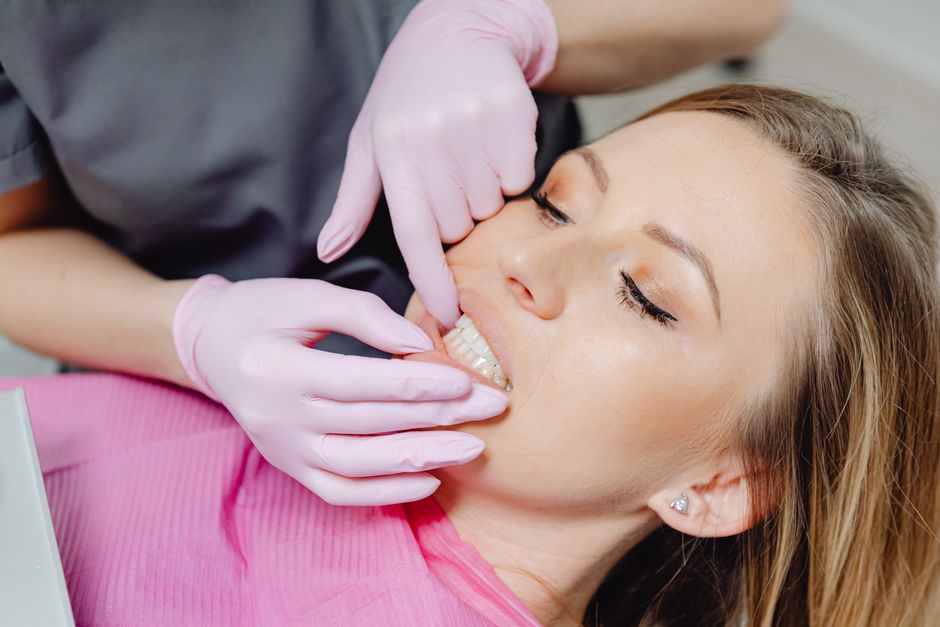
Receding gums happen when the gum tissue that covers the tooth root pulls back and exposes more of the tooth. The most common cause is gum disease, an infection of the tissues around the teeth. But several other factors — from how you brush to your genes to your hormones — can also drive gum loss. Most people have more than one cause working at once.
Gum recession is common and often develops slowly. It can happen without pain, which is why many people don’t notice it until a tooth looks longer or feels sensitive. Understanding the causes matters because the right response depends on which cause is at work.
How Do You Get Receding Gums Causes Explained?
Gum recession is usually the result of long-term pressure, inflammation, or both. The gum tissue is thin and delicate. When it is repeatedly irritated or when the bone and ligament holding the tooth in place break down, the gum follows.
The single biggest cause is periodontal (gum) disease. In gum disease, bacteria in plaque trigger inflammation of the gums. If plaque is not removed, it hardens into tartar, which irritates the gums further and cannot be brushed away at home. Over time the inflammation spreads to the bone that supports the tooth. As that bone is lost, the gum tissue moves down with it. This is why gum recession and bone loss are closely linked — the gum does not usually retreat on its own without something happening underneath.
The second major cause is mechanical. Brushing too hard, especially with a hard-bristled brush and a side-to-side scrubbing motion, wears away gum tissue over years. This is sometimes called toothbrush abrasion. It tends to affect the teeth most exposed to the brush — often the ones on the outside of the canines and premolars.
Other causes include:
- Genetics. Some people are simply more prone to gum disease and thin gum tissue, regardless of how well they care for their teeth.
- Hormonal changes. Pregnancy, puberty, and menopause can make gums more sensitive to plaque and inflammation.
- Smoking. Smoking is a well-established risk factor for gum disease and reduces blood flow to the gums, which affects healing.
- Grinding and clenching. Excess force on teeth can contribute to recession over time.
- Misaligned teeth or a bite problem. Teeth that sit outside the normal arch can have less bone and gum support.
- Piercings. Lip and tongue jewelry can rub against gum tissue and cause local recession.
- Age. Recession becomes more common as people get older, largely because the effects of the causes above accumulate.
One clarification worth making: recession is not simply a normal part of aging that nothing can be done about. Age raises the odds, but the underlying drivers are usually identifiable and often manageable.
What Does Gum Recession Look Like and Feel Like?
The first sign is usually visual — a tooth that looks longer than it used to, or a visible gap where the gum used to sit against the tooth. The exposed root is often a slightly different color, more yellow, because root surfaces lack the white enamel that covers the crown of the tooth.
Because the root is not protected by enamel, it is more sensitive. Many people notice a sharp feeling with cold drinks or when brushing. Roots also decay more easily, so cavities can form on exposed surfaces.
Other signs include:
- Teeth that feel loose or shift position
- Spaces opening between teeth
- Gums that bleed when brushing or flossing
- Bad breath or a bad taste that does not go away
- A notch you can feel near the gumline with your fingernail
Recession itself is often painless. Pain usually points to active inflammation, a cavity, or root sensitivity rather than the recession alone.
Is Gum Recession Always Gum Disease?
No. Gum disease is the most common cause, but not the only one. Some people have recession with healthy gums and no active infection. This is often the case with toothbrush abrasion, grinding, or thin gum tissue that runs in the family.
The distinction matters for treatment. If active gum disease is present, the priority is controlling the infection and stopping bone loss. If the gums are healthy and the cause is mechanical, the focus shifts to changing how you brush and reducing force on the teeth. A dentist or periodontist can usually tell the difference by measuring gum pockets, checking for bleeding, and looking at X-rays for bone loss.
This is also why self-diagnosis is unreliable. Two people with the same-looking recession can need very different care.





Can Receding Gums Grow Back?
Gum tissue does not grow back on its own. Once the gum has pulled away from the tooth, it stays that way. This is one of the most common misconceptions about gum recession — many people assume that better brushing will reverse it. It will not.
What good care can do is stop the recession from getting worse and protect the exposed root. That means removing plaque thoroughly, brushing gently with a soft brush, and addressing any active gum disease.
For people who want the gumline restored, there are surgical options. A gum graft takes tissue — usually from the roof of the mouth or from a donor source — and places it over the exposed root. This is a real procedure with real benefits, but it is not right for everyone, and outcomes depend on the cause and the health of the surrounding tissue. Whether grafting is appropriate is a decision for a periodontist after an exam.
What Makes Gum Recession Worse?
The habits that cause recession are often the same ones that speed it up. Hard brushing is the clearest example — continuing to scrub hard after recession starts will keep wearing the tissue down.
Smoking is another major factor. It is well established that smokers have higher rates of gum disease and poorer healing after treatment. Quitting does not reverse existing recession, but it reduces the ongoing risk.
Uncontrolled blood sugar is also linked to worse gum disease. People with diabetes are more prone to gum problems, and gum infection in turn can make blood sugar harder to control — a two-way relationship that research has documented.
Skipping professional cleanings allows tartar to build up in places a brush cannot reach. That tartar keeps inflammation going, which keeps the bone and gum loss moving.
When Should You See a Dentist?
See a dentist if you notice a tooth looking longer, a new gap between teeth, sensitivity at the gumline, or gums that bleed regularly. These are signs worth checking, even if nothing hurts.
Recession that is caught early is easier to manage. A dentist can measure how much gum has been lost, check for infection, and identify what is driving it. Some cases can be watched. Others need treatment for gum disease or a change in home care. A few may benefit from a referral to a periodontist.
Do not wait for pain. Gum disease is often quiet until it has caused significant damage, and by then the bone loss cannot be undone.
Frequently Asked Questions
What is the most common cause of receding gums?
Gum disease is the most common cause. It breaks down the bone and tissue that support the teeth, and the gum follows the bone down.
Can brushing too hard cause receding gums?
Yes. Years of hard brushing with a stiff brush and a scrubbing motion can wear away gum tissue, a process called toothbrush abrasion. Using a soft brush with gentle pressure reduces this risk.
Do receding gums grow back naturally?
No. Gum tissue does not regrow on its own once it has pulled away from the tooth. Surgical grafting can restore the gumline in some cases, but it is a procedure, not natural regrowth.
Is gum recession a sign of aging?
Recession becomes more common with age, but it is not an unavoidable result of getting older. The causes — gum disease, hard brushing, grinding, and others — usually accumulate over time and can often be addressed.
