
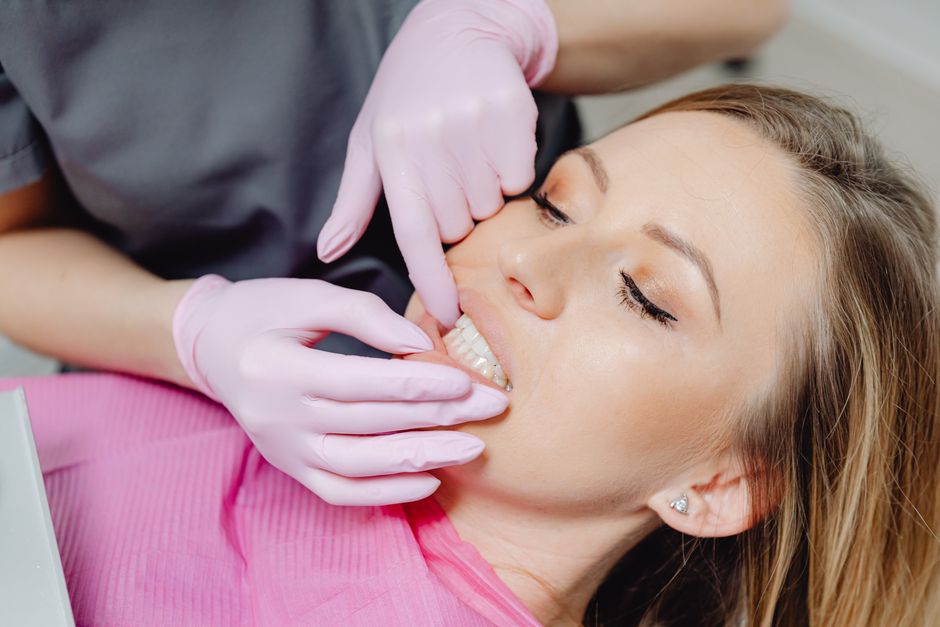
Gum recession is when the gum tissue pulls back from the tooth, exposing more of the tooth or its root. You cannot grow back gum tissue that has already receded through brushing or home remedies. Treatment focuses on stopping the recession from getting worse and covering exposed roots when needed. Options range from a simple change in how you brush to a surgical gum graft, depending on how much tissue you have lost and why.
What Actually Causes Gums to Recede?
Recession almost always has a mechanical or inflammatory cause. It rarely happens on its own.
The most common driver is gum disease, also called periodontal disease. Bacteria build up along the gumline, and the immune system responds with inflammation. Over time that inflammation breaks down the tissue and bone that hold teeth in place. As support is lost, the gum margin moves down the tooth.
Another frequent cause is brushing too hard or using a hard-bristled brush. Scrubbing back and forth wears away the thin gum tissue and can also wear a notch into the tooth itself. This is called abrasion, and it often shows up as recession on the side of the mouth where people brush hardest.
Other contributors include:
- Grinding or clenching teeth, which puts heavy force on the gums and bone
- Misaligned teeth or a bite that puts pressure on certain teeth
- Thin gum tissue that a person was born with
- Smoking, which narrows blood vessels and impairs healing
- Hormonal changes, such as during pregnancy or menopause
- Piercings in the lip or tongue that rub against the gum
Recession becomes more common with age, partly because years of these forces add up. It is not an unavoidable part of aging, though. People who keep their gums healthy and brush gently can avoid significant recession.
How Do You Fix Receding Gums Treatment Options?
There is no cream, rinse, or supplement that regrows gum tissue. The real options fall into two groups: things that stop the recession from progressing, and procedures that cover the exposed root.
Non-surgical approaches aim to remove the cause. If gum disease is driving the recession, a deep cleaning called scaling and root planing removes bacteria and tartar from below the gumline. This is done with local anesthetic and often takes more than one visit. It does not grow gums back, but it can halt further loss.
Fixing your brushing technique is one of the most effective steps. A soft-bristled brush, gentle circular motions, and less pressure reduce ongoing damage. Some dentists also recommend an electric brush with a pressure sensor.
If grinding is a factor, a night guard made by a dentist can reduce the force on your gums and teeth. Straightening crowded or misaligned teeth may also help in some cases.
Surgical approaches are used when tissue has been lost and the goal is to cover the root. The most established is a gum graft.
In a gum graft, tissue is taken from the roof of your mouth or from a donor source and stitched over the exposed root. There are a few types:
- Connective tissue graft: tissue is taken from under a flap on the roof of the mouth. This is the most common and often the most predictable for covering roots.
- Free gingival graft: a small strip of tissue is taken from the roof of the mouth. It is often used to thicken thin gums rather than cover a single root.
- Pedicle graft: tissue next to the receding tooth is shifted over to cover it. This only works when there is enough nearby gum.
- Donor tissue grafts: processed tissue from a tissue bank is used instead of taking tissue from your own mouth. This avoids a second surgical site.
A newer option is a pinhole surgical technique. A small hole is made in the gum, and instruments are used to loosen and slide the tissue down over the root. It is less invasive than a graft, but it is not appropriate for every case, and long-term data comparing it directly to grafting are more limited.
Your dentist or periodontist will recommend based on how much tissue is lost, how many teeth are involved, and the cause.
What Can You Do at Home to Stop It Getting Worse?
Home care cannot reverse recession, but it can slow it down. The single most important habit is gentle brushing.
Use a soft brush and hold it at a 45-degree angle to the gumline. Move it in small circles rather than sawing back and forth. Let the bristles do the work, not your arm. Many people brush far harder than they realize.
Flossing once a day removes bacteria between teeth where a brush cannot reach. If standard floss is hard to use, interdental brushes or a water flosser can help.
If you grind your teeth, talk to your dentist about a guard. Grinding puts repeated force on gums that are already under stress.
Quitting smoking matters more than most people expect. Smoking reduces blood flow to the gums and is strongly linked to worse gum disease and poorer healing after treatment.
See your dentist for regular cleanings. Professional cleaning removes tartar that you cannot remove at home, and early recession is easier to manage than advanced recession.





When Should You See a Dentist About Receding Gums?
See a dentist if you notice your teeth looking longer, if your roots are exposed, or if you have sensitivity to hot or cold. These are signs that recession is already happening.
See a dentist sooner if you have:
- Bleeding gums when you brush or floss
- Loose teeth
- Persistent bad breath
- Pain or swelling in your gums
- A tooth that feels like it is shifting
These can signal gum disease, which needs treatment to prevent tooth loss. Recession from gum disease tends to get worse without care.
Some recession is mild and can be watched. Your dentist can measure how much gum you have and track changes over time. Early action usually means simpler treatment.
Does Receding Gum Grow Back on Its Own?
No. Once gum tissue recedes, the body does not regrow it on its own. The tissue that is lost is gone unless it is replaced surgically.
This is why the goal of most treatment is to stop the recession and protect the exposed root. A gum graft can cover the root and restore some coverage, but it does not restore the original gumline in every case. Results depend on the type of graft, the amount of tissue available, and the skill of the surgeon.
Some people with mild recession and no symptoms may not need treatment beyond good home care and monitoring. Others with exposed roots, sensitivity, or risk of decay may benefit from a graft.
Be wary of products that claim to regrow gums. No clinical evidence currently confirms that any toothpaste, rinse, or supplement can regenerate lost gum tissue.
What Are the Risks of Leaving Receding Gums Untreated?
Untreated recession can lead to several problems. Exposed roots are more prone to decay because the root surface is softer than enamel. They are also more sensitive to hot, cold, and sweet foods.
As recession continues, more of the tooth is exposed. In severe cases, the tooth can become loose and may be lost. This is more likely when gum disease is the underlying cause, because the disease also destroys the bone that supports the tooth.
Recession can also affect appearance. Longer-looking teeth and visible roots are a common concern, and some people seek treatment for cosmetic reasons as well as health ones.
Treating the cause early is the best way to avoid these outcomes. That means managing gum disease, correcting brushing habits, and addressing grinding.
How Much Does Treatment Cost and Does Insurance Cover It?
Costs vary widely by procedure and location. A deep cleaning is generally less expensive than a gum graft. A gum graft costs more because it involves surgery and often a second site in the mouth.
Dental insurance often covers part of periodontal treatment when it is deemed medically necessary. Coverage for gum grafts varies. Some plans cover a percentage after a deductible, and some have annual maximums that a graft can exceed. Cosmetic gum procedures are frequently not covered.
Because costs and coverage differ so much, ask your dentist for a written estimate and check with your insurance before treatment. Many offices offer payment plans.
Frequently Asked Questions
Can receding gums grow back naturally?
No, lost gum tissue does not grow back on its own. Treatment can stop the recession and surgery can cover exposed roots, but natural regrowth does not happen.
What is the best treatment for receding gums?
The best treatment depends on the cause. If gum disease is driving it, deep cleaning and good home care come first. If roots are exposed and tissue is lost, a gum graft is the most established way to cover them.
Is a gum graft painful?
Most people report soreness for a few days to a week, mainly at the site where tissue was taken. Dentists manage this with local anesthetic during the procedure and pain relief afterward.
Can I fix receding gums without surgery?
You can slow or stop mild recession without surgery by changing how you brush, treating gum disease, and managing grinding. You cannot cover an exposed root without a procedure.
