
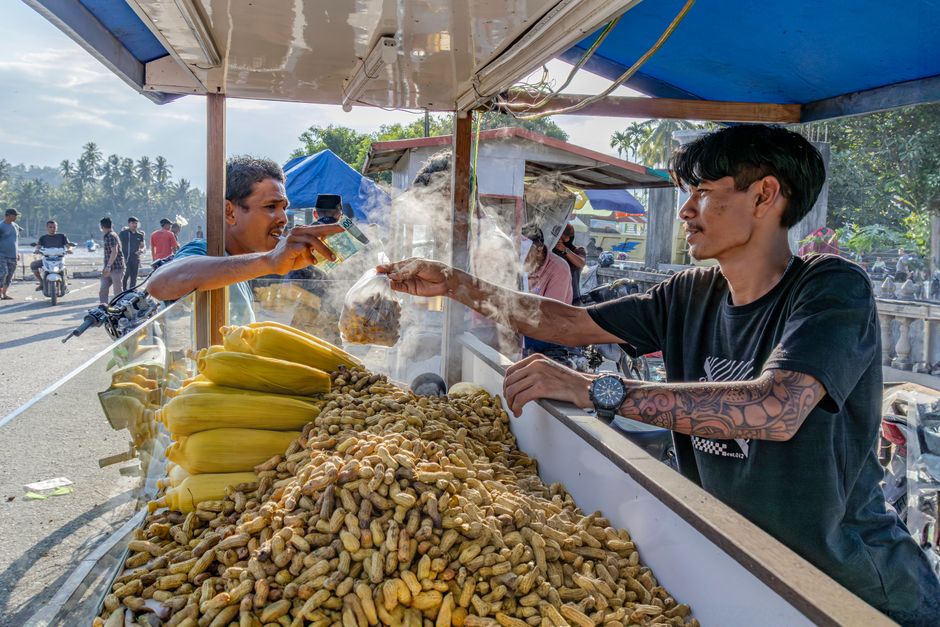
Boiled peanuts are soft, salty, and eaten straight from the shell — you crack the wet shell open, pop the warm nut into your mouth, and discard the shell. In the southern United States, they are sold in gas stations and roadside stands in paper bags or cups, still steaming. You eat them with your fingers, usually while they are warm, and you can season them however you like.
If you have never tried them, the texture surprises most people. A boiled peanut is not crunchy like a roasted peanut. It is closer to a cooked bean — soft, a little dense, and savory. That difference is not a defect. It is the whole point.
What Are Boiled Peanuts Exactly?
A boiled peanut is a raw, “green” peanut that has been simmered in salted water for hours until the shell and the nut inside turn soft. Green peanuts are freshly harvested and still contain a high amount of moisture. They are not the same as the dried raw peanuts sold in grocery stores for roasting.
The peanut itself is not a true nut. It is a legume, related to beans and lentils. That is why boiling works so well — you are essentially cooking a bean in its pod. The shell becomes spongy and the inner kernel takes on a texture similar to a cooked black-eyed pea or edamame.
Boiled peanuts are most associated with the American South, particularly Georgia, Alabama, Florida, and South Carolina. They are also eaten in parts of Asia, Africa, and the Caribbean, where the seasoning changes but the basic method does not. In China, boiled peanuts are sometimes served with star anise and Sichuan peppercorn. In parts of West Africa, they may be boiled with salt and hot pepper.
How Do You Eat Boiled Peanuts Step by Step?
Eating a boiled peanut takes a few seconds once you get the motion down. The shell is soft enough that you do not need teeth to open it — your fingers and a gentle pinch will do.
- Pick up a peanut by the shell. It will feel wet and slightly squishy.
- Pinch the shell between your thumb and forefinger near one end. It should split open easily.
- Pull the two halves of the shell apart, or squeeze the peanut directly into your mouth.
- Eat the inner kernels. Spit out or set aside the shell.
- Discard the shell — do not swallow it. It is fibrous and not meant to be eaten.
Some people bite the whole peanut in half while it is still in the shell and suck the salty juice out first. That is a common habit in the South. The juice is where a lot of the flavor lives, especially if the peanuts were boiled with spices.
If the peanut is very soft, the kernel may fall apart as you open it. That is normal. A well-boiled peanut should be tender enough to mash with your tongue but not so soft that it turns to paste.
Do You Eat the Shell of a Boiled Peanut?
No. The shell is not eaten. It is tough, fibrous, and holds no nutritional value you need. The shell exists to protect the nut, and after boiling it becomes a soft container you discard.
That said, the shell does absorb salt and seasoning from the cooking water, which is why some people suck on it before opening. The flavor transfer is real, but the shell itself is not food. Swallowing a small piece by accident is not dangerous, but eating shells in quantity is not recommended — they are indigestible fiber and can cause stomach discomfort.




What Do Boiled Peanuts Taste Like?
Boiled peanuts taste mild, earthy, and salty. The flavor is closer to a cooked bean than to a roasted peanut. Roasting brings out the deep, toasty, nutty notes most people associate with peanuts. Boiling preserves a fresher, greener, more vegetal taste.
The salt level depends entirely on how they were cooked. Some batches are barely salted. Others are brined hard and taste almost like pickled beans. If you are buying them from a stand, ask whether they are mild or salty — vendors usually know their own batch.
Texture matters as much as taste here. A good boiled peanut is soft but still holds its shape. An overcooked one turns mushy. An undercooked one stays firm and chalky in the middle, which is unpleasant.
Are Boiled Peanuts Healthy?
Boiled peanuts retain much of the nutrition of the raw legume. They are a source of plant protein, monounsaturated fat, fiber, and several vitamins and minerals, including niacin, folate, vitamin E, and magnesium. According to USDA nutritional data, peanuts in general are energy-dense — roughly 160 to 170 calories per ounce of shelled kernels — so portion size matters if you are watching calorie intake.
Boiling does leach some water-soluble nutrients into the cooking liquid, particularly certain B vitamins. How much is lost depends on cooking time and volume of water. The nutrient content of boiled peanuts is generally lower than that of raw or dry-roasted peanuts for some vitamins, though the difference is not dramatic.
The bigger nutritional issue is sodium. Boiled peanuts are typically cooked in heavily salted water, and they absorb a significant amount of that salt. If you have high blood pressure or are watching sodium, boiled peanuts can add up quickly. A single cup of shelled boiled peanuts can contain a substantial share of a day’s recommended sodium limit, though the exact amount varies widely by recipe.
One clarification worth making: boiled peanuts are not a “health food” in the marketing sense, and they are not a “junk food” either. They are a whole legume preparation with real nutritional value and a real sodium load. Both things are true at once.
How Are Boiled Peanuts Cooked?
Traditional boiled peanuts are made by simmering raw green peanuts in salted water for several hours. The exact time depends on whether the peanuts are fresh or dried. Fresh green peanuts cook faster. Dried raw peanuts take much longer and often need soaking first.
The basic method is simple. Rinse the peanuts. Put them in a large pot and cover with water by a few inches. Add salt — traditionally a lot of it — and bring to a boil. Reduce to a simmer and cook until the peanuts are soft all the way through. Some cooks add garlic, bay leaf, Cajun seasoning, or hot pepper to the water.
The peanuts are usually left to cool in the cooking liquid, which lets them absorb more salt and flavor. They are then drained and eaten warm or at room temperature. Boiled peanuts can be refrigerated for several days and reheated, though they lose some texture over time.
If you are buying them instead of making them, fresh boiled peanuts are best eaten within a day or two. They do not keep as long as roasted peanuts because of their moisture content.
Where Can You Buy Boiled Peanuts?
In the southern US, boiled peanuts are sold at roadside stands, farmers markets, convenience stores, and sometimes from the back of pickup trucks during peanut season. They are usually sold by the cup or by the bag, still warm. In other parts of the country, they are harder to find fresh, though canned boiled peanuts are available online and in some grocery stores.
Peanut season in the US runs roughly from late summer into fall, which is when fresh green peanuts are most available. Outside that window, vendors typically use dried raw peanuts, which produce a slightly firmer result.
Canned boiled peanuts are a different experience. They are already cooked and shelf-stable, but the texture is softer and the flavor is often more uniform. They work in a pinch but do not match fresh ones.
Can You Eat Boiled Peanuts If You Have a Peanut Allergy?
No. A peanut allergy is a reaction to proteins in the peanut itself, and boiling does not remove those proteins. Boiled peanuts are not safe for anyone with a diagnosed peanut allergy. This is a serious point — peanut allergy can cause anaphylaxis, which is a medical emergency.
Some research has looked at whether different cooking methods change the allergenic potential of peanuts, and roasting appears to increase it while boiling may reduce it somewhat. But “reduced” is not “eliminated.” No clinical guidance supports eating boiled peanuts if you have a peanut allergy. If you have any doubt about your allergy status, talk to a doctor before trying them.
What Is the Best Way to Eat Boiled Peanuts?
The best way is warm, freshly boiled, and eaten by hand. That is how they are traditionally enjoyed, and it is when the texture and flavor are at their peak. Letting them sit too long makes them soggy and cold, which dulls the taste.
Beyond that, there is no single right way. Some people eat them plain. Some dip them in hot sauce or sprinkle them with Cajun seasoning. Some add them to salads or soups for a soft, savory crunch. In some kitchens, boiled peanuts are mashed into a paste and used as a spread or a base for stew.
If you are trying them for the first time, start with a small cup from a vendor you trust. Ask how salty they are. Eat a few while they are warm. The texture takes some getting used to if you are expecting a roasted peanut, so give yourself a few bites before deciding.
Frequently Asked Questions
Do you eat the shell of boiled peanuts?
No, the shell is discarded. It is fibrous and not meant to be eaten, though you can suck the salty juice from it before opening.
Are boiled peanuts healthy?
They provide plant protein, fiber, and several vitamins and minerals, but they are also high in sodium from the cooking brine. Portion size and salt intake are the main things to watch.
What do boiled peanuts taste like?
They taste mild, earthy, and salty, closer to a cooked bean than a roasted peanut. The flavor depends heavily on how much salt and seasoning was used in the water.
Can you eat boiled peanuts with a peanut allergy?
No. Boiling does not remove the peanut proteins that trigger allergic reactions, so boiled peanuts are not safe for anyone with a diagnosed peanut allergy.
