
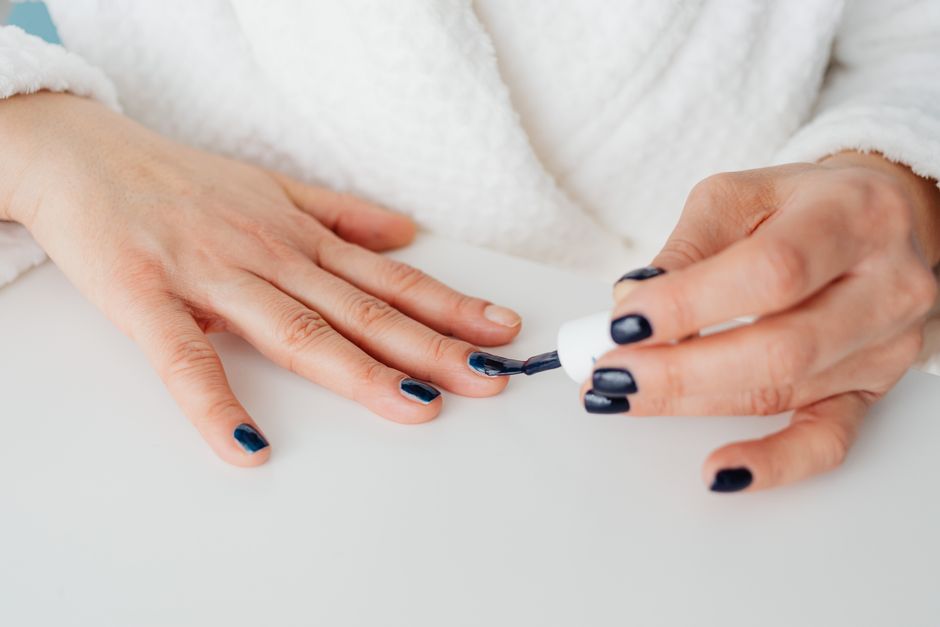
Wet nail polish dries from the top down, and the surface feels dry long before the layers underneath are set. That is why a fresh manicure can feel done, then smudge an hour later. The fastest reliable approach is thin coats, a quick-dry top coat, and cool air moved across the nails. Heat and thick layers slow the process down.
Most of what people call “drying” is really two things happening at once. Solvents evaporate from the surface, and the film hardens underneath. Quick-dry products speed the first part. Time and thin layers handle the second. Understanding that split explains why some tricks work and others do not.
How Do You Dry Nail Polish Fast? Step by Step Instructions
Follow these steps in order and you will cut drying time without wrecking the finish.
- Start with clean, dry nails. Wipe each nail with rubbing alcohol or a polish remover that contains no oils. Any oil or lotion on the nail plate stops polish from bonding and slows setup.
- Apply a thin base coat. A thin layer dries faster than a thick one and gives the color something to grip.
- Use two thin color coats, not one thick one. Thick coats trap solvent underneath. The top skins over while the middle stays wet, which is exactly how a manicure smudges hours later.
- Wait about two minutes between coats. The surface should be tacky but not wet when the next coat goes on.
- Finish with a quick-dry top coat. These products are formulated to set faster than standard top coats. Apply it thin and wrap the tip of each nail if you can.
- Move cool air across the nails. A fan on low, a hair dryer on the cool setting, or simply waving your hands works. Airflow helps solvent evaporate. Heat does not.
- Keep nails still for the first several minutes. Movement and pressure are what cause smudges, not the air itself.
- Add a drying drop or spray only if you already own one. These can help the surface set. They do not replace the need for thin coats.
One detail most people miss: the final set happens over hours, not minutes. Even a manicure that feels completely dry to the touch is still hardening underneath. Avoid tight shoes, hot water, and heavy pressure on the nails for the first few hours if you want the finish to last.
Does Cold Air Actually Dry Nail Polish Faster?
Cool air helps, and the reason is straightforward. Nail polish is a solution of film-forming polymers, plasticizers, and pigments dissolved in volatile solvents. The solvents have to leave the film for it to harden. Airflow speeds that evaporation at the surface.
Cold specifically matters because heat softens the film. Warm air can make the polish more pliable and slower to set, and it can also cause the surface to skin over before the layers underneath have released their solvent. That trapped solvent is what produces dents and smears later.
So the old advice to blow on your nails is not wrong, it is just weak. Your breath is warm and humid, which is close to the opposite of what you want. A cool fan is a better tool than a warm breath.
Do Ice Water and Cold Water Dips Work?
Ice water dips are popular and the evidence for them is thin. The idea is that cold firms up the polish quickly. In practice, a brief cold dip may help the surface feel set, but it does nothing for the solvent still trapped in lower layers.
There is a real risk with this method. Water can dull the shine of a fresh top coat, and plunging wet nails into a bowl can introduce dents from the bowl edge or from your own fingers. If you try it, keep the dip short and pat dry gently rather than rubbing.
Some people swear by it. Some nail technicians recommend against it. The honest position is that cold water is not harmful, but it is not a reliable shortcut either.
What Slows Nail Polish Down?
Most slow-drying problems come from application, not from the polish itself.
- Thick coats. The single biggest cause of smudged, dented manicures. Two thin coats always beat one thick one.
- Skipping the base coat. Polish adheres better and sets more evenly over a proper base.
- Oily nails. Lotion, cuticle oil, or natural oils on the nail plate interfere with bonding.
- Humidity and heat. Both slow solvent evaporation and soften the film.
- Layered products. Base coat, color, top coat, and a second top coat all add solvent that has to escape.
There is also a category of polish that simply takes longer. Standard lacquers rely on solvent evaporation. Gel polishes cure under a UV or LED lamp and are a different chemistry entirely. If you are using gel, the lamp does the setting and air drying advice does not apply.
Do Quick-Dry Top Coats and Drying Drops Really Help?
Quick-dry top coats generally do what they claim, within limits. They are formulated with solvents that evaporate faster than standard top coats, and many contain ingredients that help the film set more quickly. They can meaningfully shorten the time before your nails are safe to touch.
What they cannot do is fix a thick coat underneath. A fast top coat over a wet middle layer just seals the solvent in.
Drying drops and sprays are a mixed bag. Some contain silicone or light oils that help the surface feel slick and set. Others are mostly cosmetic. The evidence for specific products is limited, and results vary by formula. If you already use one and it works for you, keep using it. Do not expect it to replace thin coats and airflow.
One clarification worth making: “quick-dry” and “no-chip” are marketing terms, not regulated categories. They do not carry a standard meaning across brands.
How Long Should You Actually Wait Before Using Your Hands?
Touch-dry is not the same as fully set. Most standard polishes feel dry to the touch within several minutes with a quick-dry top coat, but the film continues to harden for hours.
Practical guidance that most nail professionals follow: avoid hot water, tight shoes, and heavy pressure on the nails for the first few hours. Do not dig through a purse. Do not do dishes without gloves. If you can, paint your nails in the evening when you will not be using your hands much.
Thin coats plus a quick-dry top coat plus cool airflow is the combination that reliably gets you to a usable manicure fastest. Everything else is a smaller factor.
Frequently Asked Questions
How long does nail polish take to dry completely?
Standard polish usually feels dry to the touch within several minutes with a quick-dry top coat, but the film keeps hardening for hours. Avoid heavy pressure and hot water for the first few hours.
Does putting nails in ice water dry polish faster?
Ice water may firm the surface briefly, but it does not speed up hardening in the lower layers and can dull the shine. It is not a reliable shortcut.
Can you use a hair dryer to dry nail polish?
Yes, but only on the cool setting. Warm or hot air softens the film and can cause the surface to set before the layers underneath are dry.
Why does my nail polish smudge hours after I paint it?
Smudging hours later usually means thick coats trapped solvent underneath a set surface. Two thin coats dry more completely than one thick one.
