
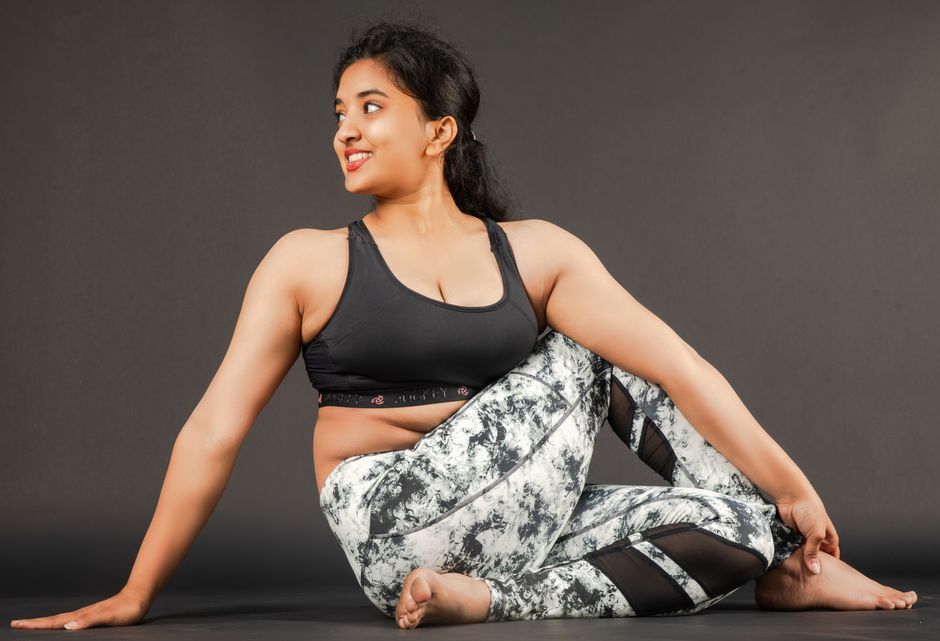
A Russian twist is a core exercise done sitting on the floor. You lean back, lift your feet, and rotate your torso from side to side. It targets the obliques, which are the muscles on the sides of your waist. The move is simple in form but easy to get wrong, and getting it wrong can strain your lower back. Here is how to do it correctly, what mistakes to avoid, and who should skip it entirely.
How Do You Do A Russian Twist
The standard Russian twist starts on the floor. Sit with your knees bent and your feet flat on the ground. Hold your hands together in front of your chest. Lean your upper body back until you feel your abdominal muscles engage. This is usually around a 45-degree angle. Lift your feet off the floor so your shins are roughly parallel to the ground. Balance on your sit bones.
From this position, rotate your torso to the right. Bring your hands toward the floor beside your hip. Pause briefly. Rotate back through center and repeat on the left side. That is one repetition. Keep your chest tall and your spine long throughout the movement. Do not let your shoulders round forward.
The rotation comes from your torso, not your arms. Your arms simply follow the movement. If you find yourself swinging your arms to generate momentum, you are no longer working your core effectively. Slow the movement down and focus on control.
What Muscles Does The Russian Twist Work?
The Russian twist primarily targets the internal and external obliques. These are the muscles that allow your trunk to rotate. They also help with side bending and stabilizing your spine during movement.
The rectus abdominis, the muscle commonly called the six-pack, also works during the exercise. It contracts isometrically to keep your torso in the leaned-back position. Your hip flexors work to hold your legs up, and your lower back muscles engage to stabilize your spine.
Research consistently shows that rotational exercises like the Russian twist produce high activation in the obliques compared to other core exercises. However, high muscle activation does not automatically mean it is the best or safest choice for everyone. It simply means the muscles are working hard.
Common Mistakes That Cause Back Pain
The most common error is rounding the lower back. When people get tired, their spine collapses into a C-curve. This puts excessive pressure on the spinal discs. Over time, that pressure can cause pain or injury. Keep your spine neutral and your chest lifted even when you are fatigued.
Another frequent mistake is moving too fast. Rushing the movement turns the exercise into a momentum-driven swing. This reduces muscle engagement and increases the risk of straining the lower back. Each rotation should take about two seconds.
Holding your breath is also common. People tense up and forget to breathe. Holding your breath raises blood pressure and reduces oxygen flow to working muscles. Exhale as you rotate to each side, and inhale as you return to center.
Finally, many people let their knees drop to one side as they twist. This shifts the workload away from the obliques and onto the hip flexors. Keep your knees pointing forward and relatively still throughout the movement.





Russian Twist Variations For Different Fitness Levels
If you are new to core training, start with a simpler version. Keep both feet on the floor. This reduces the demand on your hip flexors and makes balancing easier. You can also hold a single dumbbell or a medicine ball at your chest to add resistance without complicating the movement.
For a more advanced version, straighten your legs while you twist. This increases the lever arm and makes the exercise significantly harder. Only attempt this if you can complete the bent-knee version with perfect form for at least 15 repetitions per side.
A weighted version uses a plate, dumbbell, or medicine ball held at chest level. The weight increases resistance but also increases the risk of poor form. Start light. A weight that is too heavy will cause you to round your back or swing your arms.
There is also a standing version of the twist. You stand with your feet hip-width apart and rotate your torso side to side while holding a weight. This version is commonly done in cardio and bootcamp classes. It works the obliques but also involves the hips and legs more than the seated version. Some research suggests the standing version produces less oblique activation than the seated version, so it is not a direct replacement.
Who Should Avoid Russian Twists
People with existing lower back pain should be cautious with this exercise. The seated position with lifted legs places significant demand on the lumbar spine and hip flexors. If you have a history of disc problems, sciatica, or spinal stenosis, this exercise may aggravate your condition.
People with weak hip flexors often struggle with the leg-lifted position. They compensate by arching their lower back, which defeats the purpose of the exercise. If you cannot hold your legs up without arching your back, keep your feet on the floor.
Pregnant women should avoid this exercise, especially in the second and third trimesters. The combination of lying back, lifting the legs, and twisting places stress on the abdominal wall and can worsen diastasis recti, the separation of the abdominal muscles that occurs during pregnancy. No clinical guidelines recommend Russian twists during pregnancy.
If you have any doubt about whether this exercise is safe for you, ask a physical therapist or qualified trainer. They can assess your individual movement patterns and recommend alternatives that work your obliques without placing your spine at risk.
Safer Alternatives That Work The Same Muscles
The side plank is an excellent alternative. It targets the obliques without any spinal rotation. Lie on your side, prop yourself up on your forearm, and lift your hips off the floor. Hold the position for 20 to 30 seconds per side. This exercise builds oblique strength with minimal risk to the lower back.
The dead bug is another option. You lie on your back with your arms pointing up and your knees bent at 90 degrees. Slowly lower your right arm and left leg toward the floor, then return to center. Alternate sides. This exercise strengthens the deep core muscles while keeping your spine in a neutral position.
The Pallof press is a rotational anti-movement exercise. You stand sideways to a cable machine or resistance band and press the handle straight out from your chest. The resistance tries to rotate your torso, and your obliques work to prevent that rotation. This builds rotational strength with less spinal stress than a twisting movement.
Bird dogs are also effective. Start on your hands and knees. Extend your right arm forward and your left leg back simultaneously. Hold for a moment, then return to the starting position. Alternate sides. This exercise improves core stability and balance without compressing the spine.
How To Add Russian Twists To Your Workout
Russian twists are not a replacement for a full core workout. They target the obliques specifically, but a complete core routine should include exercises for the rectus abdominis, the transverse abdominis, and the lower back muscles.
A balanced approach includes one exercise for spinal flexion, like crunches or planks, one for rotation, like Russian twists, and one for anti-rotation, like the Pallof press. This covers the full range of core functions.
If you include Russian twists in your routine, perform them at the end of your workout. Your core stabilizes your body during compound lifts like squats and deadlifts. If your core is fatigued from twisting exercises, your form on those lifts may suffer.
Two to three sets of 10 to 15 repetitions per side is a reasonable starting point for most people. Rest for 30 to 60 seconds between sets. If you cannot complete the sets with good form, reduce the number of repetitions or remove the weight.
Frequently Asked Questions
Are Russian twists bad for your back?
Russian twists can strain the lower back if performed with poor form or if you have existing spine issues. People with disc problems, sciatica, or a history of back pain should choose a safer alternative like the side plank or Pallof press.
How many Russian twists should I do a day?
There is no established daily recommendation for Russian twists. A reasonable starting point is two to three sets of 10 to 15 repetitions per side, performed two to three times per week as part of a full core routine.
Do Russian twists actually work your abs?
Yes, Russian twists activate the obliques and the rectus abdominis. The obliques are the primary muscles working, while the rectus abdominis contracts to hold your torso in position.
Can you do Russian twists with weights?
Yes, you can hold a dumbbell, plate, or medicine ball at your chest while twisting. Start with a light weight and only increase it once you can complete the movement with perfect form.
