
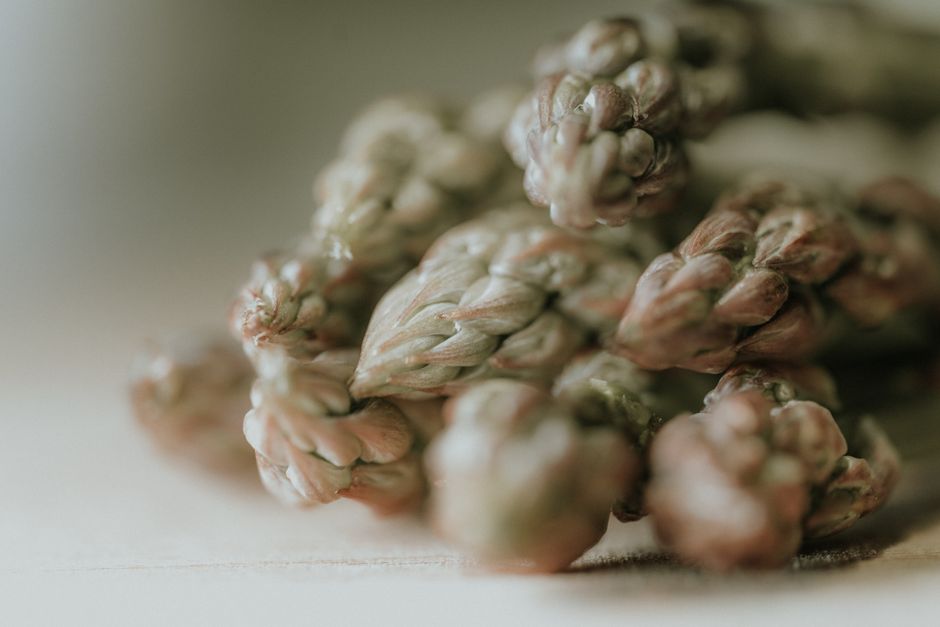
Cutting asparagus is simple once you know the trick. Hold a spear of asparagus near the bottom end. Bend it gently until it snaps. It will break naturally at the point where the tough part ends and the tender part begins. Use that broken spear as a guide to trim the rest of the bunch. Then cut the spears to your desired length on a cutting board.
What Is the Natural Snap Method for Trimming Asparagus?
The natural snap method is the most common way to cut asparagus. You hold a spear in both hands and bend it until it breaks. The spear snaps at the exact spot where the woody stem ends and the tender stalk begins. This happens because the fiber content changes sharply at that point.
Some people prefer this method because it feels intuitive. You do not need a knife or a ruler. Just bend and snap. The downside is that you lose more asparagus than necessary. The snap point is often higher than it needs to be. You throw away edible stalk along with the tough end.
Research published in Cook’s Illustrated tested this method. They found that the snap point wastes about one inch of usable asparagus per spear. That adds up when you are cooking for a family. The snap method works well enough for a quick dinner. But if you want to waste less, there is a better way.
How Do You Cut Asparagus Using the Knife Method?
The knife method is more precise than snapping. Start by lining up the asparagus spears on a cutting board. Push them so all the tips are even. Then take one spear and snap it to find the natural breaking point. Use that spear as your measuring stick.
Lay the snapped spear next to the bunch. Line up the tips. Then cut across the entire bunch at the same spot where the snapped spear broke. Use a sharp chef’s knife and cut straight through. This gives you uniform pieces with less waste than snapping each spear individually.
The knife method is faster for large batches. It also keeps more of the edible stalk. The USDA reports that the bottom inch of asparagus contains the same nutrients as the rest of the spear. It is just tougher. You can peel the outer layer of the lower stalk instead of cutting it off entirely. That saves even more food.
Should You Peel Asparagus Before Cutting?
Peeling is optional but useful for thick spears. Asparagus stalks thicker than half an inch have a tough outer skin. The inner flesh is tender. A vegetable peeler removes that outer layer without losing the whole stalk.
Hold the spear by the tip. Start peeling about two inches below the tip. Work your way down to the bottom. The tip itself is too delicate to peel. Only peel the lower two-thirds of the stalk. Thin asparagus does not need peeling at all. The skin is thin enough to eat.
Some cooks argue that peeling changes the texture too much. The peeled stalk becomes soft and loses its snap when cooked. That is a matter of preference. If you want a firmer bite, skip the peeler and just cut higher up. The CDC notes that vegetable peels contain fiber. Peeling removes some of that fiber along with the toughness.





What Is the Best Knife for Cutting Asparagus?
A sharp chef’s knife works best for cutting asparagus. The blade should be at least eight inches long. A short knife forces you to saw back and forth, which crushes the stalk. A long clean cut keeps the spear intact.
Serrated knives are not ideal. They tear the asparagus instead of slicing it. The ragged edges cook unevenly. A straight-edged knife gives you a clean cut that seals the end. That matters for roasting because the cut end browns more evenly.
Keep your knife sharp. Dull blades crush the stalk and cause bruising. Bruised asparagus releases moisture during cooking, which makes it steam instead of roast. The American Culinary Federation recommends sharpening your chef’s knife before any vegetable prep. A sharp blade is safer too. You are less likely to slip when the knife cuts cleanly.
How Do You Cut Asparagus for Different Recipes?
The cut changes depending on how you cook the asparagus. For roasting or grilling, leave the spears whole. Trim the bottoms and leave the spears at their full length. Whole spears hold up better to high heat. They also look better on the plate.
For stir-fries and pasta, cut the spears into one-inch pieces. This size cooks quickly and fits on a fork. Cut on a bias for more surface area. The angled cut exposes more of the inner flesh, which browns faster and absorbs sauce better. A study in the Journal of Food Science found that bias-cut vegetables caramelize more efficiently than straight cuts because of the increased surface area.
For soups and purees, cut the asparagus into half-inch rounds. Small pieces cook faster and blend more smoothly. The tough ends can go into stock. Simmer them in water for 20 minutes, then strain. You get asparagus flavor without the woody texture.
| Recipe Type | Cut Size | Cut Angle |
|---|---|---|
| Roasted or grilled | Whole spears | Straight across the bottom |
| Stir-fry or pasta | One-inch pieces | 45-degree bias cut |
| Soup or puree | Half-inch rounds | Straight across |
| Salad (raw) | Thin ribbons | Lengthwise with a peeler |
Common Mistakes When Cutting Asparagus
The biggest mistake is cutting too much off the top. People often cut off the tips because they look dry or brown. The tips are the most tender and flavorful part of the asparagus. A dry tip is not a bad tip. It just needs trimming of the very end, about one-eighth of an inch.
Another mistake is cutting all the spears to the same length regardless of thickness. Thick spears need longer cooking time. If you cut them the same size as thin spears, the thin ones overcook. Separate thick and thin spears before cutting. Cut thick spears slightly shorter so they cook at the same rate as thin ones.
Some people wash asparagus before cutting it. That is fine, but dry it thoroughly before cutting. Wet asparagus is slippery and dangerous to cut. The knife can slide off the wet surface and cut your hand. Pat the spears dry with a towel before you start cutting.
- Do not snap every spear individually. Use one spear as a guide and cut the rest.
- Do not cut too high. The bottom inch is edible if you peel it.
- Do not use a dull knife. It crushes the stalk instead of slicing it.
- Do not cut wet asparagus. Dry it first to prevent slipping.
- Do not throw away the ends. Save them for stock.
Does Cutting Asparagus Affect Its Nutritional Value?
Cutting does not change the nutrition of asparagus. The vitamins and minerals are inside the stalk regardless of how you cut it. What matters is when you cut it. Asparagus starts losing nutrients as soon as it is cut. The exposed surface area allows vitamins to oxidize.
Cut asparagus right before cooking. Do not cut it hours in advance and leave it sitting out. The USDA recommends cutting vegetables immediately before cooking to preserve vitamin C and folate. Asparagus is especially high in folate. One cup provides about 70 percent of the daily value. That folate degrades quickly once the vegetable is cut.
Store uncut asparagus in the refrigerator with the ends wrapped in a damp paper towel. Cut asparagus should go straight into the pan. If you must prep ahead, store cut pieces in an airtight container in the fridge for no more than four hours. Any longer and the nutrient loss becomes significant.
Frequently Asked Questions
Do you cut the whole end off asparagus?
No, you only cut off the woody bottom part. Bend a spear to find where it naturally snaps, then cut the rest of the bunch at that same spot.
Can you eat the bottom part of asparagus?
Yes, if you peel it. The bottom inch or two is tough but edible once the outer skin is removed with a vegetable peeler.
Should I cut asparagus before or after washing?
Wash and dry the asparagus first, then cut it. Cutting wet asparagus is dangerous because the knife can slip on the wet surface.
How much of the asparagus stem should I cut off?
Cut off about one to two inches from the bottom. The exact amount depends on where the spear naturally snaps when you bend it.
