
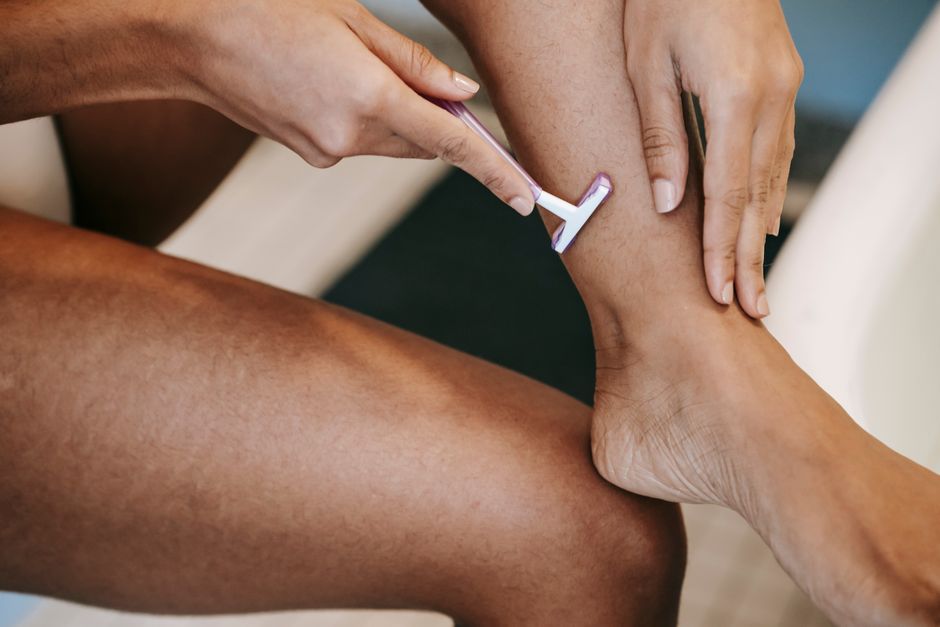
An ingrown hair happens when a hair curls back or grows sideways into the skin instead of rising to the surface. There is no single “cure” that stops them from ever forming, but most cases clear up on their own or with simple home care within a few weeks. The goal is to calm the inflammation, let the hair grow out, and reduce the habits that cause hairs to turn inward in the first place.
What Exactly Is an Ingrown Hair?
A hair follicle is a tiny pocket in the skin. Normally a hair grows up through the opening and out. An ingrown hair is one that gets trapped. It either curls back into the skin or grows sideways under the surface.
The body reacts to this trapped hair the way it reacts to any foreign object. The area becomes red, tender, and sometimes filled with pus. This is why an ingrown hair can look like a small pimple or a raised bump.
Two things commonly cause it. One is cutting hair below the surface, which leaves a sharp edge that can grow back into the skin. The other is hair that is naturally curly or coarse, which bends more easily as it grows.
Ingrown hairs are most common in areas that get shaved, waxed, or tweezed. That includes the face, neck, armpits, legs, and pubic area. The medical term for the condition, when it causes ongoing irritation, is pseudofolliculitis.
How Do You Cure Ingrown Hairs?
Most ingrown hairs do not need treatment. They resolve on their own as the hair grows out or the skin sheds the trapped strand. When they do need help, the approach is gentle care first and medical treatment only if the problem persists.
The single most useful thing you can do is stop irritating the area. Put down the tweezers. Picking and digging at an ingrown hair often pushes the hair deeper and introduces bacteria, which turns a minor bump into an infection.
Home care that is reasonable to try:
- Warm compresses for a few minutes, several times a day, to help soften the skin and reduce swelling
- Gentle washing with a mild cleanser and lukewarm water
- Letting the hair grow out for a period instead of shaving over the bump
- Using a soft washcloth to gently exfoliate the surface, without scrubbing hard
Some clinicians recommend products containing salicylic acid or glycolic acid to help clear dead skin cells at the surface. The evidence for these in treating existing ingrown hairs is limited, though they are commonly used. If your skin is sensitive, these can cause more irritation, so they are not a universal answer.
What you should not do is squeeze an ingrown hair like a pimple. If it has become infected, squeezing can spread the infection and make scarring more likely.
When Should You See a Doctor for an Ingrown Hair?
Most ingrown hairs are harmless and short-lived. A doctor’s visit is worth considering when the problem goes beyond a minor nuisance.
Signs that warrant medical attention include:
- Signs of infection such as spreading redness, warmth, or increasing pain
- Pus that is increasing rather than draining
- A bump that keeps growing or does not change for weeks
- Many painful bumps in one area, especially after repeated hair removal
- A dark or oddly shaped lesion that bleeds or changes over time
That last point matters. A new, changing, or non-healing spot in a shaved area should not be assumed to be an ingrown hair. In rare cases, a skin cancer can look like a stubborn bump. A clinician can tell the difference.
For persistent cases, a doctor may prescribe a topical steroid to reduce inflammation or a topical antibiotic if there is infection. In more stubborn cases, a clinician might recommend a retinoid cream. These are prescription decisions, not something to self-treat.
Why Do Some People Get Ingrown Hairs More Than Others?
Curly and coarse hair is the biggest natural factor. When a hair has a tight curl, its tip is more likely to bend back and re-enter the skin as it grows.
Shaving technique plays a large role too. Pulling the skin taut and shaving against the grain can cut hair so short that the new tip sits below the surface. When the skin relaxes, that tip is already underneath, and it can grow inward.
Other factors that raise the odds include:
- Waxing, tweezing, and plucking, which pull hair from the root and can disrupt how it regrows
- Tight clothing that rubs against the skin
- Dead skin cells blocking the follicle opening
- A family tendency toward ingrown hairs
This is why ingrown hairs cluster in people with curlier hair textures, and why they show up most in areas that see frequent hair removal.
How Can You Prevent Ingrown Hairs?
Prevention is more reliable than treatment. Since ingrown hairs come from how hair is cut or how skin blocks it, changing a few habits can reduce how often they happen.
If you shave:
- Shave in the direction the hair grows, not against it
- Use a sharp blade and replace it when it dulls
- Wet the skin and use shaving cream or gel to reduce friction
- Avoid pulling the skin tight, which encourages cutting too close
- Do not shave the same spot repeatedly in one session
If you use other hair removal methods, the same principle applies. Waxing, tweezing, and plucking all pull hair from the root and can lead to ingrown hairs as the hair regrows. For people with a persistent problem, a clinician may discuss options like laser hair removal or a prescription cream. Laser treatment reduces hair growth over time, which reduces the chance of ingrown hairs. It is not a guaranteed fix, and results vary by person and by hair and skin type.
Regular gentle exfoliation can help keep follicle openings clear, but harsh scrubbing does the opposite. It irritates the skin and can trigger more inflammation.
Does It Matter How You Treat the Bump Itself?
Yes, and the difference is mostly about restraint. The instinct to pick, squeeze, or dig out the hair is the most common reason a minor ingrown hair turns into an infected, scarring problem.
If a hair is visibly looping at the surface, some people gently free it with a clean needle. This is a judgment call, and doing it wrong can cause infection. If you are not sure, leave it alone and let it resolve or see a clinician.
Warm compresses and time handle most cases. Keeping the area clean and avoiding further hair removal over the bump gives the skin room to settle. If a bump is not improving after a few weeks, or is getting worse, that is the point to get it looked at rather than keep treating it at home.
What About Scarring and Dark Marks?
Ingrown hairs can leave behind dark spots, especially on darker skin tones. This is called post-inflammatory hyperpigmentation. It happens because inflammation triggers extra pigment production in the skin.
These marks are not scars in the usual sense, and many fade over time. The best way to limit them is to reduce inflammation early by not picking at the bump. Once a mark has formed, protecting the skin from sun exposure can help keep it from darkening further.
True scarring, where the skin texture changes, is more likely when an ingrown hair becomes infected or is repeatedly squeezed. That is another reason gentle care beats aggressive treatment.
Frequently Asked Questions
How long does an ingrown hair take to go away?
Most ingrown hairs clear up on their own within a few weeks as the hair grows out or the skin sheds it. If it is not improving after several weeks or is getting worse, see a clinician.
Should I pop an ingrown hair?
No. Popping or squeezing an ingrown hair can push it deeper, spread infection, and increase the chance of scarring.
Can I still shave if I have ingrown hairs?
It is best to let the area rest and avoid shaving over the bump until it heals. If you do shave, shave in the direction of hair growth with a sharp blade.
Are ingrown hairs a sign of an infection?
Ingrown hairs can become infected, but they are not infections by nature. Signs like spreading redness, warmth, or increasing pus suggest infection and warrant medical care.
